
Interstate Bridge Replacement Project Faces Scrutiny Over Tolls and Traffic Projections
An analysis of the proposed Interstate Bridge Replacement project suggests that high tolls could lead to underutilization of the new infrastructure and increased congestion on alternative routes, raising concerns about the project's financial viability and environmental impact.
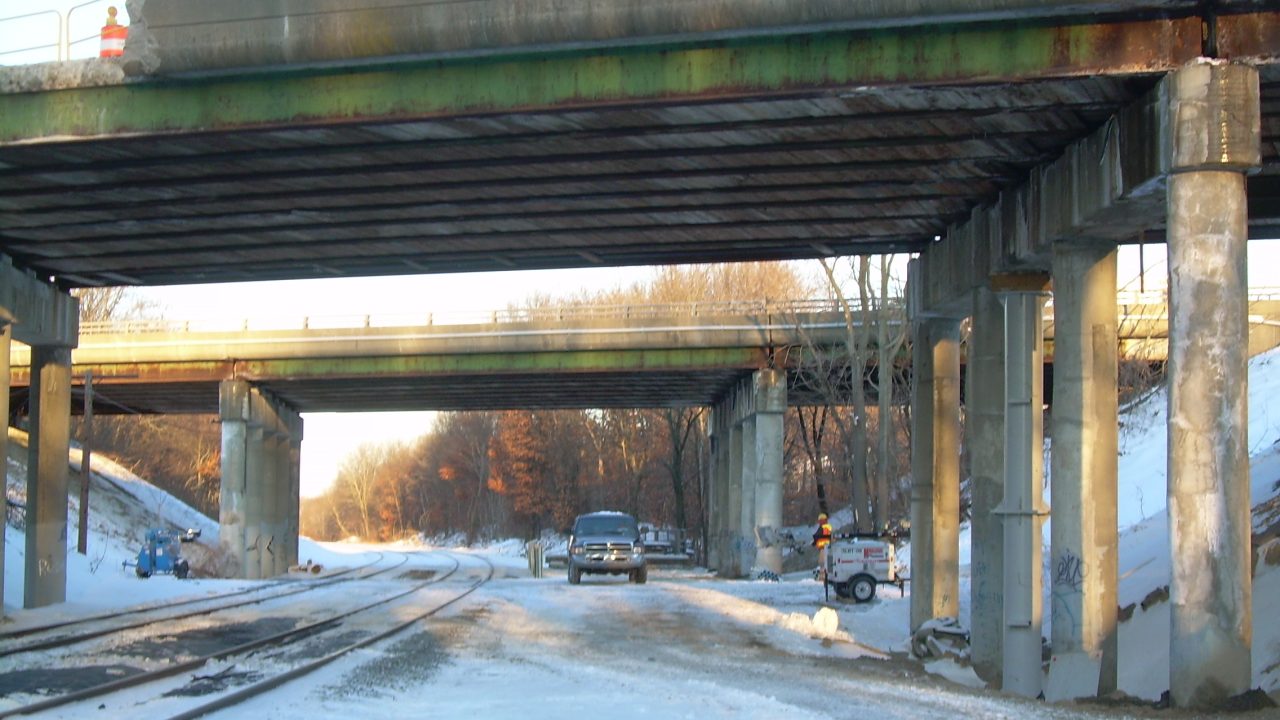
Project Faces Criticism Over Traffic and Revenue Analysis
A recent analysis of the proposed $15 billion Interstate Bridge Replacement (IBR) project has raised significant concerns regarding its projected traffic volumes and revenue generation. The Investment Grade Analysis (IGA) for the project suggests that implementing high tolls, ranging from $2.00 to $4.60, could result in a substantial portion of the new, expanded highway remaining underutilized.
This potential underuse is attributed to the anticipated diversion of vehicles seeking to avoid the tolls. The analysis indicates that approximately 50,000 vehicles may cease using the I-5 corridor, with many of these likely to reroute to the I-205 freeway. This diversion could lead to severe congestion on I-205, a critical North-South corridor for the region.
Environmental Impact Concerns
A key point of contention is the environmental impact of this projected traffic diversion. Critics argue that the IBR’s final environmental impact statement may not adequately account for the added congestion and associated environmental effects on the I-205 corridor. This omission, they suggest, could be a violation of federal law, as diverted trips and increased emissions on I-205 are not fully integrated into the project’s overall environmental assessment.
Historical Data on Toll Projects
Furthermore, the analysis questions the accuracy of past “investment grade” studies for toll road projects. It is suggested that these studies have historically overstated projected toll traffic and underestimated the diversion of vehicles to free-flowing routes. If this pattern holds true for the IBR project, the current projections for tolled traffic on I-5 may be overly optimistic, exacerbating the issue of an over-engineered and underutilized highway.
The implications for regional transportation are significant. The IBR project, as currently envisioned, could lead to a scenario where a massive, costly infrastructure upgrade fails to alleviate congestion on its primary corridor while simultaneously overloading another vital artery.
The Highway-Industrial Complex and Policy Influence
The discussion surrounding the IBR project also touches upon broader issues of transportation policy in the United States. A recent study by the Union of Concerned Scientists, titled “Freedom to Move: Investing in Transportation Choices for a Clean, Prosperous, and Just Future,” highlights the considerable influence of the oil, automobile, highway construction, and engineering industries on national, state, and local transportation and land-use policies.
This report details how these industries, through trade associations, lobbyists, and campaign contributions, shape resource allocation and policy decisions. The study asserts that over 80% of US transportation spending is directed towards these sectors, often at the expense of addressing critical national needs such as high household transportation costs, greenhouse gas emissions from transportation, fiscal burdens on governments, and a lack of viable alternatives to private car ownership.
The findings of the UCS report suggest a systemic bias in transportation planning that favors automotive and road-building interests, potentially influencing the scale and nature of projects like the IBR.
Comparing Living Standards: Urbanism and Quality of Life
In a related commentary, economist Paul Krugman highlighted differences in living standards between the US and Europe, extending beyond economic productivity. While acknowledging higher US productivity due to more working hours, Krugman pointed to areas where the US falls short, including lower life expectancy, higher traffic fatality rates, and the absence of universal healthcare.
Krugman also added an “urbanist footnote,” emphasizing the difficulty in quantifying aspects of quality of life that are intrinsically linked to urban environments. He noted the US’s comparative lack of walkable cities, limited access to public transportation, and the pervasive necessity of car ownership. These factors, though not always reflected in traditional economic statistics like GDP, represent significant real-world failings in the American urban experience and community well-being.
Impact of Science and Education Funding Cuts
Elsewhere, concerns have been raised about the impact of federal funding cuts on scientific research and education, particularly at institutions like the Massachusetts Institute of Technology (MIT). According to MIT’s president, federal award funding for campus research has declined by over 20%, with new federal research awards also down significantly. This trend is expected to lead to a reduction in graduate student enrollment, potentially depriving both the students and the nation of future innovation and expertise. The report suggests that such cuts to higher education and research could have long-lasting negative economic consequences, undermining the innovation that has historically fueled leadership in high-tech industries.
Key facts
| Factor | Detail |
|—|—|
| Project Cost | $15 billion |
| Proposed Tolls | $2.00 – $4.60 |
| Projected Diversion | 50,000 vehicles from I-5 |
| Affected Corridor | I-205 expected to see increased congestion |
| Source of Analysis | Investment Grade Analysis (IGA) for the IBR project |
The Interstate Bridge Replacement project, a multi-billion dollar undertaking, is designed to upgrade critical transportation infrastructure between Oregon and Washington. However, the current analysis suggests that the project’s reliance on high tolls may lead to unintended consequences. These include the potential for underutilization of the new bridge and highway capacity, increased traffic congestion on parallel routes like I-205, and questions about the accuracy of traffic and revenue forecasts. The broader context of industry influence on transportation policy and the quantifiable differences in urban living standards between the US and Europe further underscore the complex considerations involved in such large-scale infrastructure decisions.
Fuente: City Observatory – The Week Observed: May 22, 2026 – https://cityobservatory.org/the-week-observed-22may-2026/
Datos clave
| Punto | Detalle |
|---|---|
| Fuente | City Observatory |
| Fecha | 2026-05-27T21:57:21+00:00 |
| Tema | The Week Observed: May 22, 2026 |
Fuente
City Observatory Publicacion original: 2026-05-27T21:57:21+00:00
Related updates
New York court ruling on sanctuary policies carries implications for city-level immigration enforcement across the US
A federal judge has dismissed the Trump administration’s attempt to override New York City’s restrictions on immigration enforcement cooperation, citing state sovereignty.…
Read update
Automated license plate readers raise privacy, contract and oversight questions for UK cities
A new US-focused analysis of automated license plate recognition cameras highlights contract, privacy and oversight issues that London boroughs and Transport for…
Read update
Oregon’s “fix it first” dilemma: what London’s transport planners can learn from a revolt against megaprojects
Surveys show Oregonians overwhelmingly want existing roads repaired before new megaprojects are funded, and trust in the state’s transport agency has collapsed.…
Read update
California’s $11.25 billion housing bond: What London planners can learn from Proposition 1
California voters are deciding on an $11.25 billion general obligation bond to fund affordable housing. As London grapples with its own stalled…
Read updateWiki relacionada

Urban Planning Terms: Density, Public Realm and Transit-Oriented Development
A living glossary for terms that appear again and again in planning and development stories.
Read update