
Brooklyn’s Ashland Place Bike Lane Gap to Close, Promising Safer Streets
New York City's Department of Transportation has unveiled plans to complete a long-awaited protected bike lane on Ashland Place, addressing a notorious "crashland" and improving cycling connections in Downtown Brooklyn.
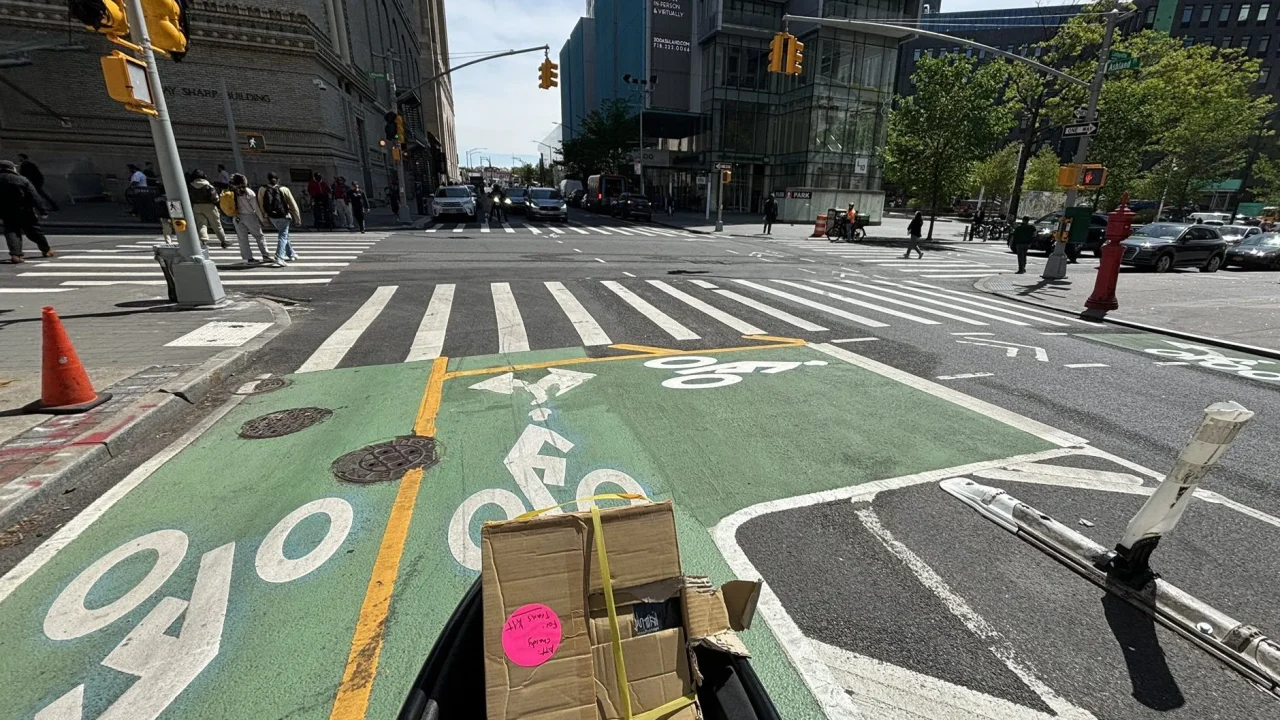
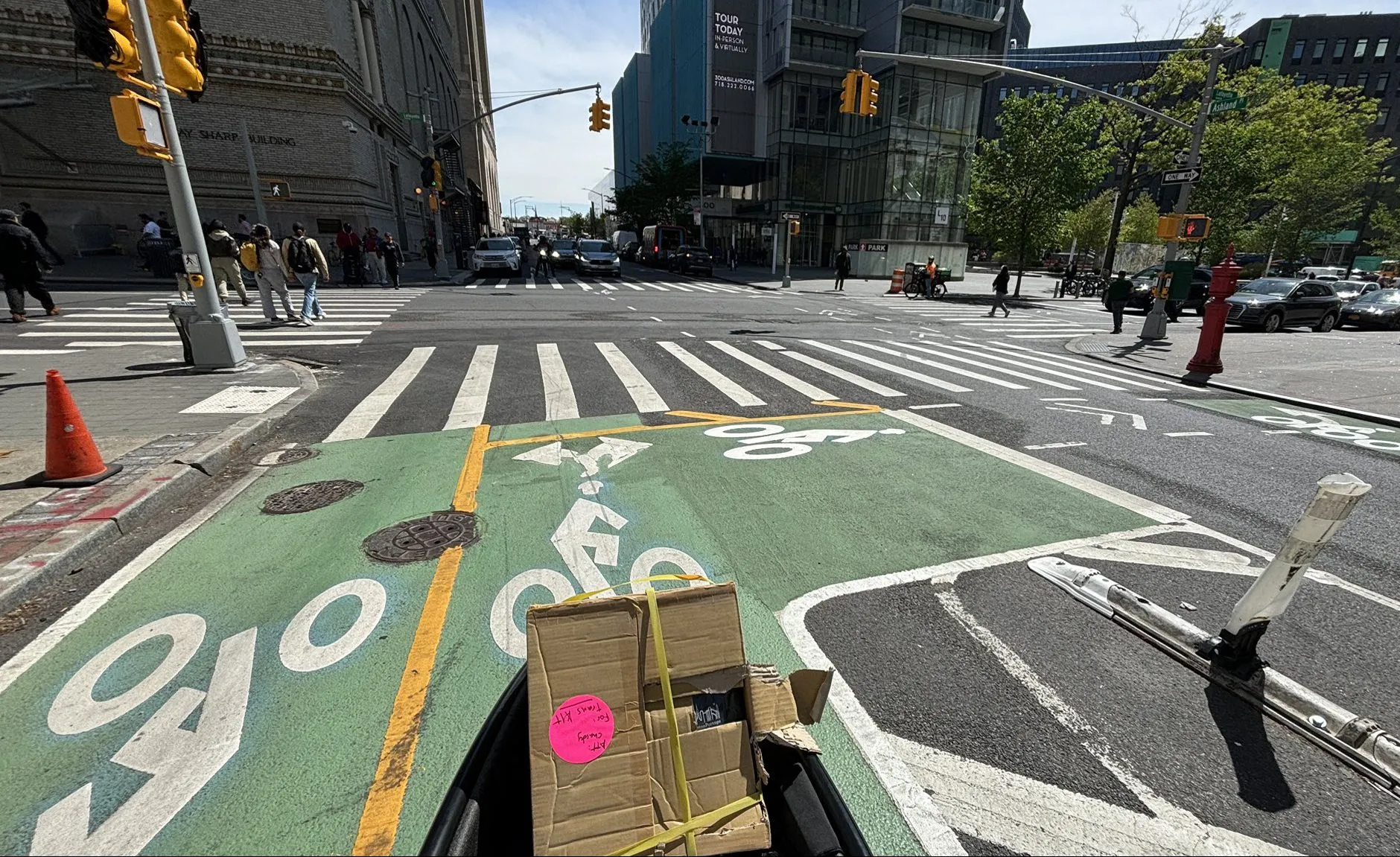
A notorious gap in Brooklyn’s protected bike lane network is set to be closed, with the New York City Department of Transportation (DOT) revealing plans to install a two-way protected bike lane on Ashland Place and transform a section of Hanson Place into a shared street. The project aims to eliminate the dangerous conditions that led to multiple crashes involving cyclists and pedestrians, a situation activists had dubbed “Crashland.”
The proposed redesign, slated for presentation to the transportation committee of Brooklyn Community Board 2, will see a protected bike lane on the north side of Ashland Place between Lafayette Avenue and Hanson Place. Simultaneously, Hanson Place between Ashland Place and St. Felix Street will be converted into a shared street, featuring expanded pedestrian space and a westbound bike lane.
To accommodate these changes, Ashland Place between Lafayette and Hanson will become a one-way northbound street for motor vehicles. Hanson Place between St. Felix Street and Ashland Place will be converted to a one-way westbound street for motor vehicles.
New Bike Lane Connections
Beyond addressing the immediate gap on Ashland Place, the project includes protected bike lane installations on two other key segments. A protected bike lane will be added to the wide sidewalk on the southern side of Lafayette Avenue between Ashland Place and Flatbush Avenue. Additionally, a protected lane will run alongside the southern sidewalk between Flatbush Avenue and Third Avenue. These additions are designed to create a direct and safe connection to the existing bike lane on Schermerhorn Street, enhancing the connectivity of Brooklyn’s cycling infrastructure.
The need for these improvements is underscored by recent safety data. The unprotected section of Ashland Place, where cyclists currently share space with two-way traffic, recorded 29 crashes injuring five cyclists and two pedestrians since September 2023. Despite these risks, the protected northern sections of Ashland Place and Navy Street continue to see significant demand, with 1,200 daily cyclists observed as of June 2024. The Citi Bike station near the Atlantic Terminal entrance on Hanson Place is also one of the busiest in the city, with 43,000 daily trips originating there.
A History of Delays and Advocacy
The project’s completion marks a significant win for cycling advocates and a reversal of policies under the previous administration. DOT first proposed a protected bike lane on Ashland Place and Navy Street in June 2022, envisioning a crucial link between the protected bike lane on Fourth Avenue and major routes like the Brooklyn and Manhattan bridges, as well as the greenway along Flushing Avenue and Kent Avenue.
However, by 2023, the project stalled due to objections from the Brooklyn Academy of Music (BAM) and real-estate developer Two Trees. BAM raised concerns about loading zones for performances, leading DOT to incorporate provisions for truck access. Two Trees, meanwhile, reportedly engaged in a behind-the-scenes campaign, enlisting former Mayor Eric Adams’s advisor, Ingrid Lewis-Martin, to push for the complete elimination of the protected bike lane on the block adjacent to their properties.
Following Adams’s decision to side with Two Trees, DOT implemented a design that activists criticized as unsafe. The protected bike lane terminated at Lafayette Avenue, forcing cyclists to navigate northbound motor vehicle traffic to continue south. For two years, advocates lobbied for a fix, but the former mayor did not act.
Mayor Mamdani’s administration has since pledged to revive and complete numerous street projects that were delayed or cancelled under Adams, with the Ashland Place redesign being a prominent example. DOT Commissioner Mike Flynn stated, “We’re working quickly to make ‘Crashland’ a distant memory with a redesign that delivers long-overdue cycling connections by closing gaps in the Brooklyn Bike Network on Ashland Place and Lafayette Avenue. On Hanson Place, a new shared street will create a gateway to Atlantic Terminal with expanded pedestrian space in the heart of Downtown Brooklyn. Completing the Ashland Place redesign will bring upgrades to one city-block that will enhance safety and connectivity for pedestrians and cyclists all across Brooklyn.”
Key facts
| Feature | Description |
|—|—|
| Project Location | Ashland Place and Hanson Place, Downtown Brooklyn |
| Proposed Improvements | Two-way protected bike lane on Ashland Place, shared street on Hanson Place with expanded pedestrian space and westbound bike lane |
| NYC DOT Commissioner | Mike Flynn |
| Previous Administration’s Impact | Delays and a compromised design on Ashland Place due to objections from BAM and Two Trees |
| Safety Concerns Addressed | Elimination of a dangerous gap in the protected bike lane network, reducing cyclist and pedestrian crashes |
The initiative represents a significant step towards creating a more connected and safer cycling network in Brooklyn. The transformation of Ashland Place and Hanson Place is expected to benefit not only cyclists but also pedestrians by providing more public space and improving access to key destinations like Atlantic Terminal. The project’s revival highlights the current administration’s commitment to prioritizing street safety and completing long-stalled urban improvement projects.
Source: Streetsblog NYC – https://nyc.streetsblog.org/2026/06/04/dot-reveals-plan-to-fill-infamous-bike-lane-gap-on-ashland-place
Key facts
| Point | Detail |
|---|---|
| Source | Streetsblog NYC |
| Date | 2026-06-04T22:30:00+00:00 |
| Topic | DOT Reveals Plan to Fill Infamous Bike Lane Gap on Ashland Place |
Fuente
Streetsblog NYC Publicacion original: 2026-06-04T22:30:00+00:00
Related updates
New York court ruling on sanctuary policies carries implications for city-level immigration enforcement across the US
A federal judge has dismissed the Trump administration’s attempt to override New York City’s restrictions on immigration enforcement cooperation, citing state sovereignty.…
Read update
Automated license plate readers raise privacy, contract and oversight questions for UK cities
A new US-focused analysis of automated license plate recognition cameras highlights contract, privacy and oversight issues that London boroughs and Transport for…
Read update
Oregon’s “fix it first” dilemma: what London’s transport planners can learn from a revolt against megaprojects
Surveys show Oregonians overwhelmingly want existing roads repaired before new megaprojects are funded, and trust in the state’s transport agency has collapsed.…
Read update
California’s $11.25 billion housing bond: What London planners can learn from Proposition 1
California voters are deciding on an $11.25 billion general obligation bond to fund affordable housing. As London grapples with its own stalled…
Read updateWiki relacionada

Urban Planning Terms: Density, Public Realm and Transit-Oriented Development
A living glossary for terms that appear again and again in planning and development stories.
Read update