
Cities Should Guide, Not Punish, Property Owners Fixing Neglected Areas
A new approach to code enforcement emphasizes collaboration and support for incremental developers, rather than punitive measures, to revitalise struggling urban areas.
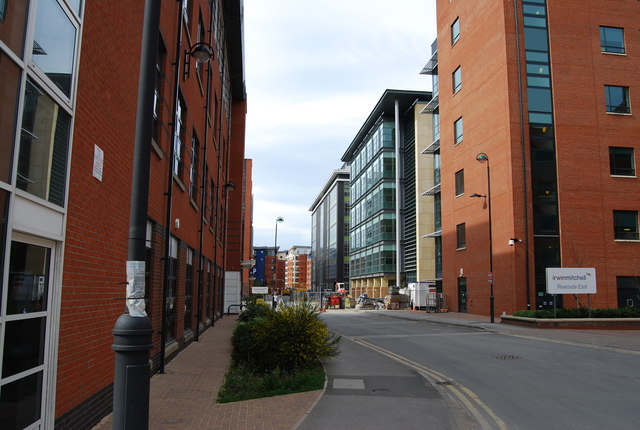
The traditional approach to property maintenance in many cities, particularly those facing economic decline, often involves strict code enforcement that can inadvertently hinder regeneration efforts. However, a more collaborative and supportive model is emerging, one that views city officials not as enforcers of violations, but as guides for property owners seeking to revitalise struggling areas. This approach aims to rebuild community confidence by working with, rather than against, the individuals investing in their neighbourhoods.
A recent discussion with the Strong Towns Local Conversation in Steubenville, Ohio, highlighted this tension. The city’s new manager has made property maintenance a priority, implementing the International Property Maintenance Code and issuing violation notices. While understandable from a city’s perspective – aiming to reverse decades of visible neglect and economic decline – this approach can be challenging for a new generation of property owners. These individuals, often local entrepreneurs and incremental developers, have invested their savings into acquiring long-neglected buildings with the genuine intention of repair and restoration.
The reality of deferred maintenance over many years means that addressing all deficiencies within a typical 60- or 90-day compliance window is often an insurmountable task. The initial property purchase may have consumed most of their capital, the planned businesses are not yet generating revenue, financing is difficult to secure, and contractors are expensive. For these new owners, their first interaction with the city can be a notice of violation, creating a sense of being penalised rather than welcomed as agents of positive change. This creates a disconnect, as the city seeks to restore confidence while these investors are simultaneously trying to build it.
Rethinking Enforcement as Guidance
The core of the evolving strategy lies in shifting the city’s role from a punitive gatekeeper to a supportive guide. This involves recognising that property owners working to fix dilapidated buildings are not the problem, but part of the solution. Instead of solely issuing violations, cities can offer pathways and resources that acknowledge the significant challenges faced by incremental developers.
An example from Oswego, New York, illustrates this point. Facing a “bank run on confidence” where residents were hesitant to invest in their properties without seeing a neighbourhood future, the city implemented a matching microgrant program. This program offered up to £1,000 for visible exterior improvements, such as painting, landscaping, and porch repairs. Crucially, the success of the program hinged not just on the financial incentive, but on a requirement for 70% of property owners on a block to participate. This fostered neighbourly coordination and mutual support, encouraging residents who couldn’t participate financially or physically to still engage through neighbourly assistance. The grants empowered small, achievable projects, thereby rebuilding collective confidence.
This “guide mindset” extends to how code enforcement operates. Rather than being an endpoint, it can be a gateway to solutions. In Martin County, Florida, the Community Redevelopment Agency (CRA) took a proactive approach. Before initiating code enforcement in neighbourhoods with significant issues, the CRA assembled a network of partners. This included the housing authority to identify rehabilitation programs and grants, Habitat for Humanity for modest repairs through its “Brush With Kindness” program, and community organisations for volunteer assistance. When an inspector identified a violation, they could connect the property owner with the CRA, which in turn coordinated the available support services. This maintained accountability through the notice of violation but crucially introduced hope and practical assistance.
Key facts
| Aspect | Detail |
|---|---|
| Core Issue | Code enforcement in declining urban areas. |
| Traditional Approach | Punitive, focused on violations. |
| Emerging Approach | Collaborative, guidance-oriented, resource-focused. |
| Example City (Ohio) | Steubenville: Implementing IPMC, issuing violations. |
| Example City (NY) | Oswego: Microgrant program for exterior improvements, community buy-in. |
| Example Agency (FL) | Martin County CRA: Partnering with housing, charities, volunteers. |
Transforming Vacant Spaces: The Broad Avenue Model
The Broad Avenue in Memphis, Tennessee, offers a compelling case study of how this integrated approach can transform not only buildings but also the economic vitality of a street. While the temporary street improvements—painted bike lanes, parklets, and adjusted street widths—are well-known, a less reported but equally significant transformation occurred within the vacant storefronts.
The process began with temporary “pop-up” businesses. These initial ventures involved simply opening a door and setting up a rudimentary shopfront, serving as a proof of concept to demonstrate interest in permanent retail. This approach allowed city officials to work pragmatically with business owners. Instead of demanding full renovations before any business could open, inspectors focused on essential safety requirements: clear exits, emergency lighting, and the installation of fire extinguishers. This pragmatic focus on the “bare minimum” for safety, rather than extensive aesthetic overhauls, facilitated the rapid activation of vacant spaces.
This iterative process, where temporary activations paved the way for permanent businesses, is a testament to a flexible and supportive regulatory environment. The success of these pop-ups provided the evidence needed for businesses to pursue the necessary permits and begin the process of permanent establishment. This model demonstrates that by collaborating with new businesses and focusing on enabling their operation, cities can not only improve the physical fabric of a street but also foster a more dynamic and resilient local economy. The key was a coordinated effort between streetscape improvements and the activation of interior commercial spaces, driven by a regulatory framework that prioritised progress and partnership.
This shift in perspective—from penalising neglect to actively supporting renewal—is vital for cities aiming to reverse decline and build more robust, confident communities. It acknowledges that true urban regeneration requires more than just enforcing rules; it demands fostering an environment where individuals feel empowered and supported to invest their energy and resources into their local areas.
Source: Strong Towns, “Don’t Punish the People Trying to Fix Your Town”, https://www.strongtowns.org/journal/2026-7-15-dont-punish-the-people-trying-to-fix-your-town
Fuente
Strong Towns Publicacion original: 2026-07-15T00:00:00+00:00
Related updates

New York Poll Shows Overwhelming Bipartisan Support for Apartments Near Transit, Highlighting Contrast with London’s Own Housing Debate
A new poll from Open New York finds 79% of voters support building multi-family homes near rail stations, as the governor’s race…
Read update
Seattle City Attorney Launches New Community Court and Repeat Offender Programme Amid Public Defender Concerns
Seattle City Attorney Erika Evans has launched Connection Court, a new community court programme, alongside a punitive High-Priority Repeat Offenses system. The…
Read update
Seattle’s Centers & Corridors Zoning Update Delayed by Environmental Review Ruling
A state hearings board ruling has forced Seattle to rework the environmental impact statement for its twenty-year growth plan, pushing the next…
Read update
FEMA disaster mitigation grants freeze threatens to stall UK resilience learning, planners warn
A US Government Accountability Office report says $2.2 billion in FEMA Building Resilient Infrastructure and Communities grants remain unresolved, delaying more than…
Read update