
Chicago’s bike lane battle echoes London’s own cycling infrastructure debate
A Chicago op-ed attacking protected bike lanes has reignited familiar arguments about business impact, safety and equity. London’s parallel experience with Cycle Superhighways and Low Traffic Neighbourhoods offers lessons for both cities.
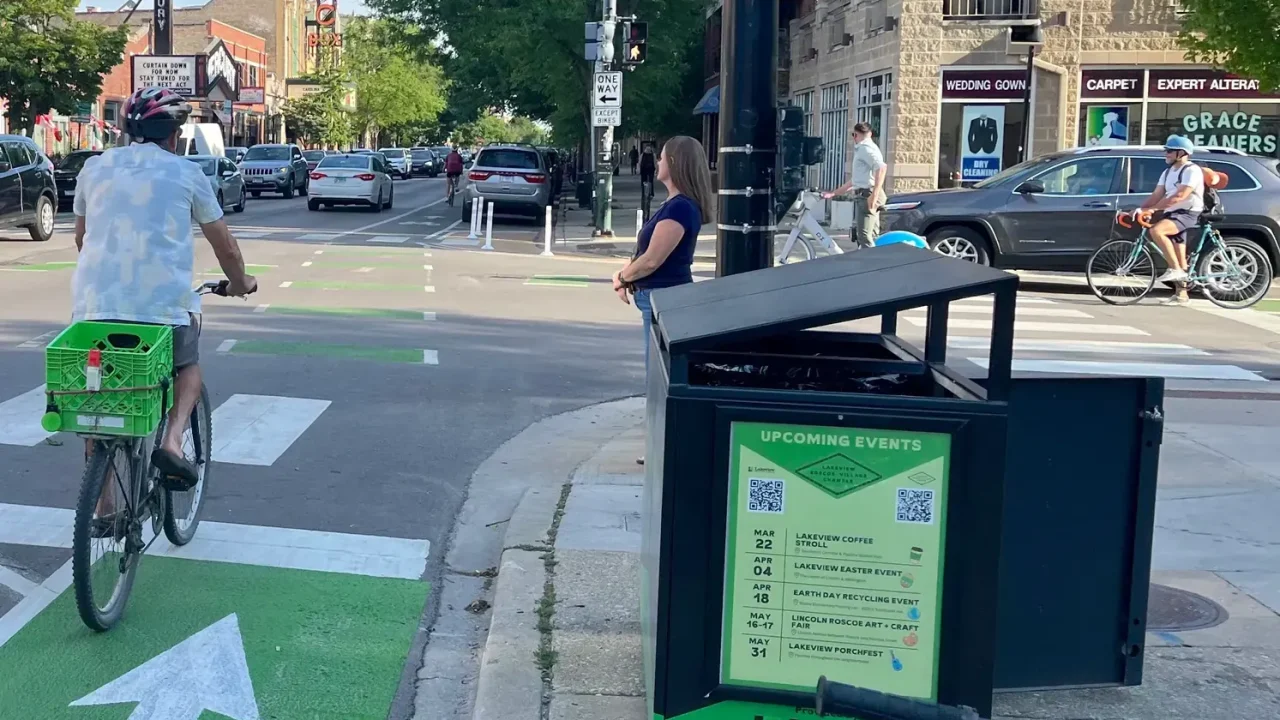
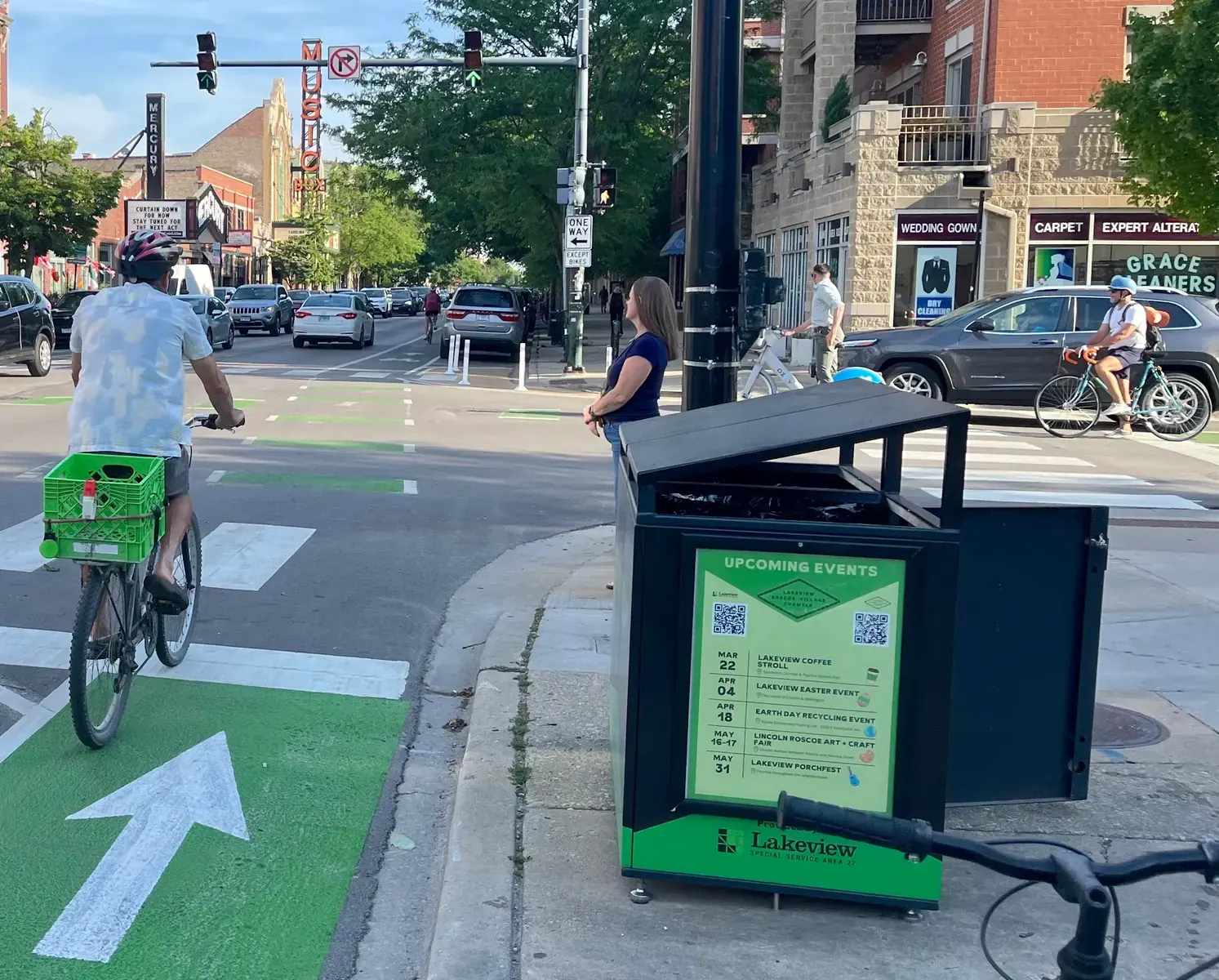
A recent op-ed in Chicago’s Loop North News attacking protected bike lanes has drawn a sharp rebuttal from Streetsblog Chicago, but the arguments it rehearses – that bike lanes harm businesses, that they are “privileged” infrastructure, that safety data is inconclusive – will sound familiar to anyone who has followed London’s own cycling infrastructure debates. From the Cycle Superhighway programme to Low Traffic Neighbourhoods, London has seen similar clashes between advocates of active travel and those who claim the changes undermine commerce and car access.
The Chicago piece, written by veteran journalist Don DeBat, claims that “City Hall has erected concrete barriers and roadway blockers on key arterial streets all over the city’s transportation grid in favour of privileged bike paths.” Streetsblog Chicago’s John Greenfield dismantles the argument point by point, noting that the “privileged” label could equally apply to car-only lanes on expressways, and that safety data shows a 30 percent drop in bike crash deaths and an 18.5 percent decrease in serious cycling collisions as bikeway mileage increased between 2021 and 2024. The article also highlights that a business owner quoted in the op-ed blaming bike lanes for lost parking had reportedly been playing anti-immigrant talk radio in a heavily Latino community – a factor omitted from the original piece.
London’s parallel experience
London has not been immune to such controversies. The introduction of Cycle Superhighways on major routes such as the Embankment, Holborn and the A10 in Hackney provoked fierce opposition from some business groups and motorist organisations. In 2020, the temporary “pop-up” cycle lanes installed during the pandemic drew complaints from delivery drivers and shop owners who said the removal of parking and road space hurt trade. A 2021 report by TfL and the London Borough of Hackney, however, found that businesses on streets with cycle lanes did not experience a net loss in footfall or revenue, and that in some cases pedestrian activity increased.
More recently, the debate around Low Traffic Neighbourhoods (LTNs) has echoed the Chicago claims about “privileged” infrastructure. Critics argue that LTNs divert traffic onto boundary roads and disadvantage less affluent residents who rely on cars. Supporters point to improved air quality, reduced collisions and increased walking and cycling. The London Assembly’s Transport Committee in 2023 noted that while LTNs can reduce local traffic, their impact on boundary roads and emergency services requires careful monitoring.
Safety data and business concerns
The Chicago article quotes a business owner who says “rampant bike lane construction is causing massive traffic congestion on diagonal arterial streets”. Streetsblog attributes the congestion instead to a concurrent water and sewer reconstruction project. In London, similar misattributions have occurred: the closure of a section of the A40 Westway for cycle lane construction was blamed for gridlock, though TfL data showed that the main cause was a spike in general traffic volume post-pandemic.
London’s own safety record provides a counterpoint to the claim that “the jury is still out on whether bike lanes promote safety”. TfL’s annual report for 2024 showed that the number of cyclists killed or seriously injured on London’s roads fell by 27 percent between 2019 and 2023, even as cycling levels rose. The highest safety gains were on routes with physically separated cycle lanes. Meanwhile, the number of pedestrian deaths remains stubbornly high, with 125 people killed in 2023, a figure that campaigners say could be reduced by measures like protected junctions and lower speed limits.
Climate resilience angle
Cycling infrastructure is not only a transport or safety issue – it is a climate adaptation measure. London’s Transport Strategy aims to reduce car use by 27 percent by 2030, with a target of 80 percent of all trips being made by walking, cycling or public transport. Protected bike lanes are a key part of that shift, alongside investment in electric vehicle charging, low-emission zones and green infrastructure. The Mayor’s Transport for London (TfL) also frames active travel as a tool for reducing air pollution and carbon emissions, both of which are part of the city’s climate resilience agenda.
Chicago’s own climate plan, Resilient Chicago, includes a goal of increasing the share of trips by bike, walking and transit. Yet the political backlash against protected lanes, as seen in DeBat’s op-ed and the opposition of Alderman Ray Lopez, shows how climate adaptation measures can become entangled in local political battles. The Streetsblog piece notes that Lopez’s opposition to a Complete Streets project on Archer Avenue coincided with the launch of a challenger’s campaign, suggesting that infrastructure decisions are sometimes driven by electoral rather than transport logic.
Key facts
| Topic | Chicago | London |
|---|---|---|
| Bike crash deaths (latest available period) | 30% drop 2021-2024 | 27% drop in KSI 2019-2023 |
| Main cycling infrastructure | Protected bike lanes (PBLs) | Cycle Superhighways, Quietways, LTNs |
| Business impact claim | Bike lanes reduce sales; contested by CDOT study | Studies show no net loss; some gain |
| Political opposition | Ald. Ray Lopez, Don DeBat | Some borough councils, business groups, residents in LTN consultations |
What this means for planning and policy
The Chicago debate highlights three recurring challenges for London’s transport planners. First, the need to separate genuine traffic impacts from temporary disruptions caused by other works. Second, the importance of rigorous, locally published safety and economic data to counter anecdotal claims. Third, the political reality that infrastructure changes can become proxy fights for broader ideological battles about car use, density and public space.
London’s boroughs and TfL already publish monitoring data on cycle lane usage, collision rates and business health. But the backlash against the CS11 extension on the A10 and the ongoing LTN review process in places like Hackney, Islington and Enfield show that perception often lags behind evidence. The Chicago case serves as a reminder that even when the data is clear, political and media narratives can stall or reverse implementation.
Source: Background from Streetsblog Chicago, “Sprocket man: Degreasing Don DeBat’s anti-bike tirade in the Loop North News” (2026). Additional London data from TfL Road Safety Reports and the Mayor’s Transport Strategy.
Fuente
Streetsblog Chicago Publicacion original: 2026-07-28T20:31:35+00:00
Related updates

California’s unused dam safety powers hold lessons for London’s ageing flood infrastructure
A California audit reveals the state has never used its enforcement powers against dam owners, despite 57 dams in poor condition. As…
Read update
New York Poll Shows Overwhelming Bipartisan Support for Apartments Near Transit, Highlighting Contrast with London’s Own Housing Debate
A new poll from Open New York finds 79% of voters support building multi-family homes near rail stations, as the governor’s race…
Read update
Seattle City Attorney Launches New Community Court and Repeat Offender Programme Amid Public Defender Concerns
Seattle City Attorney Erika Evans has launched Connection Court, a new community court programme, alongside a punitive High-Priority Repeat Offenses system. The…
Read update
Seattle’s Centers & Corridors Zoning Update Delayed by Environmental Review Ruling
A state hearings board ruling has forced Seattle to rework the environmental impact statement for its twenty-year growth plan, pushing the next…
Read updateWiki relacionada

Urban Planning Terms: Density, Public Realm and Transit-Oriented Development
A living glossary for terms that appear again and again in planning and development stories.
Read update