
California’s Return-to-Office Mandate Tests State Office Building Readiness
As California mandates state employees return to the office, the suitability of existing government buildings for modern work patterns is under scrutiny, raising questions about space utilization and future design.


California’s recent mandate requiring over 100,000 state employees to return to the office for at least four days a week is presenting a significant test for the state’s existing government buildings. The core question emerging from this policy shift is not just about employee presence, but whether these facilities are adequately designed to support the realities of contemporary work.
Workplace Design Challenges
Experts suggest that many government offices were not originally conceived with the flexible and collaborative work models that have become prevalent. The mandate brings into sharp focus the need to assess whether current office layouts, technology infrastructure, and amenity provisions align with the diverse needs of today’s workforce. This includes evaluating aspects such as desk sharing, meeting room availability, acoustic considerations, and the integration of digital collaboration tools. The challenge lies in retrofitting or redesigning spaces that were often built for more traditional, individual-focused work environments.
Beyond physical space, the mandate also prompts a re-evaluation of how these buildings contribute to employee well-being and productivity. Issues like natural light, access to outdoor spaces, and the provision of amenities that support work-life balance are becoming increasingly important in attracting and retaining talent. The success of the return-to-office policy may hinge on the state’s ability to adapt its building stock to meet these evolving expectations.
Impact on Urban Centers
The concentrated presence of state employees in urban centers across California could have a ripple effect on local economies and urban planning. Increased foot traffic could revitalize commercial districts, support local businesses, and potentially influence public transport usage. However, this also raises questions about parking, traffic congestion, and the demand for public services in these areas. Local authorities will need to monitor these impacts and potentially adjust urban planning strategies to accommodate the renewed activity.
The policy also presents an opportunity to rethink the role of government buildings within cities. Instead of solely serving as workplaces, they could potentially be reimagined as community hubs or integrated with other public services, enhancing their value and contribution to the urban fabric.
Future of Government Workspaces
The current mandate serves as a catalyst for a broader conversation about the future of government workspaces. As the state navigates the practicalities of this policy, it is likely to uncover specific deficiencies and innovative solutions. This period of adaptation may lead to significant investments in building upgrades, new construction, or a shift towards more agile and distributed work models.
The experience in California could serve as a case study for other governments and large organizations grappling with similar return-to-office directives. The lessons learned regarding building readiness, employee needs, and the broader urban impact will be crucial in shaping the future of public sector workplaces.
Key facts
| Aspect | Detail |
|---|---|
| Policy | California state employees mandated to return to office 4 days/week. |
| Workforce Affected | Over 100,000 state employees. |
| Core Issue | Suitability of existing government buildings for modern work patterns. |
| Potential Impact | Revitalization of urban centers, changes in transport use, need for building adaptation. |
Source: Smart Cities Dive, https://www.smartcitiesdive.com/news/california-rto-mandate-spotlight-office-readiness/824820/
Fuente
Smart Cities Dive Publicacion original: 2026-07-09T15:42:28+00:00
Related updates

New York Poll Shows Overwhelming Bipartisan Support for Apartments Near Transit, Highlighting Contrast with London’s Own Housing Debate
A new poll from Open New York finds 79% of voters support building multi-family homes near rail stations, as the governor’s race…
Read update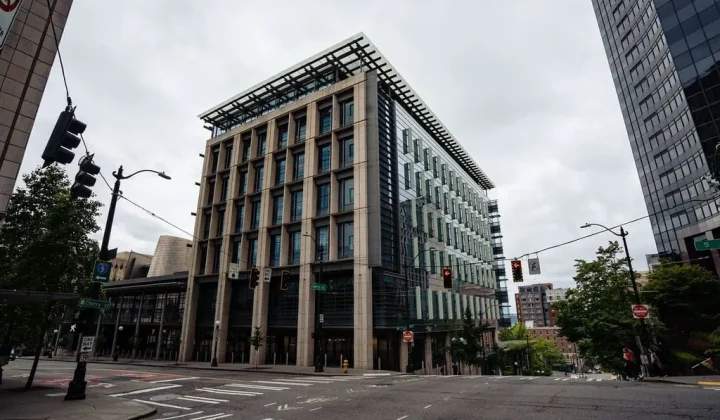
Seattle City Attorney Launches New Community Court and Repeat Offender Programme Amid Public Defender Concerns
Seattle City Attorney Erika Evans has launched Connection Court, a new community court programme, alongside a punitive High-Priority Repeat Offenses system. The…
Read update
Seattle’s Centers & Corridors Zoning Update Delayed by Environmental Review Ruling
A state hearings board ruling has forced Seattle to rework the environmental impact statement for its twenty-year growth plan, pushing the next…
Read update
FEMA disaster mitigation grants freeze threatens to stall UK resilience learning, planners warn
A US Government Accountability Office report says $2.2 billion in FEMA Building Resilient Infrastructure and Communities grants remain unresolved, delaying more than…
Read update