California Moves Forward on E-Bike Legislation to Clarify Regulations and Enhance Safety
New legislation in California aims to distinguish between electric bicycles and more powerful e-mopeds and e-motorcycles, addressing safety concerns and creating a clearer regulatory framework for riders, manufacturers, and municipalities.
Legislative Update on E-Bikes in California
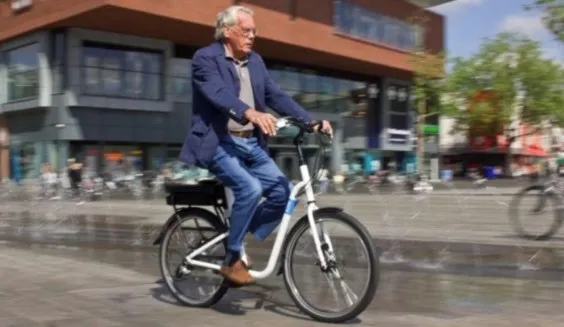
California is advancing key legislation designed to create a clearer distinction between electric bicycles (e-bikes) and more powerful electric-powered two-wheelers, such as e-mopeds and e-motorcycles. The move comes in response to increasing numbers of accidents and a patchwork of local regulations struggling to keep pace with the evolving landscape of personal electric mobility. The primary goal is to enhance safety for all road users, including pedestrians, cyclists, and e-bike riders, while ensuring that regulations accurately reflect the capabilities and classifications of different electric vehicles.
Senate Bill 1167: Defining E-Bikes
The most significant piece of legislation moving forward is Senate Bill 1167, authored by Senator Catherine Blakespear. This bill directly addresses the confusion arising from manufacturers and retailers marketing high-powered electric motorcycles, often exceeding 750 watts and capable of motorcycle-like speeds, as “e-bikes.” This practice has particularly targeted young riders, contributing to safety concerns.
SB 1167 seeks to draw a clear line between legitimate e-bikes and these more powerful machines. It aims to preserve the legal status of existing e-bike classifications (Class 1, 2, and 3) while ensuring that electric motorcycles and mopeds are correctly labeled, their capabilities fully disclosed to consumers, and that they are regulated as motor vehicles. This distinction is crucial for establishing appropriate safety standards, insurance requirements, and operational rules. The bill has successfully passed the Senate and is now proceeding to the Assembly for its first hearing.
Assembly Bill 1569: E-Bike Safety Program
Another piece of legislation gaining traction is Assembly Bill 1569, introduced by Assemblymembers Laurie Davis and Philip Chen. This bill mandates the creation of a standardized e-bike safety and training program by the Department of Education, with a target completion date of 2028. AB 1569 has passed the Assembly and has been referred to the Senate Transportation and Education Committees. The establishment of a formal training program is intended to equip riders with the knowledge and skills necessary to operate e-bikes safely, further contributing to accident reduction.
Legislation That Did Not Advance
Not all e-bike related legislation introduced this session has survived. Several bills faced hurdles and did not progress.
Assembly Bill 1557, also titled “Vehicles: Electric Bicycles,” proposed to limit the motor output of e-bikes sold in California to a maximum of 750 watts, aligning with current federal definitions. While this bill passed the Assembly Transportation Committee, it failed to secure a vote in the Appropriations Committee before the legislative deadline. The California Bicycle Coalition, Streets for All, Bike East Bay, and other advocacy groups opposed AB 1557. Their primary concerns were that the proposed wattage limit was too restrictive and could negatively impact the business operations of local bike shops and the accessibility of e-bikes for consumers. Concerns were also raised about the effectiveness of the bill in addressing crash incidents, despite the apparent sincere intentions of its author, Assemblymember Diane Papan.
Assembly Bill 1942, known as the “E-Bike Accountability Act,” would have required owners of Class 2 and Class 3 electric bicycles to register their bikes with the California Department of Motor Vehicles (DMV) and display a special license plate. This bill passed the Transportation Committee but did not advance past the Appropriations Committee, thus failing to move forward this session.
Assembly Bill 2284, the “Electric Bicycles: Attorney General List,” would have directed the California Highway Patrol (CHP) to publish a list identifying devices marketed as e-bikes that do not meet legal e-bike standards. This bill was defeated in the Transportation Committee and will not be considered further this session.
The failure of these bills highlights the complex balancing act legislators face in regulating emerging transportation technologies. The opposition from cycling advocacy groups indicates a concern that overly strict regulations could stifle innovation, impact affordability, and hinder the adoption of e-bikes as a sustainable transportation alternative.
Municipal Challenges and Need for Clarity
The context for this legislative push is the growing challenge faced by municipalities across California. Cities are grappling with how to establish safe frameworks for a diverse range of e-bike users, from casual riders to those using more powerful electric cycles, while simultaneously ensuring the safety of pedestrians and traditional cyclists. The existing regulatory landscape is often fragmented, with rules varying significantly from one municipality to another. This inconsistency creates confusion for riders and law enforcement alike and complicates efforts to manage public space effectively.
The current legal definition of electric bicycles under state and federal law already exists, but the increasing prevalence of high-powered electric motorcycles being marketed and used as e-bikes necessitates updated and clearer regulations. SB 1167, by establishing a robust distinction between e-bikes and e-motorcycles, aims to provide the necessary clarity for enforcement, consumer understanding, and infrastructure planning. This will allow for more targeted safety interventions and potentially more appropriate infrastructure considerations for different types of electrically powered vehicles.
Key facts
| Bill Number | Description | Status |
|---|---|---|
| SB 1167 | Distinguishes e-bikes from e-mopeds/e-motorcycles, preserves Class 1-3 e-bike status, regulates higher-powered devices as motor vehicles. | Passed Senate, awaiting Assembly hearing. |
| AB 1569 | Requires the Department of Education to create a standardized e-bike safety and training program by 2028. | Passed Assembly, in Senate committees. |
| AB 1557 | Proposed a 750-watt motor limit for e-bikes sold in California. | Did not pass Appropriations Committee. |
| AB 1942 | Would have mandated registration and license plates for Class 2 and 3 e-bikes. | Did not pass Appropriations Committee. |
| AB 2284 | Would have required CHP to publish a list of non-compliant “e-bikes.” | Defeated in Transportation Committee. |
Implications for Urban Mobility and Safety
The legislative developments in California underscore a broader trend in urban planning and transportation policy: the need to adapt to new mobility technologies. As e-bikes and other personal electric vehicles become more integrated into the urban fabric, they present both opportunities and challenges. They offer a potentially sustainable, efficient, and healthy mode of transport, capable of reducing reliance on cars and easing congestion. However, their integration requires careful consideration of safety, infrastructure, and equitable access.
The distinction being codified by SB 1167 is vital for urban planners and transportation authorities. It allows for more targeted policy development. For instance, infrastructure designed for low-speed Class 1 e-bikes might not be suitable for higher-speed e-motorcycles. Clearer definitions will inform decisions about where different types of electric vehicles can operate, what speed limits apply, and what safety equipment is mandated. This clarity is essential for creating a multimodal transportation system that is safe, efficient, and accessible for everyone.
The push for standardized safety training, as proposed by AB 1569, also reflects a proactive approach to managing the risks associated with new technologies. Educated riders are safer riders, and a consistent training program can help instill best practices and raise awareness of potential hazards.
As California navigates these legislative waters, other cities and states will likely be watching closely. The outcomes of these bills could set precedents for how e-bikes and similar devices are regulated nationwide, impacting their role in the future of urban transportation. The focus on distinguishing between e-bikes and more powerful electric vehicles is a critical step towards ensuring that these innovations contribute positively to urban environments without compromising safety or creating undue regulatory burdens.
Source: Streetsblog SF (https://cal.streetsblog.org/2026/06/04/legislative-update-the-good-e-bike-legislation-is-moving)
Fuente
Streetsblog SF Publicacion original: 2026-06-04T23:03:24+00:00
Related updates
Seattle social housing land deal offers lessons for London’s community-led delivery
Seattle’s social housing developer has acquired its first site for a mixed-income project, aiming for 1,000 homes by end of 2026. The…
Read update
When zoning reform meets private covenants: the HOA obstacle to backyard cottages
As more US cities rewrite zoning rules to allow accessory dwellings, private homeowners’ association covenants remain a barrier that reform alone cannot…
Read update
Seattle-Area Race Highlights Diverging Approaches to Housing, Transit and Tech Taxation
A Washington State legislative race in the 32nd District pits incrementalism against urgency on housing supply, transit funding and tech regulation, with…
Read update
New York court ruling on sanctuary policies carries implications for city-level immigration enforcement across the US
A federal judge has dismissed the Trump administration’s attempt to override New York City’s restrictions on immigration enforcement cooperation, citing state sovereignty.…
Read update