
Bay Area Transit Funding Measure Secures Ballot Spot Amidst Policy Setbacks
Advocates celebrate a significant victory in signature gathering for a regional transit funding initiative, while expressing disappointment over state-level cuts to transit programs.
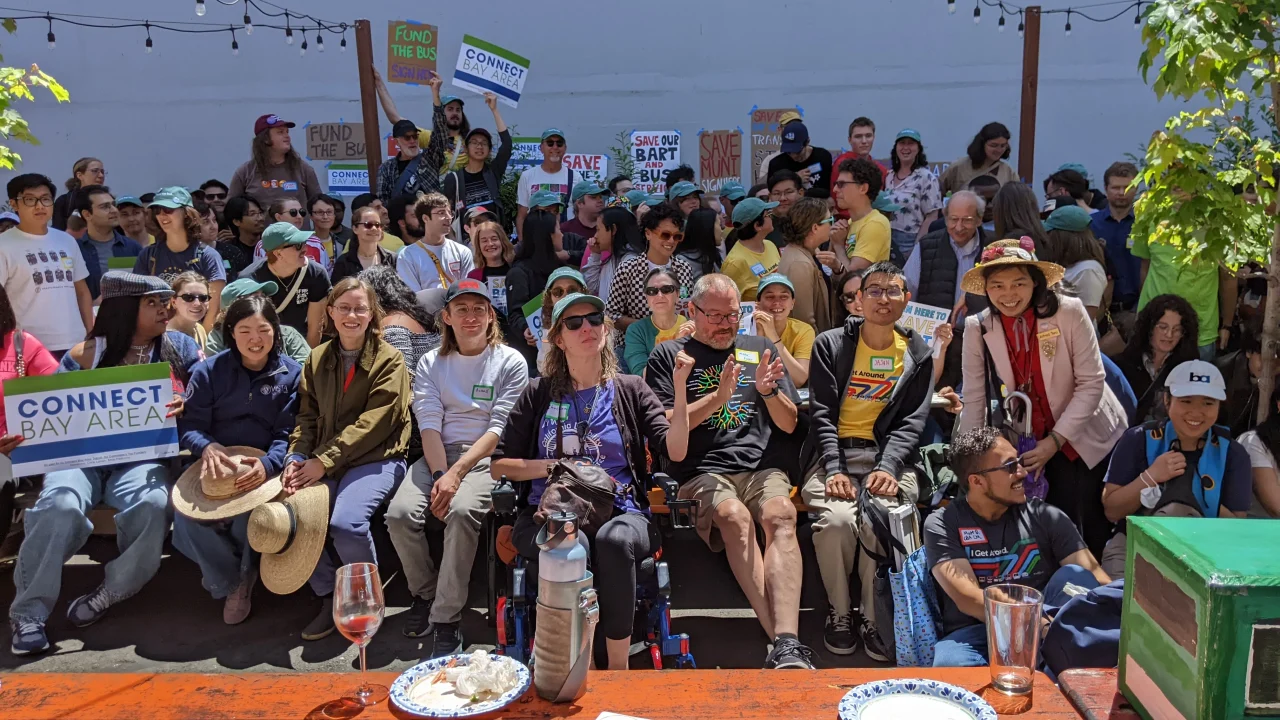
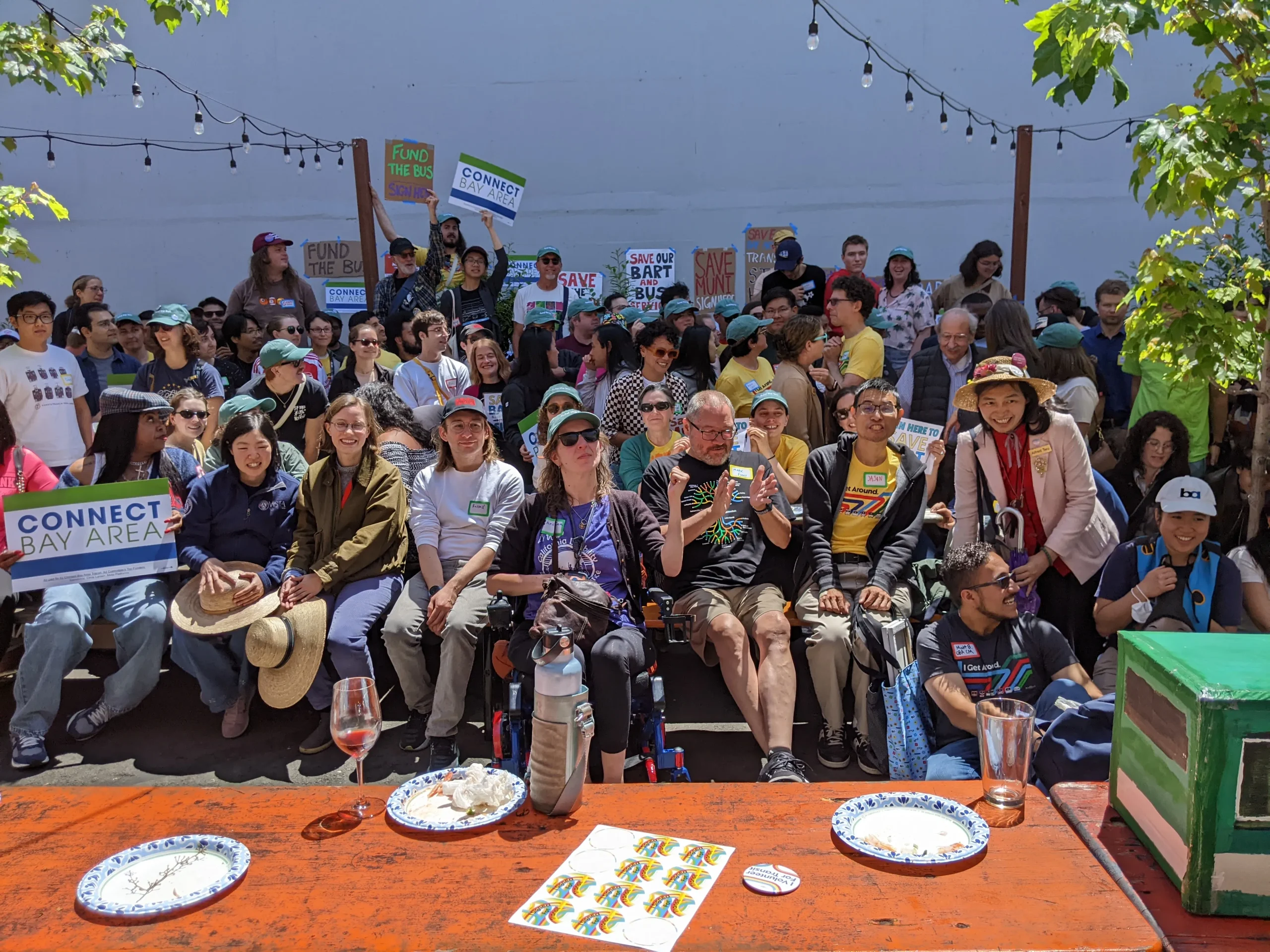
A major regional transit funding measure, the Connect Bay Area Act, has officially qualified for the November ballot after advocates successfully gathered over 300,000 signatures. This milestone represents a significant victory for public transit supporters in the Bay Area, surpassing the required number by approximately 100,000 signatures. If passed, the measure aims to provide $1 billion annually to support transit operations across the region.
Grassroots Mobilisation Celebrated
The success of the signature gathering effort was marked by a large celebration attended by over 150 advocates and politicians at Two Pitchers Brewing in Oakland. State Senator Jesse Arreguín, co-author of the enabling legislation (S.B. 63, 2025), lauded the “incredible effort” and highlighted the substantial contribution of unpaid volunteers. Connect Bay Area, the group orchestrating the campaign, reported that over 77,000 signatures were collected by more than 1,000 advocates and transit supporters. This groundswell of volunteer activity is seen as a strong indicator that public transit is a popular issue with robust community backing.
The sheer volume of volunteer engagement has been interpreted as evidence of the transit advocacy community’s potent influence, a force that political figures can no longer afford to disregard. Congresswoman Lateefah Simon, a vocal proponent and BART Board Director, emphasised the connection between transit and broader social justice movements, stating, “Mobility cannot be a privilege.” As someone who relies on public transport, Simon underscored its integral role in social justice advocacy.
Policy Setbacks Cast a Shadow
Despite the celebratory mood surrounding the ballot measure, the event was tempered by news of recent decisions from Governor Gavin Newsom’s California Air Resources Board (CARB). On the day prior to the celebration, CARB voted to remove transit and housing programs from the state’s cap-and-trade program, a decision that aligns with interests of major polluters like Chevron. This move is projected to result in an annual loss of approximately $2 billion for various transit programs, according to analyses shared with the BART Board and Streetsblog.
This decision has been met with deep disappointment and a sense of betrayal among many transit advocates. They view the CARB’s action as a repudiation of their efforts and a blow to environmental goals. A significant contingent of advocates is now focused on lobbying the state legislature to find a way to overturn the CARB decision. Plans are reportedly underway for a trip to the state capitol, with Senator Arreguín describing it as “time for another ‘transit funeral’ in Sacramento,” alluding to previous advocacy efforts in the capital. Streetsblog has indicated it will continue to cover upcoming protests and related developments.
Key facts
| Aspect | Detail |
|---|---|
| Measure Name | Connect Bay Area Act |
| Purpose | Provide $1 billion annually for transit operations |
| Signature Count | Over 300,000 (100,000+ over requirement) |
| Enabling Legislation | S.B. 63 (2025) |
| State Policy Impact | $2 billion annual cut to transit programs from cap-and-trade |
| Regulatory Body Involved | California Air Resources Board (CARB) |
Impact on Urbanism and Policy
The dual developments highlight a critical juncture for public transit in the Bay Area. The success of the Connect Bay Area Act demonstrates a clear public demand for enhanced transit services and a willingness to fund them. This grassroots momentum, driven by a coalition of advocacy groups and individuals, underscores the growing recognition of transit’s importance for economic vitality, environmental sustainability, and social equity. The substantial volunteer effort suggests a potentially powerful voting bloc that politicians will need to address.
Conversely, the CARB decision represents a significant policy setback, potentially undermining the very programs that advocates are working to bolster. The allocation of cap-and-trade revenue has been a contentious issue, with environmental justice advocates arguing for its use to fund programs that directly benefit communities disproportionately affected by pollution and climate change, such as public transit. The diversion of these funds away from transit and housing programs, towards what some perceive as the benefit of large corporations, raises concerns about the state’s commitment to its climate and equity goals.
The situation underscores a broader conflict in urban policy: the tension between local public demand for sustainable urban infrastructure and state-level policy decisions that can either support or hinder progress. The Bay Area’s experience illustrates how progressive urban initiatives can face challenges from broader economic and political forces. Advocates are now faced with the dual task of mobilising public support for the ballot measure while simultaneously engaging in political action to counteract adverse state-level policy changes. The outcome of these efforts will have significant implications for the future of public transit investment and climate action in one of California’s most populous regions.
Future actions for advocates will likely involve continued public awareness campaigns for the Connect Bay Area Act, alongside targeted lobbying and potential public demonstrations aimed at influencing legislative action to restore funding to transit and housing programs. The juxtaposition of strong local support and challenging state policy creates a complex landscape for urban development and transportation planning.
Source: Streetsblog SF – https://sf.streetsblog.org/2026/06/01/advocates-celebrate-signature-gathering-success-for-transit-measures
Fuente
Streetsblog SF Publicacion original: 2026-06-01T23:07:48+00:00
Related updates

Seattle-Area Race Highlights Diverging Approaches to Housing, Transit and Tech Taxation
A Washington State legislative race in the 32nd District pits incrementalism against urgency on housing supply, transit funding and tech regulation, with…
Read update
New York court ruling on sanctuary policies carries implications for city-level immigration enforcement across the US
A federal judge has dismissed the Trump administration’s attempt to override New York City’s restrictions on immigration enforcement cooperation, citing state sovereignty.…
Read update
Automated license plate readers raise privacy, contract and oversight questions for UK cities
A new US-focused analysis of automated license plate recognition cameras highlights contract, privacy and oversight issues that London boroughs and Transport for…
Read update
Oregon’s “fix it first” dilemma: what London’s transport planners can learn from a revolt against megaprojects
Surveys show Oregonians overwhelmingly want existing roads repaired before new megaprojects are funded, and trust in the state’s transport agency has collapsed.…
Read updateWiki relacionada

Urban Planning Terms: Density, Public Realm and Transit-Oriented Development
A living glossary for terms that appear again and again in planning and development stories.
Read update