
‘Arrested Mobility’: Charles T. Brown on Dismantling Transportation Inequities
An interview with urban planning expert Charles T. Brown, author of 'Arrested Mobility: Overcoming the Threat to Black Movement,' explores how historical and systemic decisions shape access to opportunity and the fight for equitable transportation.
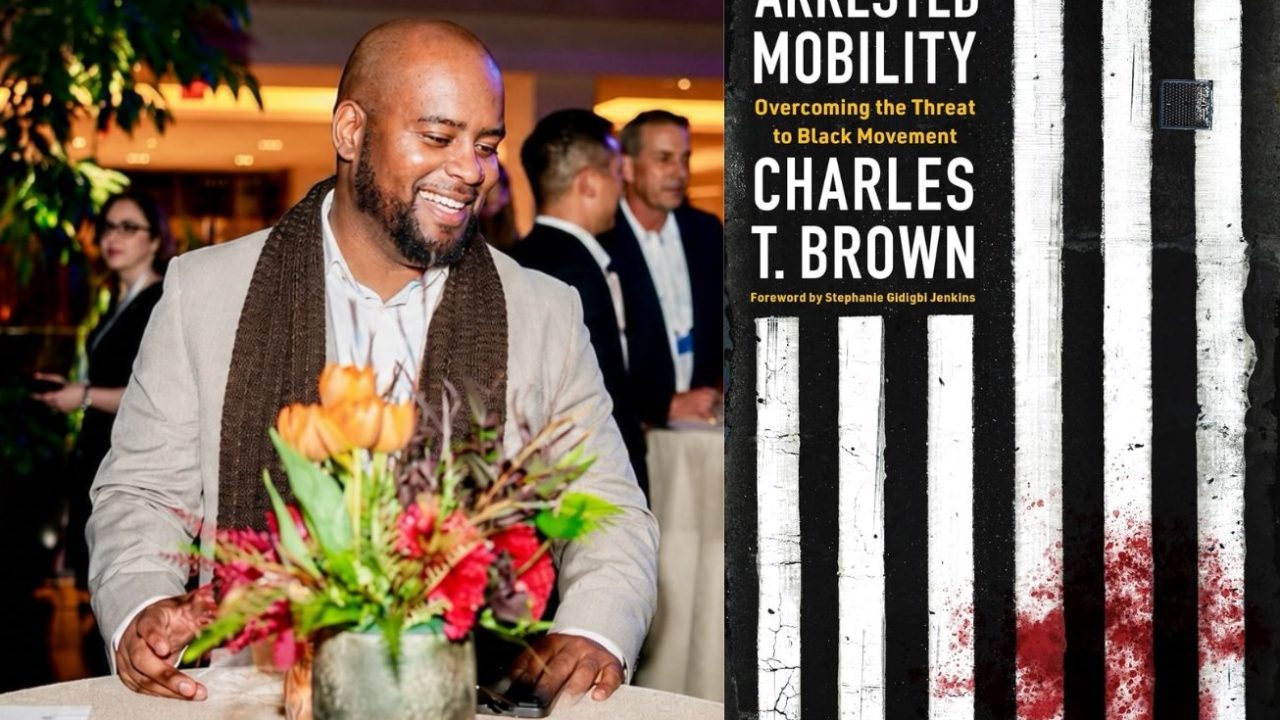
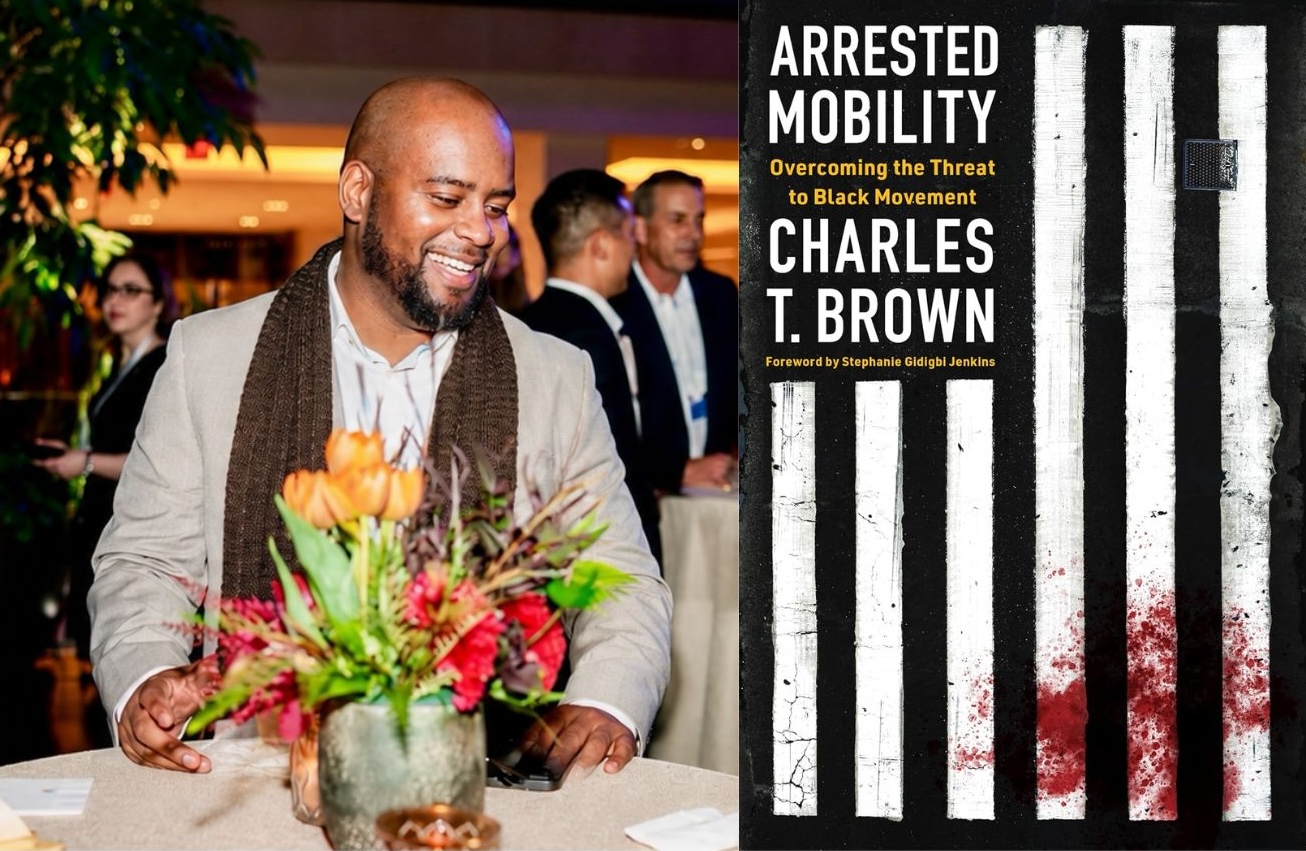
Charles T. Brown, founder of Horizon 54 and author of “Arrested Mobility: Overcoming the Threat to Black Movement,” argues that restricting people’s ability to move—physically, economically, or socially—is a fundamental restriction of freedom. In a recent interview, Brown elaborated on how policy and investment decisions have historically created “arrested mobility,” particularly impacting disadvantaged American communities, and how his firm is working to design systems that foster true mobility and opportunity for all.
Growing Up in Under-Resourced Landscapes
Brown’s early life in Shuqualak, Mississippi, a small town of approximately 500 people, provided him with a firsthand understanding of places overlooked by deliberate policy and investment choices. This environment, he explains, taught him the profound impact of geography on access and opportunity. “I didn’t have the language for it then, but I was living in what I now call arrested mobility,” Brown stated. “In a place like that, you learn quickly that where you live can expand your world or shrink it.”
His subsequent military service, which earned him the Mississippi Commendation Medal and the Global War on Terrorism Service Medal, sharpened his awareness of systemic design. He observed how infrastructure and systems were intentionally engineered for efficiency, safety, and movement. This contrasted sharply with the fragmented and sometimes “hostile” systems he had experienced growing up. This contrast led him to view places not just as physical structures, but as intentional designs that either facilitate thriving or containment.
From Equitable Cities to Horizon 54
The urgency to address these disparities fueled the creation of Equitable Cities, a firm Brown founded to challenge the prevailing approach to urban planning, where communities were often planned for, not with. He noted that equity was not yet a common discourse, and data was frequently used without contextual understanding, leading to performative engagement.
Equitable Cities has since evolved into Horizon 54, a name representing an expansion of the firm’s mission. “Horizon speaks to where we’re going, while the ’54’ grounds us in where we’ve come from. Think 1854 and 1954,” Brown explained. The new name signifies a commitment to broader impact, moving beyond critique to actively designing systems that deliver scaled outcomes across transportation, housing, health, and climate. Horizon 54 aims to influence policy at higher levels while remaining deeply connected to community roots.
Pracademic Approach to Urbanism
Brown distinguishes Horizon 54’s work through its integration of community engagement with technical expertise. The same team that interacts with residents is involved in shaping strategy, policy, and recommendations. This “pracademic” approach grounds their work in research while proving its efficacy in practice. Furthermore, Horizon 54 emphasizes storytelling through various media, including videos, podcasts, and data visualizations, to ensure that communities see themselves reflected in the work and that decision-makers cannot ignore the human impact.
At its core, the firm focuses on people-centered, place-based outcomes, which Brown believes are the foundation for resilience, health, and genuine connections—not only between people but also between people and their environments.
Addressing Infrastructure’s Inequitable Impacts
Brown highlighted the work in Syracuse, New York, as part of the HUD Thriving Communities program, as a prime example of addressing the inequitable impacts of infrastructure. The construction of Interstate 81 in Syracuse had displaced over 1,200 Black families and dismantled a vibrant community, with consequences still felt decades later.
Horizon 54’s role in Syracuse involved rebuilding trust and aligning housing redevelopment with transportation decisions. They spearheaded inter-agency coordination and developed a unified engagement strategy to prevent residents from repeatedly answering the same questions without action. “That’s what repair requires: not just removing harm, but intentionally rebuilding what was lost,” Brown stated, emphasizing that rebuilding trust, a significant loss in many communities, is a central component of this repair process.
The Pace of Trust and Lifelong Engagement
When asked about timelines for rebuilding trust, Brown stressed that it cannot be dictated by external schedules. “We move at the speed of trust, and that speed is determined by the community, by the people who were harmed.” He advocates for a balance between project deadlines and the crucial work of rebuilding trust, asserting that communities should have a significant degree of control over the process.
Horizon 54 is committed to establishing authentic, long-term relationships within communities, viewing themselves as friends and colleagues rather than simply professionals with an expiration date. “As long as I have life in my body, my firm is going to continue to work with that community, paid or unpaid. We don’t do that for profit.” This dedication underscores their mission to foster lasting change and ensure that mobility and opportunity are accessible to all.
Key facts
| Concept | Description |
|---|---|
| Arrested Mobility | A term coined by Charles T. Brown describing how policy and investment decisions restrict people’s freedom to move, impacting opportunity. |
| Horizon 54 | Charles T. Brown’s firm, evolved from Equitable Cities, focusing on integrated solutions for transportation, housing, health, and climate equity. |
| Pracademic Approach | Grounding urban planning work in research and proving its efficacy through real-world practice and community engagement. |
| Syracuse I-81 Project | An example of infrastructure-induced displacement and the subsequent efforts to rebuild trust and repair community harm. |
This work directly addresses how the physical design of urban environments and transportation systems can perpetuate systemic inequities. By focusing on people-centered, place-based outcomes and prioritizing trust-building, Horizon 54 aims to dismantle barriers to mobility and foster more resilient and equitable communities. The firm’s approach signifies a shift towards more holistic urban planning that recognizes the deep historical roots of displacement and actively works towards repair and inclusive development.
Source: Planetizen News, https://www.planetizen.com/features/137735-arrested-mobility-and-fight-black-movement
Fuente
Planetizen News Publicacion original: 2026-06-08T12:00:00+00:00
Related updates

When zoning reform meets private covenants: the HOA obstacle to backyard cottages
As more US cities rewrite zoning rules to allow accessory dwellings, private homeowners’ association covenants remain a barrier that reform alone cannot…
Read update
Seattle-Area Race Highlights Diverging Approaches to Housing, Transit and Tech Taxation
A Washington State legislative race in the 32nd District pits incrementalism against urgency on housing supply, transit funding and tech regulation, with…
Read update
New York court ruling on sanctuary policies carries implications for city-level immigration enforcement across the US
A federal judge has dismissed the Trump administration’s attempt to override New York City’s restrictions on immigration enforcement cooperation, citing state sovereignty.…
Read update
Automated license plate readers raise privacy, contract and oversight questions for UK cities
A new US-focused analysis of automated license plate recognition cameras highlights contract, privacy and oversight issues that London boroughs and Transport for…
Read updateWiki relacionada

Urban Planning Terms: Density, Public Realm and Transit-Oriented Development
A living glossary for terms that appear again and again in planning and development stories.
Read update