
Tribes sign first watershed co-management agreement for California’s Clear Lake
Seven Native American tribes have signed a formal co-management agreement with state agencies for Clear Lake, California’s largest freshwater body, marking the first implementation of the state’s 2026 initiative to bring 7% of lands and waters under tribal stewardship.

Lead
Seven Native American tribes signed a formal co-management agreement with California state agencies and Lake County government on 11 September 2026 to jointly govern Clear Lake, the state’s largest freshwater body. The agreement is the first watershed-level deal under California’s 2026 initiative to place 7% of the state’s lands and waters under tribal stewardship, and represents a significant shift in how public water bodies are managed in the United States.
The deal formalises what the tribes around the lake have been doing on an ad hoc basis for years: emergency fish rescues, water quality monitoring and restoration work aimed at saving the Clear Lake hitch (known locally as the chi), a fish found only in this watershed that is culturally and ecologically vital to the region’s Indigenous people.
Why this matters for urban and regional planning
While Clear Lake sits in rural Lake County, north of Napa, the co-management structure offers a potential model for how urban watersheds and large public water bodies could be governed elsewhere, including in the United Kingdom. The agreement combines state regulatory authority, tribal ecological knowledge and local government coordination under a single framework — an approach that London’s catchment-based planning for the Thames, or the management of the Lee Valley reservoirs, could draw lessons from.
For planners and policy professionals following land governance innovations, the Clear Lake deal demonstrates how co-management can work in practice: it does not transfer ownership, but creates a binding decision-making structure that gives tribal representatives equal standing with state agencies on matters of water quality, fish management and invasive species control.
The crisis at Clear Lake
Clear Lake faces three interconnected environmental threats that the agreement aims to address:
Mercury contamination from historic mining operations in the watershed, which has accumulated in lake sediments and the food chain.
Toxic algal blooms, fuelled by nutrient runoff from agriculture and septic systems, which have become more frequent and severe with rising temperatures.
Predatory invasive fish species, including largemouth bass and crappie, which prey on the Clear Lake hitch and outcompete native species.
The Clear Lake hitch — a member of the minnow family that can grow up to 18 inches long — has declined so sharply that it is now considered in danger of extinction. Another fish unique to the watershed, the Clear Lake splittail, is already extinct. The hitch’s spring spawning runs, once so dense that tribal elders recall catching them by hand in the creeks feeding the lake, are now a fraction of their historic size.
Jose “Moke” Simon III, chair of the Middletown Rancheria of Pomo Indians, described the change in an interview with the Los Angeles Times: “They ran so thick in the rivers, you didn’t even need a pole. You’d just get in there and splash them out of the river, or catch them in your shirt.”
What the agreement actually does
The 11 September agreement does not transfer ownership of Clear Lake or its shoreline. Instead, it establishes a formal co-management body — a joint committee with representatives from each of the seven tribes, the California Natural Resources Agency, the California Department of Fish and Wildlife, the State Water Resources Control Board, the Lake County Board of Supervisors and other relevant agencies.
The committee will have authority over:
Water quality monitoring and target-setting for mercury, nutrients and algae.
Fisheries management plans for the Clear Lake hitch and other native species.
Invasive species control strategies, including fish removal and habitat restoration.
Grant allocation for restoration projects within the watershed.
The agreement also commits the state to fund a full-time tribal liaison position within the California Natural Resources Agency and to provide technical assistance for tribal-led monitoring and restoration work.
California’s 7% initiative
The Clear Lake deal is the first watershed-level implementation of California’s 2026 initiative, announced by Governor Gavin Newsom’s administration, which aims to bring 7% of the state’s lands and waters under tribal stewardship. The initiative does not involve land transfer; rather, it creates co-management frameworks that give tribal governments formal decision-making power over public lands and waters within their ancestral territories.
The 7% figure was chosen to roughly match the proportion of California’s land area that was under tribal management before European colonisation, adjusted for current land ownership patterns. The initiative is being implemented through a series of individual agreements, each tailored to the specific ecological and cultural context of the site.
Key facts
| Element | Detail |
|---|---|
| Location | Clear Lake, Lake County, California (north of Napa) |
| Signatories | Seven tribes, California Natural Resources Agency, California Department of Fish and Wildlife, State Water Resources Control Board, Lake County |
| Date signed | 11 September 2026 |
| Main threat | Mercury contamination, toxic algal blooms, invasive predatory fish |
| Target species | Clear Lake hitch (chi) – culturally vital fish found only in this watershed |
| State policy | California’s 2026 initiative to bring 7% of lands and waters under tribal stewardship |
Implications for watershed governance
For professionals working in urban water management, the Clear Lake agreement is notable for several structural reasons. First, it addresses a freshwater body with multiple overlapping jurisdictions — state, county and federal — and creates a single coordinating body that cuts across them. Second, it explicitly centres Indigenous ecological knowledge alongside scientific monitoring data, a model that London’s catchment partnerships and the Environment Agency’s Thames Basin Plan have discussed but not yet implemented in a binding form.
The agreement also establishes a precedent for how water quality targets can be set and enforced in a co-management framework. The Clear Lake hitch serves as a proxy species: if the fish population recovers, the water quality measures are working. This kind of indicator-species approach could be applied to urban rivers such as the Lea or the Wandle, where salmonid recovery has been used as a benchmark for restoration success.
What remains unclear
The agreement does not specify funding levels beyond the tribal liaison post. The state has not disclosed how much will be allocated for restoration work, fish monitoring or invasive species removal. The tribes have been funding much of their emergency work through grants and donations; the agreement formalises their role but does not guarantee sustained state funding.
It is also unclear how the co-management committee will resolve disputes. The agreement does not include a veto mechanism or arbitration process. If a majority of tribal representatives vote for a measure that the state agencies oppose, or vice versa, there is no defined escalation path.
The Clear Lake splittail is already extinct. Whether the Clear Lake hitch can be saved will depend on how quickly the co-management body can act on water quality, invasive species and habitat restoration — and whether the funding follows the governance structure.
Source: Los Angeles Times, “California’s biggest lake is in crisis. Now tribes are coming back to save its sacred fish,” 11 September 2026. https://www.latimes.com/environment/story/2026-09-11/californias-biggest-lake-has-problems-now-tribes-are-coming-back-to-fix-them
Fuente
Planetizen News Publicacion original: 2026-09-13T15:00:00+00:00
Related updates
Colorado River agreement signals new model for cross-border water sharing amid drought
The US and Mexico have signed a temporary amendment to the Colorado River treaty, reducing deliveries to Mexico by 250,000 acre-feet per…
Read update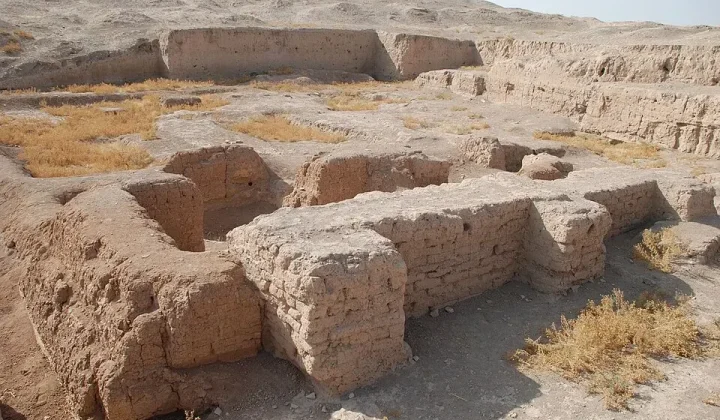
What Ancient Proto-Cities Reveal About Organic Urban Growth
New research into settlements such as Tell Brak suggests that some of the earliest cities formed without central rulers or master plans.…
Read update
Smart Cities Dive awards spotlight US city innovation, offering lessons for London’s data-driven planning
The Smart Cities Dive Public Service and Community Project Awards recognise notable people and projects in US city, county and regional government.…
Read update
San Francisco rewrites homeless service contracts with outcomes focus
San Francisco plans to reissue more than $500 million in annual homeless service grants and contracts, shifting to an outcomes-based model. The…
Read update