
What Ancient Proto-Cities Reveal About Organic Urban Growth
New research into settlements such as Tell Brak suggests that some of the earliest cities formed without central rulers or master plans. The findings offer urban planners a lens through which to reconsider top-down versus bottom-up development.
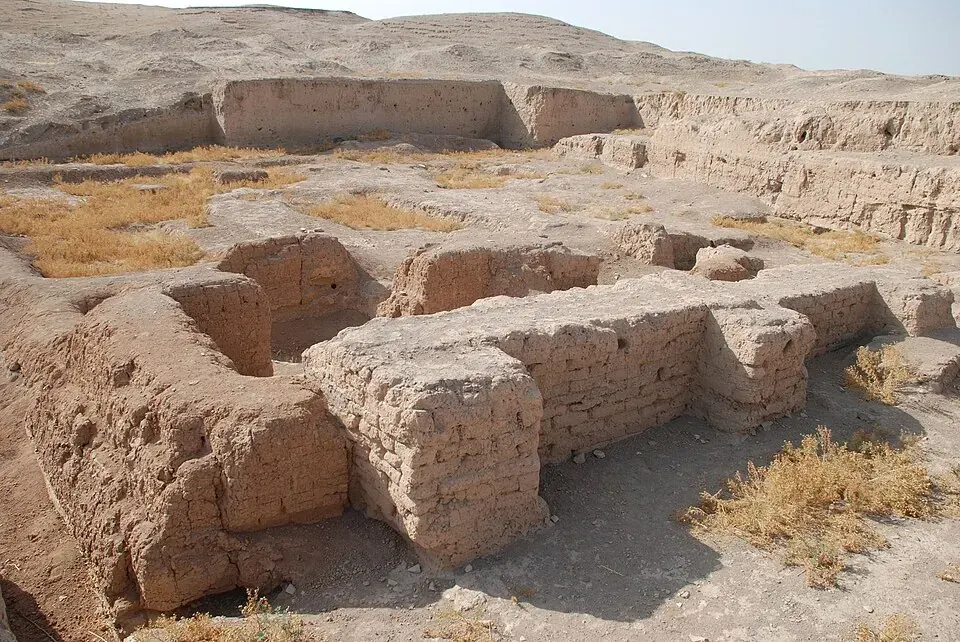
A recent article in Planetizen, the first in a series by architect and urbanist Stefan Al, revisits archaeological discoveries from the 1930s that are reshaping how scholars understand the origins of cities. The findings from Tell Brak and Khirbat al-Fakhar in present-day Syria suggest that some early urban settlements emerged not from the decrees of a powerful ruler, but from the collective, self-organising actions of many households.
For planners and urbanists in London and beyond, the research raises fundamental questions about the relationship between top-down planning and organic urban growth. If the earliest cities could form without a master plan, what does that imply for how we design and manage cities today?
Por que importa
The discoveries at Tell Brak
In 1937, archaeologist Max Mallowan, accompanied by his wife Agatha Christie, excavated the site of Tell Brak in northeastern Syria. They uncovered a temple filled with thousands of small figurines known as “eye idols,” dating back nearly six thousand years. The site, together with the nearby settlement of Khirbat al-Fakhar, would challenge long-held assumptions about the first cities.
For millennia, village life in Mesopotamia followed a pattern of fission: when a settlement grew too large or resources became scarce, groups would split off to form new settlements. But around 4,000 BC, Tell Brak and Khirbat al-Fakhar broke this pattern. Instead of dividing, they continued to grow, forming a patchwork of household clusters separated by open spaces.
Contexto
Khirbat al-Fakhar sprawled across 750 acres — larger than modern-day Monaco. Tell Brak covered about 130 acres. Neither settlement showed signs of central authority. There were no grand palaces, no soaring temples. Scholars now refer to them as “proto-cities.”
Key facts
| Fact | Detail |
|——|——–|
| Location | Tell Brak and Khirbat al-Fakhar, northeastern Syria |
| Period | Around 4,000 BC |
| Scale | Khirbat al-Fakhar: 750 acres; Tell Brak: 130 acres |
| Key characteristic | No evidence of central ruler, palace or master plan |
A bottom-up model of urbanisation
The evidence from these sites upends the traditional story of urbanisation. Uruk in southern Mesopotamia has long been considered the world’s first city, defined by its monumental temples and centralised administration. Tell Brak and Khirbat al-Fakhar offer an alternative: some cities could have emerged organically, shaped by the collective actions of countless households rather than the decrees of a ruler.
Complexity, in this model, grew from below. Archaeologist Jason Ur, who has studied these proto-cities, noted in his paper “Households and the emergence of cities in ancient Mesopotamia”: “Urbanism does not appear to have originated with a single, powerful ruler or political entity. Instead, it was the organic outgrowth of many groups coming together.”
The pattern bears a resemblance to what biologists call “emergence” — as seen in termite mounds, which form without a leader directing the process. Households likely did not set out to form large settlements. The settlement was the organic result of collective motivations: feeding dependents, expanding households and preserving autonomy.
Economic drivers and self-organisation
What drove people to create these unprecedented communities? One clue lies in obsidian, a volcanic glass prized for its sharpness. Imported from hundreds of miles away, obsidian was likely the economic engine. Each household became a workshop, contributing to a network of decentralised production and trade. Organising such exchanges required communication, coordination and trust — putting these communities on a path toward growing complexity.
This self-organising process has parallels in contemporary urban theory. Economists and urbanists such as Jane Jacobs argued that cities are complex systems that thrive on bottom-up interactions, not top-down blueprints. The archaeological evidence from Tell Brak suggests that this dynamic may be as old as urbanism itself.
Costs of organic growth
Tell Brak was not a timeless utopia of self-organisation. As it grew, residents faced the mounting costs of urban complexity: longer journeys to distant fields, trash mounds as large as five football fields, and pollution and fire risks from bread ovens and pottery kilns.
The outskirts became specialised zones for these functions, suggesting that inhabitants deliberately pushed less-desirable activities to the periphery — much as modern cities zone industrial and waste uses away from residential cores. Inequality also deepened. Pig remains, a cheaper source of meat, were found at the periphery, suggesting that poorer migrants lived in the outer clusters — reminiscent of informal settlements that ring many megacities today. Mass graves found at the site point to periods of violence or hardship.
Relevance for contemporary planning
For planners and policymakers, the Tell Brak evidence offers a historical counterpoint to the assumption that cities require strong central direction. It suggests that some degree of organic, bottom-up development is not a modern anomaly but a deep-rooted feature of urbanism.
The findings do not argue against planning. They do, however, raise questions about the balance between top-down and bottom-up approaches. In London, for example, debates about neighbourhood planning, community-led housing and the role of the Greater London Authority all touch on this tension. How much should be left to self-organisation, and how much requires strategic direction?
The article notes that the pattern observed at Tell Brak is not isolated. Around the same period, ancient Trypillia settlements in present-day Ukraine exhibited similar traits — spanning up to 300 hectares without monumental buildings or evidence of centralised power. The parallel emergence suggests a shared pattern of urban development across different regions.
Source: Planetizen News, “Urbanism before the plan” by Stefan Al, September 11, 2026. https://www.planetizen.com/features/138395-urbanism-plan
Datos clave
| Punto | Detalle |
|---|---|
| Fuente | Planetizen News |
| Fecha | 2026-09-11T12:00:00+00:00 |
| Tema | Urbanism before the plan |
Fuente
Planetizen News Publicacion original: 2026-09-11T12:00:00+00:00
Related updates
Colorado River agreement signals new model for cross-border water sharing amid drought
The US and Mexico have signed a temporary amendment to the Colorado River treaty, reducing deliveries to Mexico by 250,000 acre-feet per…
Read update
Smart Cities Dive awards spotlight US city innovation, offering lessons for London’s data-driven planning
The Smart Cities Dive Public Service and Community Project Awards recognise notable people and projects in US city, county and regional government.…
Read update
San Francisco rewrites homeless service contracts with outcomes focus
San Francisco plans to reissue more than $500 million in annual homeless service grants and contracts, shifting to an outcomes-based model. The…
Read update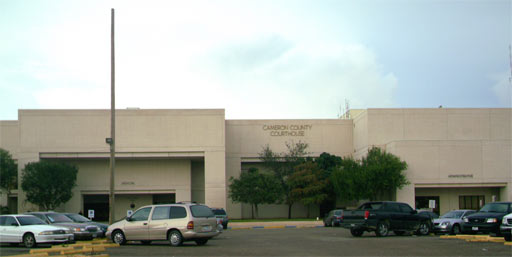
SpaceX arrival inflates property taxes and home values in Texas border county – what London planners can learn
Home values in Cameron County, Texas, more than doubled in six years after SpaceX built a launch facility. Property tax bills rose…
Read update