
LA’s 57/60 Freeway Expansion: A Model London Would Not Follow
A 57% complete, six-lane widening in the San Gabriel Valley shows how Los Angeles tackles congestion with more concrete. London’s transport strategy takes a different route – by reducing car dependency. We examine the contrast and what it means for UK policy.
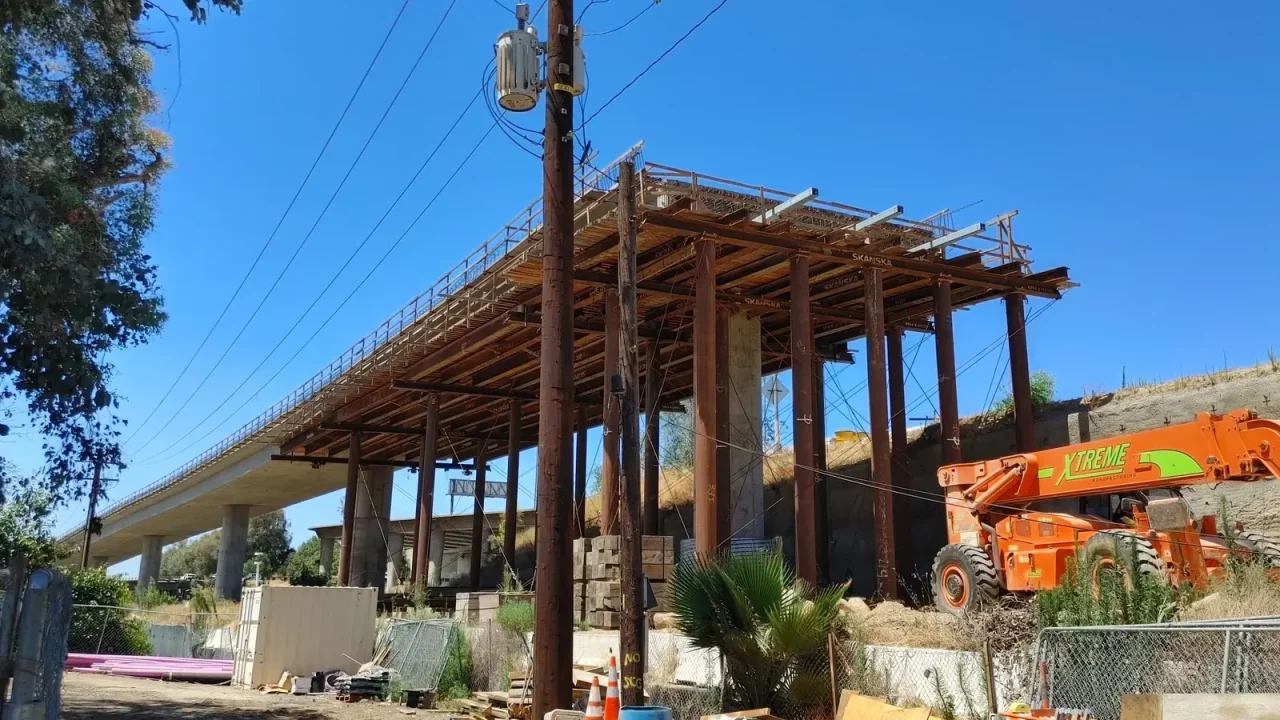
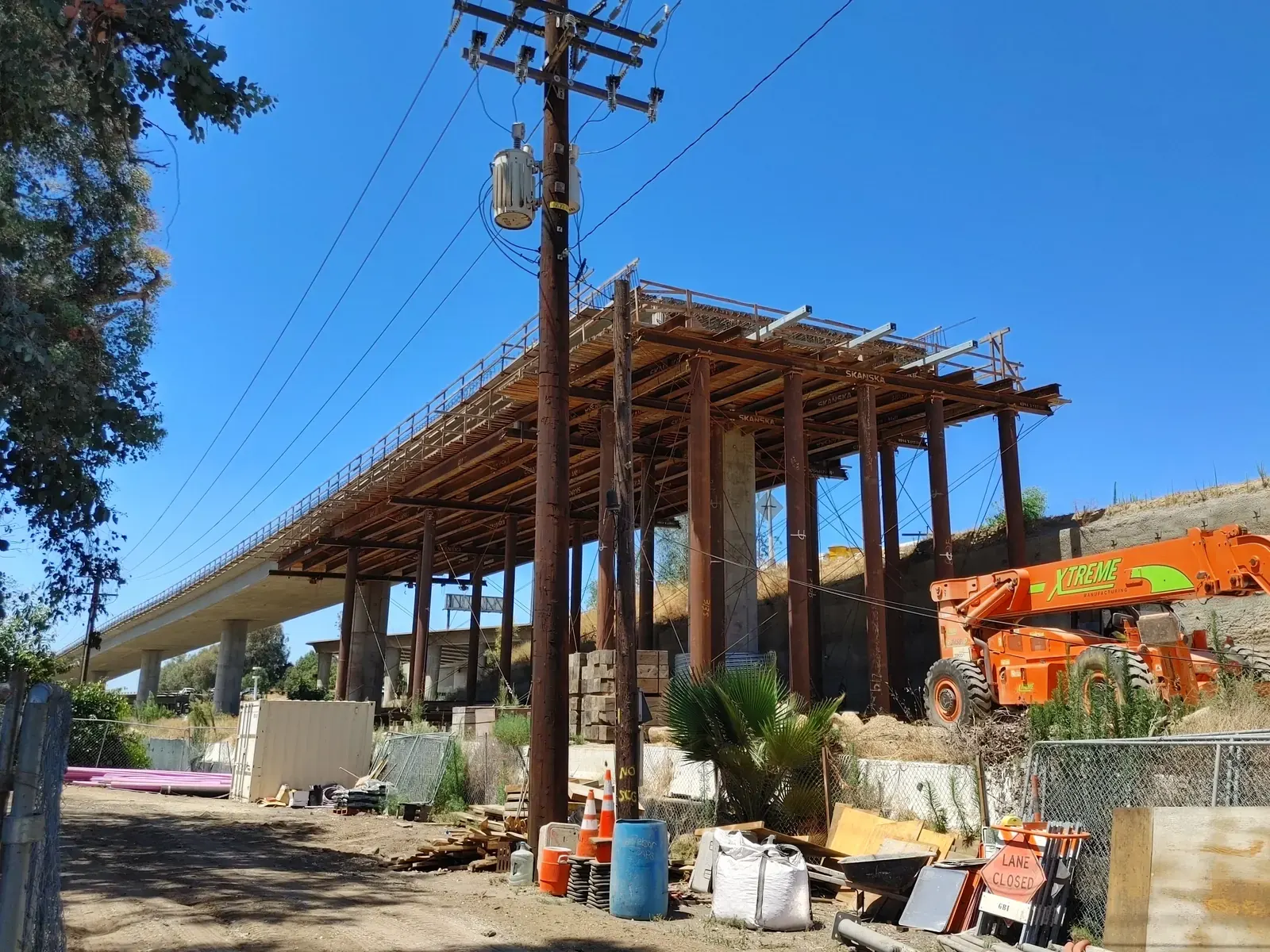
Construction of the State Route 57/60 confluence relief project in the San Gabriel Valley, east of Los Angeles, is now 57 percent complete, according to the San Gabriel Valley Council of Governments (SGVCOG). The half-mile eastbound 60 bypass viaduct and the mile-long Grand Avenue flyover off-ramp are taking shape, with the bridge deck rebar being placed and the eastern half of the Grand Avenue bridge expected to carry traffic later this year. The project broke ground in 2023 and is being built by Metro/Caltrans under the management of the SGVCOG. It remains on track for a 2028 Olympic deadline, the COG’s director of capital projects, Kevin Lai, told Streetsblog LA in a recent update.
For a London audience, the project is a textbook illustration of a fundamental divide in transport philosophy. While Los Angeles continues to invest heavily in expanding freeway capacity to ease congestion, London has spent the past decade actively reducing road capacity for private vehicles, reallocating space to buses, cycles and pedestrians, and investing in rail and tube upgrades. The contrast is not just about geography – it reflects competing assumptions about induced demand, the role of car travel in dense cities, and the purpose of public investment.
The 57/60 Project: Progress and Details
The core of the project is a set of three major elements:
- A half-mile elevated bypass on the eastbound 60 Freeway that will allow drivers to skip the weaving area where the 57 and 60 merge.
- The Grand Avenue flyover off-ramp, a mile-long structure that lifts traffic over the chokepoint.
- Widening of the Grand Avenue overpass from six to eight lanes.
According to SGVCOG spokesperson Ricky Choi, the bypass viaduct “will significantly reduce congestion and improve safety by allowing motorists to bypass the current State Route 57/60 weaving area.” The bridge has almost reached Diamond Bar Boulevard, where it will rejoin the main trunk of the 60. On the Grand Avenue bridge, crews have completed the stem, soffit and sidewalls, and are now placing rebar for the new deck. The next milestone is shifting traffic onto the eastern half of the bridge so that the western half can be rebuilt. Southern California Edison is expected to begin installing electrical cable through the bridge this autumn.
The flyover off-ramp is growing at roughly a foot per day, though it has not yet reached the landmark hotel visible in the project’s rendering. Lai told Streetsblog LA that he still expects the whole project to be finished before the 2028 Olympic Games, a deadline that now leaves just over two years. Given the pace of construction, that appears ambitious but not impossible.
A table summarising the key facts:
| Aspect | Detail |
|---|---|
| Project | SR 57/60 Chokepoint Confluence Relief Project |
| Location | San Gabriel Valley, California |
| Cost | Not publicly disclosed in source material |
| Progress | 57% complete (as of July 2026) |
| Key elements | 60 bypass viaduct (0.5 mi), Grand flyover (1 mi), bridge widening |
| Start date | 2023 |
| Target completion | Before the 2028 Los Angeles Olympics |
| Source | Streetsblog LA, 29 July 2026 |
London’s Alternative: Healthy Streets and Mode Shift
London’s transport strategy, set out in the Mayor’s Transport Strategy (2018) and reinforced by the current 2025–2030 Business Plan, explicitly rejects the idea that adding road capacity is a viable long-term answer to congestion. The principle of induced demand – that new road space quickly fills with new car trips – is now central to TfL’s planning. Instead, the city has pursued a programme of “Healthy Streets” measures: low-traffic neighbourhoods, cycle infrastructure, bus priority, the expansion of the Ultra Low Emission Zone, and the reduction of general traffic lanes on key corridors such as the A12, A23 and the Embankment.
The results are mixed in public perception, but the trajectory is clear. Between 2000 and 2023, car traffic in inner London fell by roughly one-third, while public transport and active travel mode share rose. TfL’s latest modelling suggests that even with population growth, car trips can be further reduced by 10–15% by 2030 through continued investment in tube frequency, bus reliability, and the completion of the Elizabeth line’s integration.
The 57/60 project, by contrast, treats congestion as a problem to be solved by building more lanes. No serious analysis of induced demand appears in the public material from the SGVCOG – the project is justified entirely on the basis of immediate delay reduction and safety improvements at the weaving area.
Silvertown Tunnel: A Rare London Road Expansion
London is not completely opposed to road infrastructure. The most notable recent example is the Silvertown Tunnel, a new twin-bore road tunnel under the Thames linking the Greenwich Peninsula and the Royal Docks. The project, due to open in 2025, is designed to relieve congestion on the Blackwall Tunnel and provide a cross-river bus route.
Critically, Silvertown is not a freeway widening. It is a single pair of lanes in each direction, with a user charge (the same as the Blackwall Tunnel) and a dedicated bus lane built into the design. The tunnel is intended to support bus connections and the redevelopment of the Royal Docks, not to add general capacity for private cars. Even then, it has been controversial: opponents argue that it will induce additional car trips and undermine the city’s net-zero transport targets. The difference in scale and philosophy between a £2bn tunnel with bus priority and a 1.5-mile freeway widening in LA could not be starker.
What the Comparison Reveals
The 57/60 project serves as a useful case study for London-based planners and policymakers partly because it is so far from the London approach. In Los Angeles, freeway expansions are still seen as a legitimate tool for congestion management. In London, the same argument would be greeted with scepticism from TfL, the GLA, and most borough planning departments.
The comparison also highlights the role of governance. The SGVCOG is a council of governments that can advance a project without the level of public inquiry, environmental assessment, and political challenge that a similar scheme would face in the UK – where the Department for Transport’s own “Road Investment Strategy” has been criticised for failing to align with net-zero commitments. The 57/60 project broke ground in 2023, just three years after planning approvals. In London, the Silvertown Tunnel took more than a decade from initial proposal to construction.
What Remains Unclear
The source material does not disclose the total cost of the 57/60 project, nor the full funding breakdown. The SGVCOG has not published a detailed traffic modelling study showing the expected long-term effect on congestion, air quality, or mode shift. The project’s reliance on motorist benefit alone, without any measurable commitment to public transport or active travel improvements, is a notable gap. For London readers, the absence of such data would be a significant weakness in any transport business case.
Additionally, the original Streetsblog LA article includes a sponsorship note from Foothill Transit, which should be noted as a potential source of bias in the reporting tone. The article is promotional in parts, emphasising “impressive progress” without independent verification.
Source: Streetsblog LA – “The 57/60 Confluence Construction is More Than Halfway Finished”, 29 July 2026, https://la.streetsblog.org/2026/07/29/the-57-60-confluence-is-more-than-halfway-finished. Additional context from TfL’s Mayor’s Transport Strategy 2018 and the 2025–2030 Business Plan.
Fuente
Streetsblog LA Publicacion original: 2026-07-29T21:03:40+00:00
Related updates

Why the predicted Portland ‘Carmaggedon’ never arrived — and what London can learn about traffic evaporation
A month-long closure of a mile-long section of I-5 in Portland was forecast to triple commute times. Instead, morning peak journeys increased…
Read update
What the fall of Angkor reveals about the risks of low-density urban sprawl
A new analysis of the fall of Angkor, the ancient Khmer capital, draws parallels between its sprawling, low-density infrastructure and the vulnerabilities…
Read update
Why urban beauty matters for community wellbeing and civic pride
Research and everyday experience show that beautiful places foster stronger communities, better mental health, and greater civic engagement. What can London learn…
Read update
Colorado Data Center Dispute Highlights Gap in Planning Rules and Community Oversight
A proposal for Colorado’s largest data centre in Aurora has sparked debate over planning rules that allow major developments to bypass public…
Read update