
What New York’s Containerised Trash Debate Means for London’s Street Space and Parking Conflicts
A veteran New York council member’s demand for local control over on-street waste bin locations highlights a familiar tension between parking and public realm improvements that London boroughs also face.
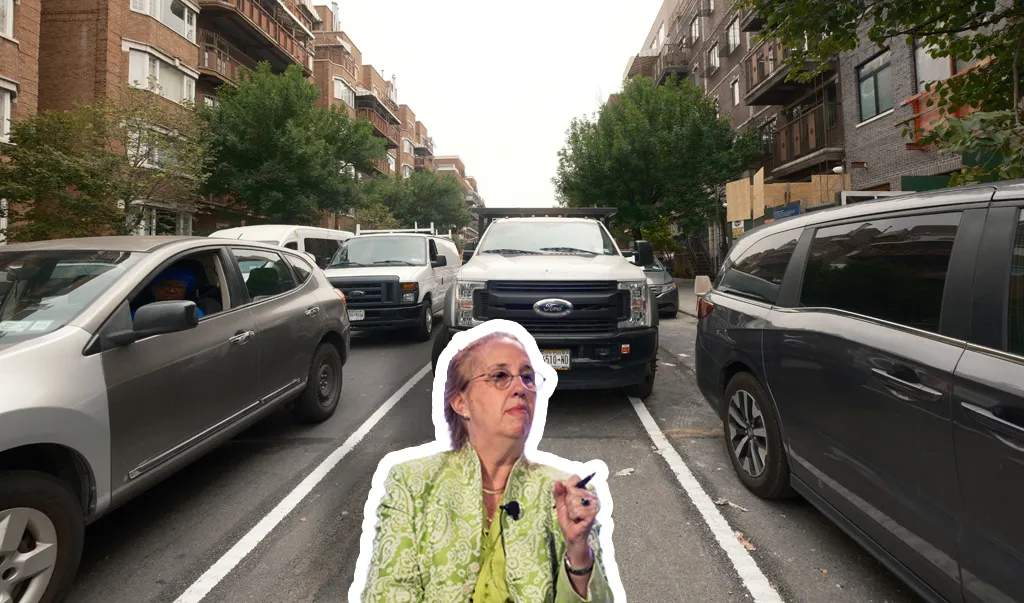
New York City’s push to replace plastic bags on kerbs with sealed, on-street containers – a move widely praised for reducing rat populations and reclaiming pavement space – has hit a familiar obstacle: the defence of free parking. Upper West Side Council Member Gale Brewer, a veteran Democrat who has served in various elected roles since 1975, said she supports the so-called Empire Bins “only if the on-street containers are sited with the feedback of local leaders and community boards.” Her reasoning, reported by Streetsblog NYC, was blunt: “Parking is an issue! I know that you could say on the Upper West Side we have two lines of subways, we have buses. People still want their cars.”
The controversy is a textbook case of a conflict that London boroughs know well. Whether it is the siting of cycle hangars, parklets, or bin enclosures, a recurring obstacle is the perceived loss of on-street parking. The New York debate offers a useful lens for London planners, councillors and residents who are grappling with the same trade-off between waste modernisation, public realm gains and motorist expectations.
Key facts
| Element | New York (Empire Bins) | London parallel |
|---|---|---|
| Lead actor | Council Member Gale Brewer (Upper West Side) | Local councillors and community forums |
| Stated position | Support containerisation but only with local/community board approval | Boroughs often require local consultation before street furniture changes |
| Core conflict | Parking vs. waste containerisation | Parking vs. cycle hangars, parklets, bollards, and bin enclosures |
| Climate resilience link | Reduces rats, frees street space for greening, reduces litter | Similar benefits: improved drainage, reduced vermin, more permeable surfaces |
The New York conflict: a local veto on street bins
The Empire Bins programme is part of a citywide effort to containerise residential waste, aiming to curb the rat population that thrives on open bags and to create more space for pedestrians. At a Council oversight hearing on 28 July 2026, Brewer stated her support for the programme but attached a condition that would effectively require case-by-case sign-off from local community boards. “I support the placement of the Empire Bins, but only with local input,” she said. She then emphasised that parking remains a priority for constituents, even on a corridor served by two subway lines and multiple bus routes.
Streetsblog NYC characterised the move as a pattern of Brewer saying she supports safe streets but then defending “free parking and other driver subsidies that make our city demonstrably worse.” The same critique could be levelled at any London politician who backs active travel and public realm improvements in principle but then defers to residents who oppose the removal of any parking space.
London’s parallel: parking as a veto point
London boroughs have been slowly introducing containerised waste systems, particularly in high-density areas where kerbside bags create litter, attract vermin and block footways. Schemes such as Westminster’s underground bins and shared on-street containers in parts of Camden and Islington have shown that residents generally accept the concept – until a bin is proposed outside their own front door. The typical objection is loss of parking, even when the bin replaces a single car space on a street with ample alternative provision.
The New York story highlights the danger of embedding a local-veto mechanism into a programme that needs scale to work. If every bin location must be approved by a community board, the process can become a venue for organised opposition from a vocal minority, delaying or killing the entire scheme. In London, the equivalent is a planning committee or a ward-level consultation that gives a small number of objectors disproportionate influence over a street-by-street decision.
Climate resilience: more than just rats
The climate resilience angle of containerised waste is often understated. Open bags of rubbish, especially when torn by vermin, scatter litter that clogs drains and contributes to local flooding. Containerised bins reduce that risk. They also free up pavement space that can be used for rain gardens, tree pits or permeable paving, all of which help manage stormwater and reduce urban heat. In both New York and London, these co-benefits are rarely mentioned in the parking-versus-bin debate, but they are directly relevant to adaptation planning.
London’s own climate resilience strategy, published by the GLA, identifies improving waste management as part of a broader effort to reduce flood risk and improve air quality. Yet at borough level, the conversation often stalls at the parking question. The New York story suggests that unless the climate benefits are explicitly linked to the bin siting decision, the conversation will remain stuck on car spaces.
Policy implications for London
The takeaway for London is not that community input is wrong – it is essential for democratic legitimacy. The problem is when that input can be used to block a programme that has broad support in principle. Boroughs could learn from the New York experience by setting clear criteria for bin placement (e.g., distance from junctions, proximity to high-density housing, access for collection vehicles) and only allowing community boards or ward committees to comment on the criteria, not on individual locations. That would preserve the efficiency gains of containerisation while still giving residents a voice.
Alternatively, London could pilot a street-level vote where residents decide on a block-by-block basis whether to replace one parking space with a communal bin – a model that has been used for cycle hangars in some boroughs. That would put the decision in the hands of those most affected, rather than leaving it to a single councillor or a noisy meeting.
Neither approach is perfect, but the New York case shows what happens when the process is left open to ad hoc local veto: the programme stalls and the rats keep winning.
Source: Streetsblog NYC, “Wednesday’s Headlines: Come On, Gale Edition,” 29 July 2026. https://nyc.streetsblog.org/2026/07/29/wednesdays-headlines-come-on-gale-edition
Fuente
Streetsblog NYC Publicacion original: 2026-07-29T04:01:00+00:00
Related updates

Why the predicted Portland ‘Carmaggedon’ never arrived — and what London can learn about traffic evaporation
A month-long closure of a mile-long section of I-5 in Portland was forecast to triple commute times. Instead, morning peak journeys increased…
Read update
What the fall of Angkor reveals about the risks of low-density urban sprawl
A new analysis of the fall of Angkor, the ancient Khmer capital, draws parallels between its sprawling, low-density infrastructure and the vulnerabilities…
Read update
Why urban beauty matters for community wellbeing and civic pride
Research and everyday experience show that beautiful places foster stronger communities, better mental health, and greater civic engagement. What can London learn…
Read update
Colorado Data Center Dispute Highlights Gap in Planning Rules and Community Oversight
A proposal for Colorado’s largest data centre in Aurora has sparked debate over planning rules that allow major developments to bypass public…
Read updateWiki relacionada

Urban Planning Terms: Density, Public Realm and Transit-Oriented Development
A living glossary for terms that appear again and again in planning and development stories.
Read update