
Berkeley’s Hopkins bike lane vote: a climate-and-ageing dilemma London’s planners know well
A Berkeley city council vote on protected bike lanes for Hopkins Street pits parking loss against safety for all ages. The same tension surfaces in London boroughs where active travel meets resistance from residents who rely on cars.
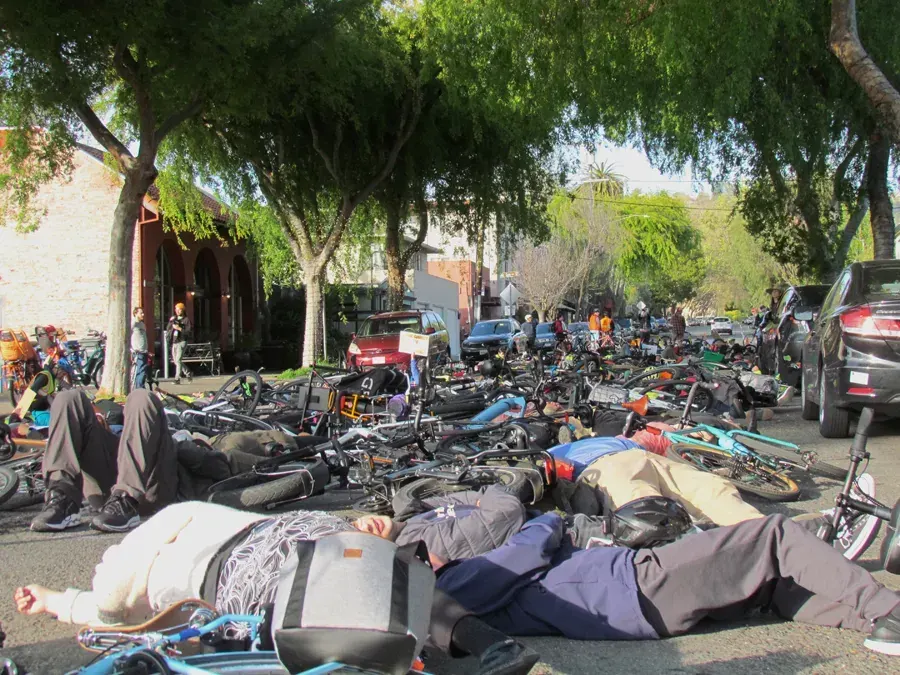
Berkeley City Council is set to vote today (28 July) on whether to proceed with protected bike lanes on a busy stretch of Hopkins Street, reviving a project that was paused years ago. The debate, which pits the loss of over 100 parking spaces against demands for safer routes to schools and the Ohlone Greenway, echoes a tension that London boroughs confront regularly: how to reconcile active travel infrastructure with the needs of residents who feel they cannot function without a car.
The proposed design, backed by advocacy groups Walk Bike Berkeley and North Berkeley Now, features one-way protected bike lanes on each side of Hopkins from The Alameda to Peralta, where they would connect to the Ohlone Greenway. It also includes painted bike lanes and traffic calming from The Alameda to Sutter, additional traffic calming from Peralta to San Pablo, and pedestrian safety and transit improvements. Advocates describe the switch from an earlier two-way cycle track as an improvement, but note that the lack of protection east of The Alameda and west of Peralta remains a disappointment.
Opposition centres on the removal of more than 100 on-street parking spaces, as reported by Berkeleyside. The San Francisco Chronicle’s Rachel Swan quoted residents who pointed out that many elderly people live in the area and depend on cars. “And they can’t all ride bikes,” one commenter said. Streetsblog SF, which carried the action alert, pushed back on the framing, arguing that the project is about safety, not forcing everyone onto two wheels.
More than 100 written public comments were submitted ahead of the vote. Robert Prinz of Bike East Bay summarised the range of fears: seniors in the hills worried about ageing in place after bus service cuts, parents concerned about children walking or cycling to school, and existing cyclists and car-free residents who already feel unsafe under the status quo.
Key facts
| Element | Detail |
|---|---|
| Location | Hopkins Street, Berkeley, California |
| Proposal | One-way protected bike lanes from The Alameda to Peralta, plus traffic calming and pedestrian improvements |
| Parking loss | Over 100 on-street spaces removed |
| Decision date | 28 July 2026 |
The climate resilience angle
The Berkeley debate is not merely a local parking dispute. Active travel infrastructure is a recognised tool for reducing transport emissions, improving air quality and building climate resilience. Every trip shifted from car to bicycle or foot cuts tailpipe CO₂ and particulate matter, while also reducing the heat-island effect of asphalt and the flood risk from impermeable surfaces. London’s own Transport Strategy targets 80 per cent of all trips to be made by walking, cycling or public transport by 2041, and the city’s Streetspace programme has installed hundreds of kilometres of temporary and permanent cycle lanes since 2020.
Yet London’s experience shows that the same clash between parking and protected lanes recurs ward by ward. The consultation on Cycle Superhighway 9 (CS9) between Kensington and Brentford, for example, drew strong opposition from residents who feared losing parking and access for elderly and disabled relatives. In Camden, the borough’s Active Travel Programme has been challenged by groups arguing that street changes penalise car-dependent households. The Berkeley vote is a live case study in a dilemma that London planners know intimately.
What the vote means
If the Berkeley council approves the referral, the project will move to detailed design, with further consultation and likely a more precise tally of parking loss. The vote itself is a political signal: whether the city is willing to accept the trade-offs required to build a coherent network of low-stress routes. For advocates, the Hopkins link is critical because it connects King Middle School, Saint Mary’s, Crowden, Ruth Acty Elementary, several daycares, the Gilman Street commercial strip and the Ohlone Greenway – a major north-south active travel corridor.
For London’s urbanist audience, the Berkeley case reinforces two lessons. First, the parking-vs-safety binary is false; the real choice is between a street that balances modes and one that prioritises car throughput at the expense of everyone else. Second, the political difficulty of reallocating road space means that projects often stall or are watered down, as happened in Berkeley when the original two-way cycle track was paused. London’s boroughs have seen similar delays: the planned cycle lane on the A10 in Hackney, for instance, was scaled back after a sustained campaign by local businesses and residents.
The ageing-in-place question
The strongest argument against the Berkeley plan is that older residents who cannot cycle rely on cars for essential trips. But the same residents also need safe streets to walk to shops, medical appointments and bus stops. The proposed design includes pedestrian safety improvements, which could help. London’s approach to “Healthy Streets” – as set out in the Mayor’s Transport Strategy – explicitly aims to make streets welcoming for people of all ages and abilities, whether they walk, wheel, cycle or take the bus. The Berkeley project is a test of whether a city can deliver on that principle when the numbers are tight.
Next steps for readers
The Berkeley council vote is expected later today. The outcome will be reported by local media, and the project’s future will depend on further design work and funding. London readers who want to follow similar debates in their own borough can check planning committee agendas, consultation portals and the London Datastore for active travel data. The Hopkins case is a reminder that street design is never just about paint and barriers – it is about who the city prioritises, and how it balances the needs of a diverse population against the climate imperative to reduce car dependence.
Source: Streetsblog SF, “Action Item: Last Chance to be Heard on Hopkins”, 28 July 2026. https://sf.streetsblog.org/2026/07/28/action-item-last-chance-to-be-heard-on-hopkins
Fuente
Streetsblog SF Publicacion original: 2026-07-28T17:16:11+00:00
Related updates

Why the predicted Portland ‘Carmaggedon’ never arrived — and what London can learn about traffic evaporation
A month-long closure of a mile-long section of I-5 in Portland was forecast to triple commute times. Instead, morning peak journeys increased…
Read update
What the fall of Angkor reveals about the risks of low-density urban sprawl
A new analysis of the fall of Angkor, the ancient Khmer capital, draws parallels between its sprawling, low-density infrastructure and the vulnerabilities…
Read update
Colorado Data Center Dispute Highlights Gap in Planning Rules and Community Oversight
A proposal for Colorado’s largest data centre in Aurora has sparked debate over planning rules that allow major developments to bypass public…
Read update
London procurement teams face mounting cost and compliance pressures, North American survey suggests
A survey of 100 public-sector procurement professionals across North America finds rising costs and compliance demands straining teams, with 46% still relying…
Read updateWiki relacionada

Urban Planning Terms: Density, Public Realm and Transit-Oriented Development
A living glossary for terms that appear again and again in planning and development stories.
Read update