
IIHS study finds Waymo robotaxis involved in 68% fewer crashes than human drivers – what it could mean for London
A new Insurance Institute for Highway Safety report shows Waymo self-driving vehicles had 68% fewer crashes than human drivers in comparable conditions. The findings arrive as London’s transport authorities continue to assess the safety case for autonomous vehicles on the capital’s streets.
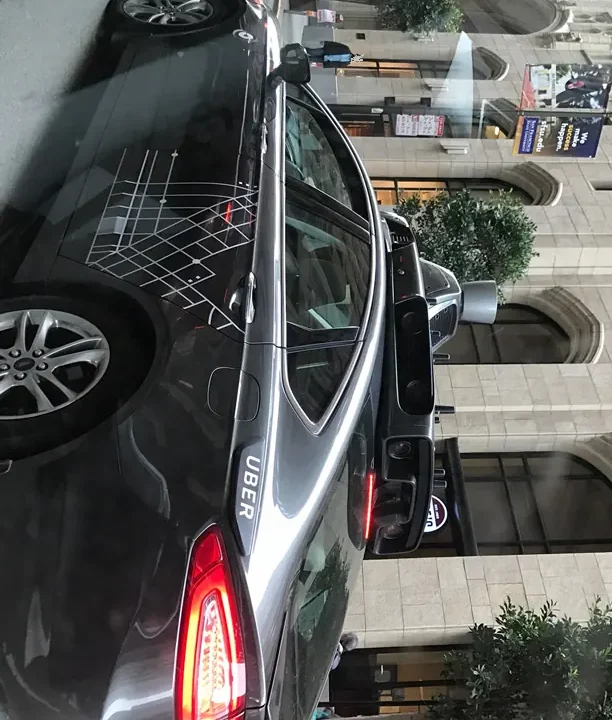
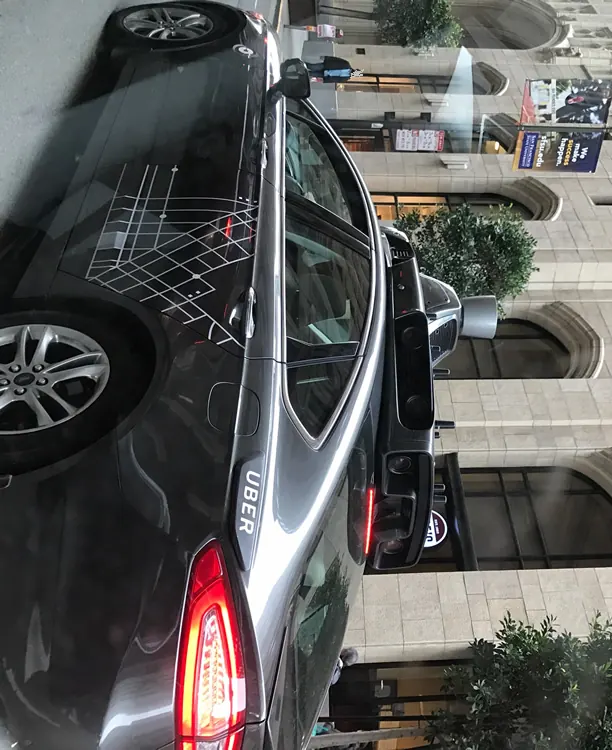
A new report from the Insurance Institute for Highway Safety (IIHS) has found that Waymo vehicles operating in fully self-driving mode were involved in 68% fewer crashes than human-driven vehicles under comparable traffic, road and weather conditions. The study, published on 28 July 2026, provides one of the most robust statistical comparisons yet between autonomous and human driving performance in real urban environments.
While the research is based on Waymo’s operations in Phoenix and San Francisco, its findings are being watched closely by transport planners and policy-makers in London, where the case for autonomous vehicles remains at an early but active stage. Transport for London and the Department for Transport have both signalled interest in the safety potential of self-driving technology, but no commercial robotaxi service currently operates in the capital.
IIHS findings on autonomous safety
The IIHS study analysed crash data from Waymo’s fleet over millions of miles of driverless operation and compared it with a benchmark of human-driver crash rates from national databases, adjusting for factors such as time of day, road type and weather conditions. The headline result: Waymo vehicles in autonomous mode had 68% fewer crash involvements than human drivers driving themselves in the same types of situations.
When the comparison was narrowed to crashes involving property damage or injury, the advantage was even larger. The IIHS noted that the safety gap was particularly pronounced in scenarios where human errors – such as distraction, speeding or failure to yield – are common. Waymo vehicles were also less likely to be at fault in the crashes they were involved in.
The report’s authors cautioned that the findings do not prove that autonomous vehicles are inherently safer across all contexts. Waymo’s operating area is limited to specific geographies with high-definition mapping and favourable weather. London’s dense, narrow streets, complex junctions and frequent rain could pose different challenges.
How the study compared Waymo to human drivers
The IIHS constructed what it called a “crash exposure framework” by matching Waymo’s operational data – including miles driven, road type, time of day and weather – to comparable human driver trips from the US national crash databases. This approach aimed to avoid comparing robotaxis on sunny suburban freeways with human drivers in downtown rush hour. Each Waymo crash was classified against a control set of human crashes under the same conditions.
| Key facts | Data |
|---|---|
| Crash reduction in Waymo AV mode vs human drivers | 68% fewer crash involvements |
| Source | Insurance Institute for Highway Safety (IIHS), July 2026 |
| Waymo operational areas (US) | Phoenix, Arizona; San Francisco, California; ongoing expansion |
| Applicability to London | No direct Waymo service; London’s street geometry and weather differ |
Autonomous vehicles in the UK context
The UK government has enacted the Automated Vehicles Act 2024, which created a legal framework for self-driving vehicles on British roads. The Department for Transport has indicated that safety must be demonstrated “to a high bar” before any deployment is approved. Transport for London has run limited trials of autonomous shuttle buses in the Queen Elizabeth Olympic Park and has explored the role of CAVs (connected and autonomous vehicles) in its Future Transport strategy, but no commercial robotaxi service has been authorised for London’s streets.
The IIHS report may provide a benchmark that UK regulators can use when assessing future applications from companies such as Waymo, which has expressed interest in UK expansion, or from British firms such as Oxa (formerly Oxbotica) and Wayve, which are testing autonomous systems in various UK locations. The 68% reduction figure could become a reference point in public consultations and policy papers on the acceptable risk level for automated taxis in a dense city like London.
What this means for London’s transport future
The safety case is only one of several hurdles. London’s transport network is shaped by its historic street layout, high pedestrian and cyclist volumes, and frequent roadworks. The IIHS study cannot directly predict how autonomous vehicles would perform in Marylebone Road’s bus traffic or in the narrow lanes of the City of London. TfL’s own research has emphasised that the introduction of AVs would require significant infrastructure adaptation, including digital kerbside management, updated traffic signals and clearer segregation of autonomous and conventional traffic.
Nevertheless, if the IIHS findings hold across other environments and with other operators, they would strengthen the argument that autonomous taxis could reduce the 30,000-plus casualties on London’s roads each year. Human error is a factor in the vast majority of road collisions in the capital. A technology that reduces crash involvement by two-thirds would represent a major public health gain, provided the risks specific to London’s street design can be managed.
Limitations and unanswered questions
The IIHS study is observational, not a controlled trial. Waymo’s vehicles are equipped with extensive sensor arrays and operate within a geofenced area with detailed digital maps. The study also does not address pedestrian and cyclist collisions separately – a critical concern for London, where pedestrians and cyclists account for a large share of serious injuries. Waymo has previously reported lower collision rates with pedestrians in its US cities, but independent verification for UK conditions is lacking.
Another limitation is that the human-driver baseline used in the IIHS study draws from US crash data. UK driving behaviour, road layouts and traffic enforcement differ, so the relative safety advantage could vary. TfL and the Department for Transport would need to commission their own comparison studies before any UK deployment decision.
No decision on a London robotaxi launch is imminent. The IIHS report provides a data point, not a policy conclusion, but it adds to the evidence base that autonomous vehicles can outperform human drivers on safety under suitable operating conditions.
Source: Smart Cities Dive, “Waymo robotaxis safer than human drivers: IIHS report”, 28 July 2026. https://www.smartcitiesdive.com/news/waymo-robotaxis-safer-than-human-drivers-iihs-report/826320/
Fuente
Smart Cities Dive Publicacion original: 2026-07-28T14:47:00+00:00
Related updates

Why the predicted Portland ‘Carmaggedon’ never arrived — and what London can learn about traffic evaporation
A month-long closure of a mile-long section of I-5 in Portland was forecast to triple commute times. Instead, morning peak journeys increased…
Read update
What the fall of Angkor reveals about the risks of low-density urban sprawl
A new analysis of the fall of Angkor, the ancient Khmer capital, draws parallels between its sprawling, low-density infrastructure and the vulnerabilities…
Read update
Colorado Data Center Dispute Highlights Gap in Planning Rules and Community Oversight
A proposal for Colorado’s largest data centre in Aurora has sparked debate over planning rules that allow major developments to bypass public…
Read update
London procurement teams face mounting cost and compliance pressures, North American survey suggests
A survey of 100 public-sector procurement professionals across North America finds rising costs and compliance demands straining teams, with 46% still relying…
Read updateWiki relacionada

Urban Planning Terms: Density, Public Realm and Transit-Oriented Development
A living glossary for terms that appear again and again in planning and development stories.
Read update