
Los Angeles bike lane removal for light rail: a cautionary tale for London’s transit expansion
A new bikeway on Terra Bella Street in Los Angeles partially replaces lanes removed from Van Nuys Boulevard during light rail construction. The swap reduces total protected lane-miles and leaves cyclists without a direct connection to the new station. London’s own rail expansion projects may benefit from examining the
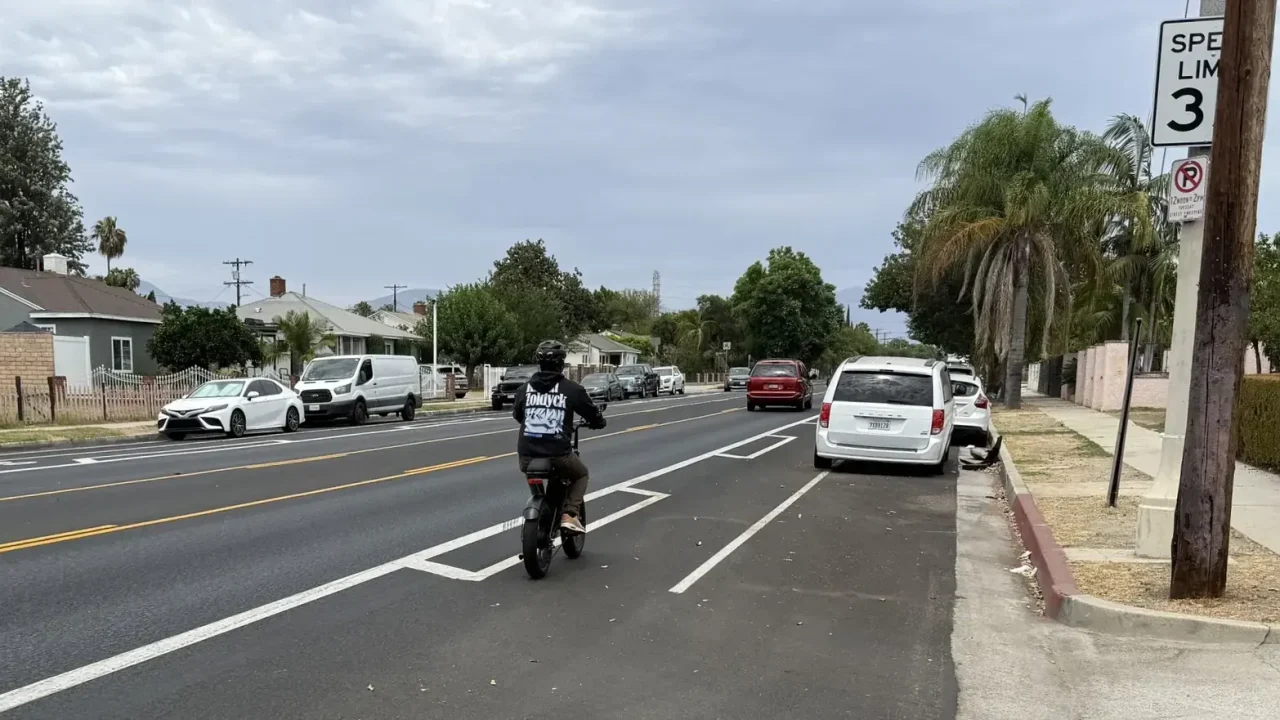
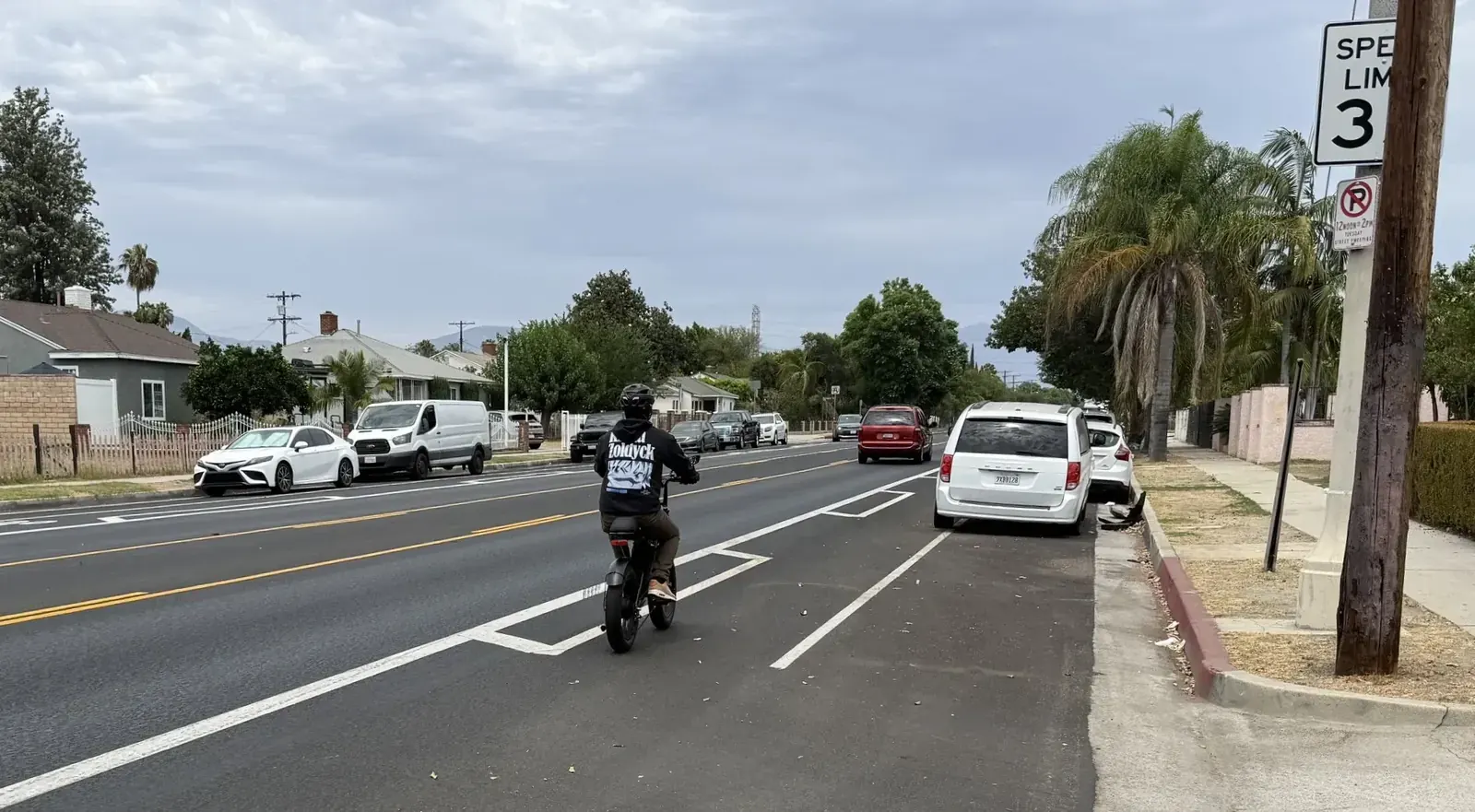
Los Angeles is removing 5.6 lane-miles of cycle lanes from Van Nuys Boulevard to make room for car travel lanes and on-street parking during the construction of Metro’s East San Fernando Valley light rail line. The replacement bikeway, installed on the parallel Terra Bella Street, offers just 4.8 lane-miles – all unprotected – and stops one block short of the new rail station at Nordhoff Street. The outcome, reported by Streetsblog LA, highlights a recurring tension in urban transport: whether to prioritise car capacity or maintain and improve cycling infrastructure when building new public transit.
For London, where similar questions arise during the expansion of the London Overground, the Elizabeth line and proposed extensions such as the Bakerloo line, the Los Angeles case offers a practical warning. If the goal is to increase sustainable travel, the removal of cycle lanes without adequate replacement risks undermining the first/last-mile connectivity that makes rail attractive to people who do not live within walking distance of a station.
The Van Nuys–Terra Bella swap
The Van Nuys Boulevard bike lanes were partially protected. The new Terra Bella bikeway is entirely unprotected, meaning cyclists share the street with motor traffic without a physical barrier. The width of Terra Bella varies, and in some sections the city has repurposed a car travel lane – a road diet – to add the bike lane. In other sections the lane is buffered but not separated.
The project’s most striking shortfall is the missing connection to the new light rail station. The bikeway ends at San Fernando Road, one block short of Nordhoff Street, where the station is located. That gap forces cyclists to navigate a major intersection that has already seen fatal and serious injury crashes. In March 2025 a person died at the San Fernando Road–Terra Bella intersection; in January 2026 a serious injury crash occurred at the same location. In December 2025, a hit-and-run driver on Terra Bella at Woodman Avenue killed three people.
Metro and the Los Angeles Department of Transportation (LADOT) have stated that the lane removal is necessary to retain car travel lanes and on-street parking along the light rail corridor. The underlying premise, as Streetsblog notes, is anti-bicycle: the agencies do not see bikeways as compatible with light rail, and instead favour car capacity near stations.
Key facts
| Metric | Value |
|---|---|
| Lane-miles removed from Van Nuys Boulevard | 6 (0.9 protected) |
| Lane-miles added on Terra Bella Street | 8 (all unprotected) |
| Gap between bikeway and Nordhoff Street station | 1 block (San Fernando Road) |
| Fatal crashes at San Fernando Road–Terra Bella intersection since March 2025 | 1 fatal, 1 serious injury, plus 3 deaths in December 2025 hit-and-run |
What this means for transport planning
The Los Angeles case illustrates a design choice that is not unique to California. When a city builds a new rail line, it must decide how to reallocate street space. Retaining car lanes and parking at the expense of cycling infrastructure signals that the primary mode remains private vehicles. The consequence is a cycle network that is fragmented, lower in quality, and disconnected from the transit it is meant to feed.
For London, the comparison is instructive. Transport for London (TfL) has committed under the Mayor’s Transport Strategy to increase the proportion of trips made by cycling, walking and public transport. Major projects such as the extension of the London Overground to Barking Riverside, the upgrade of the Piccadilly line, and the proposed Bakerloo line extension require careful street-space reallocation. TfL’s Cycle Superhighway programme and the newer cycleways have been integrated into some station areas, but not always seamlessly.
The Van Nuys–Terra Bella experience suggests that without a clear policy to protect and enhance cycling during transit construction, the default outcome is a net loss for cyclists. In London, the removal of the segregated cycle lane on the A23 during the Croydon Tramlink upgrade in the early 2000s – and its eventual replacement with a lower-quality facility – is a domestic example of the same pattern. More recently, the redesign of the A12 corridor in East London has seen debates about cycle lane continuity during bus priority works.
First/last mile and station access
The missing connection in Los Angeles is a classic first/last mile failure. Cyclists arriving at the Nordhoff Street station will have to ride on a high-speed arterial road without dedicated infrastructure. In London, TfL has invested in cycle parking and cycle hire at many stations, but the quality of the approach routes varies. The Cycle Superhighway to the new Elizabeth line stations at Liverpool Street, Paddington, and Canary Wharf are generally high quality, but other stations, particularly in outer boroughs, rely on quieter roads or shared paths.
The Van Nuys case shows that a bikeway that does not reach the station entrance is of limited use. London’s current projects, such as the extension of the Docklands Light Railway to Thamesmead or the proposed West London Orbital rail line, will need to ensure that cycle routes are not terminated short of the station.
Road safety context
The safety record on Terra Bella Street is a further concern. The new bikeway passes through an area that has seen multiple fatal crashes. Unprotected bike lanes on a road with a history of serious collisions do not provide the level of safety that separated infrastructure would. In London, the adoption of the Vision Zero target has led to design standards that favour physical separation on roads with speed limits above 30 mph. The Van Nuys–Terra Bella bikeway, at least in its current form, would not meet London’s current cycle infrastructure design standards.
What London can take away
The Los Angeles case is not a direct parallel because London’s governance and transport agencies are different, and the political context of car parking and travel lanes is less dominant in central London. However, the underlying dynamic – that building light rail can lead to a reduction in cycling capacity if not actively managed – is relevant. Transport planners, borough officers, and campaign groups in London should monitor the Van Nuys–Terra Bella outcome as a real-world test of what happens when bikeways are treated as optional rather than integral to a transit project.
Source: Streetsblog LA, “New Terra Bella Bike Lanes Partially Replacing Van Nuys Bike Lanes”, 27 July 2026, https://la.streetsblog.org/2026/07/27/new-terra-bella-bike-lanes-partially-replacing-van-nuys-bike-lanes. London context draws on the Mayor’s Transport Strategy (2018) and general TfL design standards. No direct London project data was sourced for this comparison.
Fuente
Streetsblog LA Publicacion original: 2026-07-28T00:48:33+00:00
Related updates

Why the predicted Portland ‘Carmaggedon’ never arrived — and what London can learn about traffic evaporation
A month-long closure of a mile-long section of I-5 in Portland was forecast to triple commute times. Instead, morning peak journeys increased…
Read update
What the fall of Angkor reveals about the risks of low-density urban sprawl
A new analysis of the fall of Angkor, the ancient Khmer capital, draws parallels between its sprawling, low-density infrastructure and the vulnerabilities…
Read update
Colorado Data Center Dispute Highlights Gap in Planning Rules and Community Oversight
A proposal for Colorado’s largest data centre in Aurora has sparked debate over planning rules that allow major developments to bypass public…
Read update
London procurement teams face mounting cost and compliance pressures, North American survey suggests
A survey of 100 public-sector procurement professionals across North America finds rising costs and compliance demands straining teams, with 46% still relying…
Read updateWiki relacionada

Urban Planning Terms: Density, Public Realm and Transit-Oriented Development
A living glossary for terms that appear again and again in planning and development stories.
Read update