
What London can learn from Jakarta’s bike-share revival push
Jakarta’s bike-share vanished in 2022 despite clear demand. As the city plans a comeback, the lessons for London’s own first‑ and last‑mile challenge are worth examining.
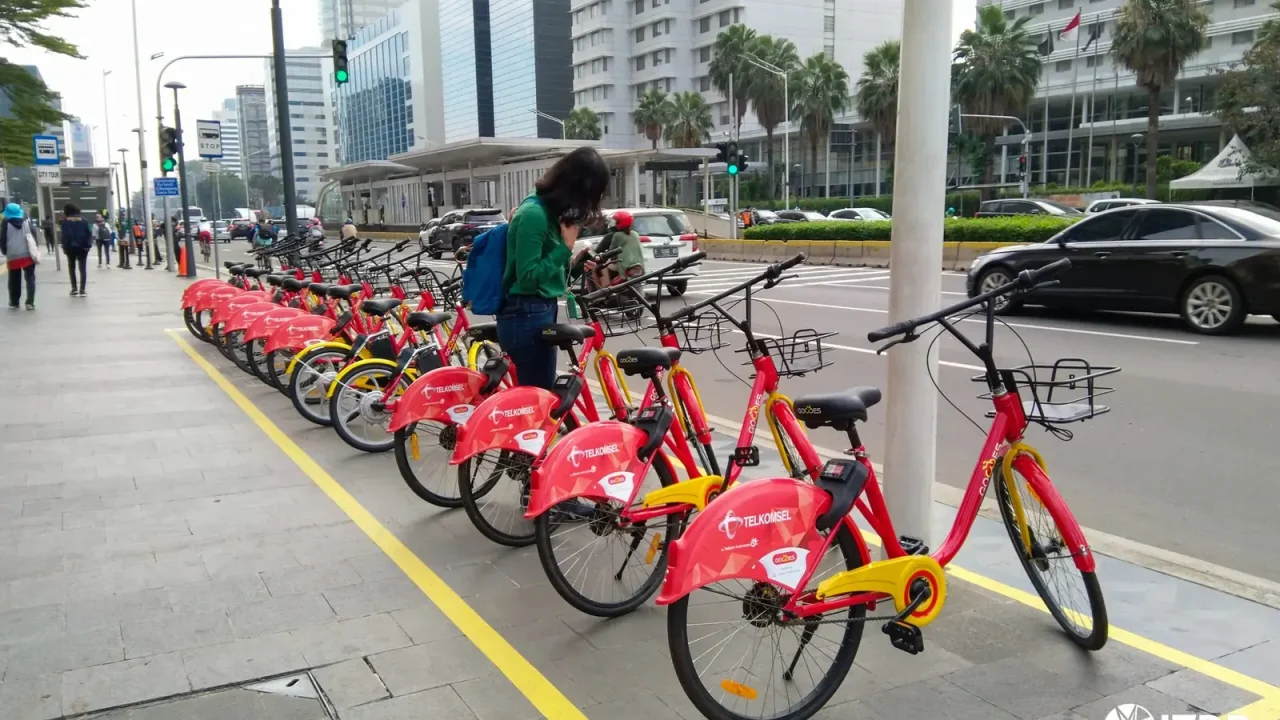
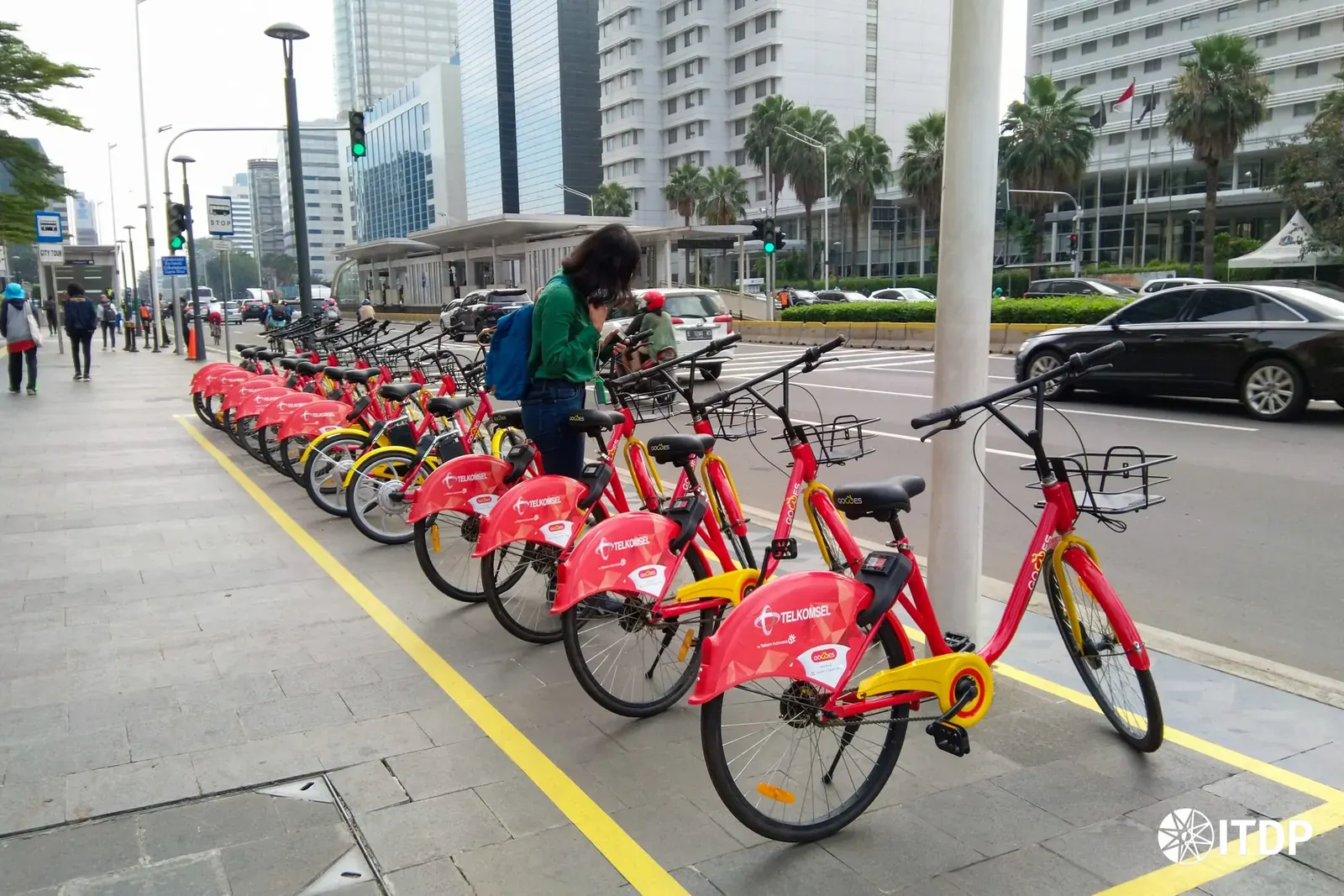
Bike‑share systems are often promoted as a solution to the “first‑ and last‑mile” problem that stops people using public transport. But Jakarta’s recent experience shows how quickly a well‑intentioned scheme can collapse when policy, infrastructure and business models are not aligned. As the Indonesian capital prepares to relaunch bike‑share as part of an integrated mobility network, the story offers a practical caution for London, where the Santander Cycles scheme is a central fixture but still faces its own coverage and integration gaps.
London’s bike‑share in context
Transport for London’s Santander Cycles scheme has been operating since 2010, with roughly 11,000 bikes and 800 docking stations concentrated in central London. The system has become a familiar part of the city’s transport mix, used for short trips, commuting and leisure. TfL has been exploring expansion to outer boroughs, including dockless e‑bike trials, and the Mayor’s Transport Strategy sets a target of 80 per cent of all trips made by sustainable modes by 2041.
Yet the first‑ and last‑mile gap remains a persistent barrier. Many rail and Tube stations in outer London are not within easy walking distance of homes or workplaces, and the existing bike‑share network does not serve them. A 2023 TfL report on the “cycle hire network” noted that expanding coverage could help shift car trips to public transport, but that funding, dock‑space availability and infrastructure quality were all constraints. The core challenge is familiar: making the journey to and from a station as convenient as driving door‑to‑door.
Jakarta’s cautionary tale
Jakarta’s bike‑share story is a stark example of what happens when those constraints are not addressed. For a few years, shared bicycles were available in the city, offering an affordable way to cover short distances and connect to Transjakarta buses, MRT and LRT. By the end of 2022, however, the service had disappeared. An ITDP Indonesia survey that year found that nearly half of respondents wanted to use bike‑share for daily activities such as commuting, shopping or visiting places of worship – not just for recreation. Demand was clearly there.
The problems were systemic. Users reported damaged bicycles, unreliable payment systems, limited station coverage and inconsistent service quality. Operators faced financial pressures and technological challenges. The city’s bike‑share regulation was only finalised in August 2022, after operators had already shut down. Meanwhile, protected bike lanes deteriorated as physical barriers were removed, and roadworks fragmented cycling routes, undermining confidence in the safety of urban cycling.
Jakarta’s public transport network has expanded dramatically in the past decade: around 91 per cent of the province now lies within a five‑ to ten‑minute walk of a public transport stop. Yet the mode share for public transport remains only about 22 per cent, far below the provincial government’s goal of 60 per cent by 2029. The gap between transit coverage and actual use is exactly the space that bike‑share is meant to fill.
Key facts
| Aspect | Jakarta | London |
|---|---|---|
| Bike‑share status | Ended 2022, revival planned | Operating since 2010, ~11,000 bikes, 800 stations |
| Public transport mode share | 22% (goal 60% by 2029) | ~40% of all trips (2019 data) |
| First‑/last‑mile coverage | 91% within 5‑10 min walk of transit | Varies by borough; outer London underserved |
| Regulatory timing | Regulation finalised after operators exited | Continuous TfL oversight, public‑private sponsorship |
Policy and infrastructure lessons
Jakarta’s experience highlights three conditions that London’s planners and transport officials should keep in mind as they consider expanding bike‑share.
First, policy must precede or accompany operations, not follow them. Jakarta’s regulatory framework was put in place after the market had collapsed. In London, TfL’s oversight has been steady, but as the network expands to new boroughs, each locality will need clear rules on dockingstations, parking, data sharing and liability – especially if dockless and e‑bike options are added.
Second, cycling infrastructure cannot be allowed to degrade. Jakarta’s protected bike lanes lost their physical barriers and were cut by roadworks, making cycling less safe. London’s cycling network, while growing, still has gaps and inconsistent protection. The quality of the route to and from a bike‑share station directly affects whether people will use it, especially for women, older riders and those new to cycling.
Third, bike‑share must be integrated with public transport fares and information. In Jakarta, the system was not connected to transit ticketing or real‑time journey planning. London already benefits from contactless payment and the Oyster system, but bike‑share is still a separate product. Integrating the cost of a Santander Cycles trip into a single fare for a journey combining train, bus and bike would remove a barrier to seamless multimodal travel.
What London can take away
The Jakarta case is not a direct parallel: London’s bike‑share has not collapsed, and TfL’s public‑sector backing provides a degree of stability that Jakarta’s private‑operator model lacked. But the warning about relying on standalone operations without sustained policy support, infrastructure investment and integration with the wider transport network is universal.
As TfL pushes forward with its “Cycle Hire Expansion” programme and considers new partnerships for dockless e‑bikes, the city has a chance to avoid the same trap. The goal should not be more bikes for their own sake, but a system that makes it genuinely easier to leave the car at home for the whole journey – from door to station, and from station to destination.
Source: Institute for Transportation and Development Policy (ITDP), “In Jakarta, Reviving Bike-Share Is Key to Boosting Public Transport”, July 2026. https://itdp.org/2026/07/27/in-jakarta-reviving-bike-share-is-key-to-boosting-public-transport/
Fuente
ITDP Publicacion original: 2026-07-27T20:44:23+00:00
Related updates

Why the predicted Portland ‘Carmaggedon’ never arrived — and what London can learn about traffic evaporation
A month-long closure of a mile-long section of I-5 in Portland was forecast to triple commute times. Instead, morning peak journeys increased…
Read update
What the fall of Angkor reveals about the risks of low-density urban sprawl
A new analysis of the fall of Angkor, the ancient Khmer capital, draws parallels between its sprawling, low-density infrastructure and the vulnerabilities…
Read update
Colorado Data Center Dispute Highlights Gap in Planning Rules and Community Oversight
A proposal for Colorado’s largest data centre in Aurora has sparked debate over planning rules that allow major developments to bypass public…
Read update
London procurement teams face mounting cost and compliance pressures, North American survey suggests
A survey of 100 public-sector procurement professionals across North America finds rising costs and compliance demands straining teams, with 46% still relying…
Read updateWiki relacionada

Urban Planning Terms: Density, Public Realm and Transit-Oriented Development
A living glossary for terms that appear again and again in planning and development stories.
Read update