
Sound Transit’s Maintenance-Frequency Trade-off: A Lesson for London’s Tube Planning
Seattle’s Sound Transit proposes cutting light rail hours to expand maintenance windows, dropping a route segment and adjusting bus frequencies. The plan echoes a perennial London challenge: how to keep the Tube running while finding time to repair the track. We examine the parallels and what London’s transport planner
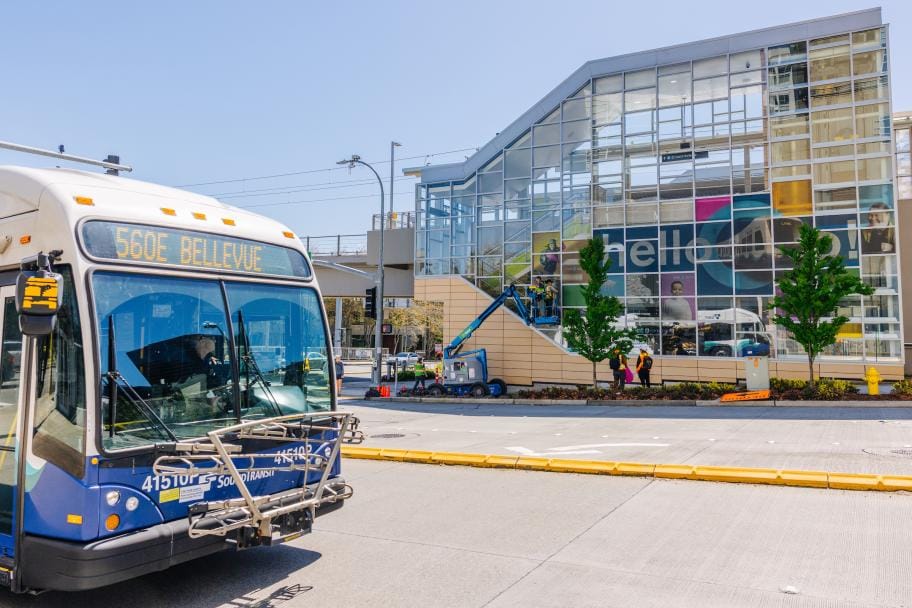
Seattle’s transit agency, Sound Transit, has opened a public survey on a draft 2027 service plan that could curtail light rail running hours, truncate a bus route and adjust frequencies – all in the name of longer maintenance windows. The proposal, which includes ending night-time light rail service earlier or starting later, mirrors a tension familiar to Transport for London (TfL): how to keep trains running reliably while carving out enough time for essential track and signal repairs.
For London urbanism readers, the Sound Transit consultation offers a case study in the trade-offs between service span and system resilience. TfL faces similar pressures on the London Underground, where weekend closures, earlier last trains and occasional whole-line suspensions are used to give engineers access to ageing infrastructure. The Sound Transit plan, though specific to the Puget Sound region, highlights decisions that affect every transit agency that runs a high-frequency metro service.
What Sound Transit is proposing
Sound Transit’s draft 2027 service plan makes several concrete changes. The highest-profile element is a potential reduction in Link light rail operating hours to create larger maintenance windows. The agency is evaluating options such as ending night-time service earlier, starting later, scheduling more frequent weekend segment closures, or closing individual tracks during certain hours. A night bus service could replace the late-night Link trains, offering slower but continuous coverage.
On the bus side, Route 560 (West Seattle–Bellevue) would be truncated at Burien Transit Center, removing the segment between Westwood Village and Burien. That cut allows doubling weekend frequencies to every 30 minutes and boosting weekday service to every 20 minutes during the day. The eliminated segment is already shadowed by King County Metro’s RapidRide H Line, which runs every 15 minutes or better on weekdays and weekends. The truncation also sets the stage for the Stride S1 bus rapid transit line, planned for 2028.
Other proposals include a new freeway bus stop pair on I-405 at NE 85th Street in Kirkland (served by Routes 532 and 535), a slight realignment of Route 545 in Redmond to connect with the Downtown Redmond Link 2 Line station, and the elimination of extended early-morning and late-night service to Downtown Everett on Routes 510 and 512.
The survey closes on 26 July 2026. Sound Transit will present a final plan to its board in September, with implementation expected in spring and autumn 2027.
London’s parallel: the Tube maintenance squeeze
The core dilemma Sound Transit faces – expanding maintenance windows while minimising disruption – is a constant in London. The London Underground operates on a possession regime that grants engineers access to track, signals and power systems during the few hours each night when trains are not running. On the Piccadilly, Central and Northern lines, that window is typically between 1:00 and 5:00 a.m. – tight for major renewal work.
TfL has used several strategies to buy more time. Weekend line closures, such as those on the Metropolitan line for the upgrade of the Chiltern route, are common. In 2023, TfL introduced earlier last trains on the Central and Victoria lines to allow longer maintenance blocks. The Night Tube, suspended during the pandemic, returned on the Central and Victoria lines in 2023 but remains absent on the Jubilee, Northern and Piccadilly lines – partly because of the difficulty of maintaining those lines overnight.
Sound Transit’s proposal to replace late-night Link service with a bus is analogous to TfL’s rail replacement bus services, which are used during planned closures. The difference is that Sound Transit is contemplating a permanent reduction in operating hours, not a temporary closure. London has not gone that far, but the pressure is mounting: the Elizabeth line, which runs 24 hours on weekends, has faced demands for maintenance time that may force a review of its all-night service.
Consultation and public engagement
Sound Transit is asking riders to prioritise between service span and reliability. The survey asks users to weigh the impact of earlier last trains, later starts, and more frequent weekend closures. This is a model that London’s transport planners could watch closely. TfL’s own consultations on service changes – such as the 2023 proposal to reduce Night Tube frequencies – often generate strong public reaction, but detailed trade-off questions are rare.
The Sound Transit process is also notable for its transparency: the agency publishes a draft plan, a survey, and a timeline for board adoption. London has a similar approach through TfL’s Have Your Say portal, but the scope of consultation on maintenance-related service changes is often narrower. The Sound Transit example may encourage campaigners in London to push for more explicit trade-off questions in future consultations on Tube service changes.
Key facts
| Element | Sound Transit (2027 plan) | TfL (London Underground) |
|---|---|---|
| Maintenance window strategy | Reduce light rail hours, use night buses | Weekend closures, earlier last trains, rail replacement buses |
| Bus route truncation | Route 560 cut at Burien, boosted frequency | TfL has truncated routes (e.g., Route 38) to improve reliability, but less common |
| Consultation format | Draft plan + survey open 26 days | TfL’s Have Your Say portal, often longer windows |
| Implementation timeline | Spring/autumn 2027 | Ongoing, with periodic service change dates |
What this means for London
The Sound Transit plan is a direct reminder that every fast-growing city with a modern rail system must confront the tension between service frequency and maintenance time. London’s Underground is older and more complex, but the underlying maths is the same: trains need to stop running so that tracks can be fixed.
For London’s transport planners, the key takeaway may be the value of explicit public engagement on trade-offs. Sound Transit is not hiding the fact that it needs more maintenance time; it is asking riders to help choose how to find it. TfL could adopt a similar approach when it next reviews Night Tube service or plans major renewals on the Piccadilly, Bakerloo or Central lines.
For residents and transport users, the Sound Transit story is a useful benchmark. If you ride the Tube late at night or on weekends, the likelihood of a closure or rail replacement bus is not an accident – it is a deliberate choice to keep the system safe. The question is whether that choice is made openly, with public input, or behind closed doors.
Source: The Urbanist, “Sound Transit Asks Riders to Weigh In on 2027 Service Plan,” 24 July 2026, https://www.theurbanist.org/sound-transit-asks-riders-to-weigh-in-on-2027-service-plan/. Additional context from TfL’s published service change records and general knowledge of London Underground maintenance practices.
Fuente
The Urbanist Publicacion original: 2026-07-24T15:32:52+00:00
Related updates
US mayors rank housing affordability as top crisis as costs squeeze cities
A new survey from the US Conference of Mayors finds affordable housing leading city leaders’ concerns as the rising cost of living…
Read update
Seattle School Board Member Challenges Washington State MAGA-Backed Initiatives
Seattle School Board member Joe Mizrahi has issued a detailed critique of three Washington State ballot initiatives funded by a hedge fund…
Read update
Lessons from Los Angeles: How housing policies can deter new development – a cautionary tale for London
Los Angeles developers are scaling back projects despite huge housing demand, blaming pandemic-era rent protections and a mansion tax that encourages small-scale…
Read update
Uber’s $10B robotaxi bet signals a shift in urban mobility, but London’s streets remain a different arena
Uber has announced a $10 billion investment in autonomous vehicles, intensifying the robotaxi race with Waymo, Zoox and Tesla. For London, the…
Read updateWiki relacionada

Urban Planning Terms: Density, Public Realm and Transit-Oriented Development
A living glossary for terms that appear again and again in planning and development stories.
Read update