
Bus-mounted enforcement cameras cut travel times up to 6%: what SEPTA’s data means for London
Philadelphia’s AI-powered bus lane cameras have issued over 180,000 tickets in a year, reducing travel times by 3–6% on equipped routes. As TfL reviews its own enforcement toolkit, the SEPTA results offer a rare real-world measure of what bus-mounted cameras can achieve.
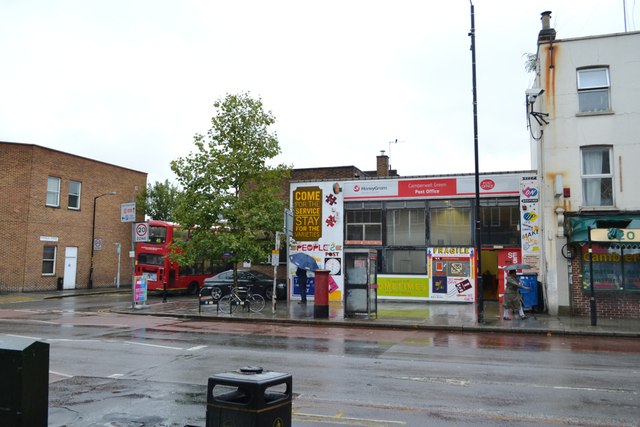
Transport for London has long relied on fixed and mobile cameras to keep bus lanes clear, but data from Philadelphia now provides a rare quantified benchmark for a newer approach: cameras mounted directly on buses. In the first year of full operation, the Southeastern Pennsylvania Transportation Authority (SEPTA) issued over 180,000 citations, recorded $14.5 million in fines, and saw travel times shorten by 3% to 6% on equipped routes, according to reporting by Mike D’Onofrio in Axios.
The results, based on the first 12 months of enforcement after cameras were installed on 152 buses serving routes across Philadelphia (including Center City), offer a concrete case study for London’s bus operators and local authorities who are weighing whether to expand bus-mounted camera enforcement beyond existing pilots.
Por que importa
Key facts
| Metric | SEPTA camera programme (May 2025 – May 2026) |
|—|—|
| Buses equipped with cameras | 152 |
| Citations issued | Over 180,000 |
| Total fines | $14.5 million (approx. £11.6 million) |
| Collection rate | Around 68% ($9.8 million collected) |
| Travel time reduction | 3% to 6% on camera-equipped routes |
Philadelphia’s experience
SEPTA’s system uses AI-powered cameras to detect vehicles blocking bus lanes. The cameras are forward-facing, capturing images of the road ahead and automatically issuing citations when a non-authorised vehicle occupies the lane during restricted hours. The programme began issuing citations in May 2025, after a period of warning notices. The enforcement is not static – it moves with the bus, covering the entire route rather than a fixed point.
Contexto
The travel time improvements are notable, even if modest in percentage terms. A 3–6% cut on a 20-minute bus journey translates to roughly 36–72 seconds saved per trip. Over the course of a day, that adds up to significant schedule reliability gains. SEPTA believes the cameras are “improving both customer travel times and safety along these routes,” the agency stated, while still studying long-term impacts.
The fine revenue is substantial but less than the maximum possible: 68% collection rate is comparable to many UK fixed-penalty regimes, where a portion of fines remain unpaid or are contested.
How it works
Unlike fixed cameras at a single junction, bus-mounted cameras enforce along the entire corridor. They can catch drivers who duck into a bus lane for a few hundred metres and then re-enter general traffic – a pattern that fixed cameras miss. The AI component helps reduce false positives by distinguishing between authorised vehicles (buses, taxis, cycles, emergency vehicles) and prohibited ones. SEPTA’s cameras are on 152 buses, covering about 100 routes, though the programme is gradually being expanded.
The enforcement model is similar to what TfL has trialled on a limited scale. London already operates a mix of fixed bus lane cameras (enforced by TfL and boroughs) and some mobile enforcement vans, but bus-mounted cameras remain less common. A small number of London buses have been fitted with forward-facing cameras for enforcement on routes such as the 38, but the technology is not yet a standard fixture across the network.
Relevance to London
London’s bus network is one of the most heavily enforced in the world, with bus lane penalty charge notices (PCNs) running into millions annually. But enforcement gaps remain. Bus lanes on secondary roads, outside central London, or on routes with frequent turning movements are often poorly covered. Bus-mounted cameras offer a way to extend enforcement without investing in new fixed infrastructure on every kerb.
The SEPTA data is directly relevant to TfL and London boroughs in three respects:
Travel time reliability – even small improvements matter when bus schedules are tight. London buses already face delays from general traffic congestion; bus-mounted cameras can help maintain lane integrity, especially in high-traffic corridors.
2. Fine collection rates – SEPTA’s 68% collection rate is a realistic benchmark. London’s PCN enforcement has historically been higher (around 80–85% for bus lane contraventions), but the comparison is useful when assessing return on investment for mobile enforcement.
3. AI accuracy – the AI component reduces the burden on human review. TfL’s existing enforcement relies on a combination of automatic number plate recognition (ANPR) and manual verification; a similar AI-assisted camera could reduce processing time.
Several London boroughs, including Camden, Islington and Haringey, have expressed interest in bus-mounted cameras as part of their bus priority plans. However, no decision has been announced by TfL to roll out the technology at scale. The SEPTA results may strengthen the case for pilots, especially on routes with chronic bus lane violations.
Caveats and context
The SEPTA programme is still young, and its long-term effectiveness is not yet proven. Travel time gains may diminish as drivers learn where cameras are present (since the cameras move with the bus, drivers cannot predict them as easily as fixed sites). However, the novelty advantage – a driver being caught by a camera on a bus rather than a lamppost – may sustain enforcement effectiveness for longer.
London also differs from Philadelphia in enforcement powers: TfL has the power to issue PCNs to vehicles that contravene bus lanes, but the legal framework, penalty amount and appeals process are different. The UK’s Traffic Management Act 2004 provides the basis for civil enforcement, and TfL already uses a mix of camera types. The main barrier is not legal but financial and logistical: fitting cameras to thousands of buses, training operators, and processing citations.
The source for this analysis is the Axios article “SEPTA’s AI-powered cameras generated $14.5M in fines in the first year” (published 21 July 2026) and the Planetizen summary of that reporting. London Urbanism Desk has not independently verified SEPTA’s data, but the figures are drawn from official agency statements cited in the Axios piece.
Source: Planetizen News – SEPTA’s bus-mounted lane enforcement cameras cut travel times by up to 6% (23 July 2026)
Datos clave
| Punto | Detalle |
|---|---|
| Fuente | Planetizen News |
| Fecha | 2026-07-23T13:00:00+00:00 |
| Tema | SEPTA's bus-mounted lane enforcement cameras cut travel times by up to 6% |
Fuente
Planetizen News Publicacion original: 2026-07-23T13:00:00+00:00
Related updates

US mayors rank housing affordability as top crisis as costs squeeze cities
A new survey from the US Conference of Mayors finds affordable housing leading city leaders’ concerns as the rising cost of living…
Read update
Seattle School Board Member Challenges Washington State MAGA-Backed Initiatives
Seattle School Board member Joe Mizrahi has issued a detailed critique of three Washington State ballot initiatives funded by a hedge fund…
Read update
Lessons from Los Angeles: How housing policies can deter new development – a cautionary tale for London
Los Angeles developers are scaling back projects despite huge housing demand, blaming pandemic-era rent protections and a mansion tax that encourages small-scale…
Read update
Uber’s $10B robotaxi bet signals a shift in urban mobility, but London’s streets remain a different arena
Uber has announced a $10 billion investment in autonomous vehicles, intensifying the robotaxi race with Waymo, Zoox and Tesla. For London, the…
Read updateWiki relacionada

Urban Planning Terms: Density, Public Realm and Transit-Oriented Development
A living glossary for terms that appear again and again in planning and development stories.
Read update