
Seattle’s World Cup streets debate offers London a transport-event checklist
A Seattle urbanism analysis argues that tournament-era public realm and transit gains should not disappear after the final whistle. For London, the useful comparison is how major events can test pedestrian space, bus and rail capacity, and access to city-centre venues.
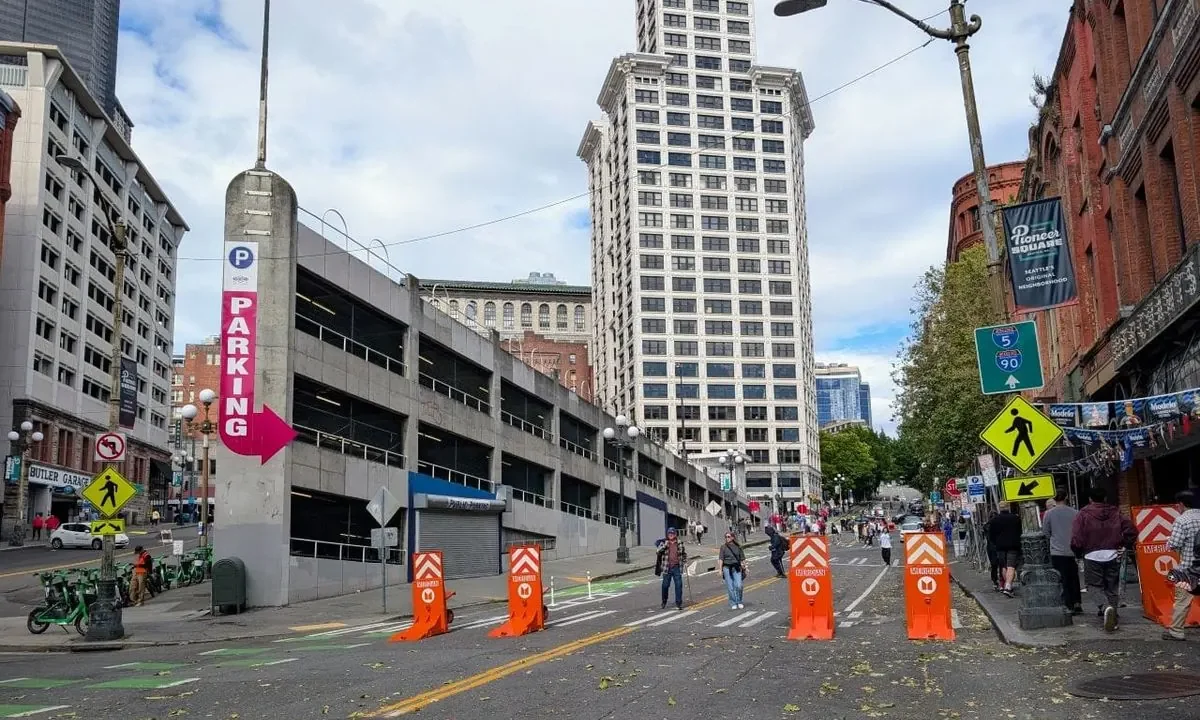
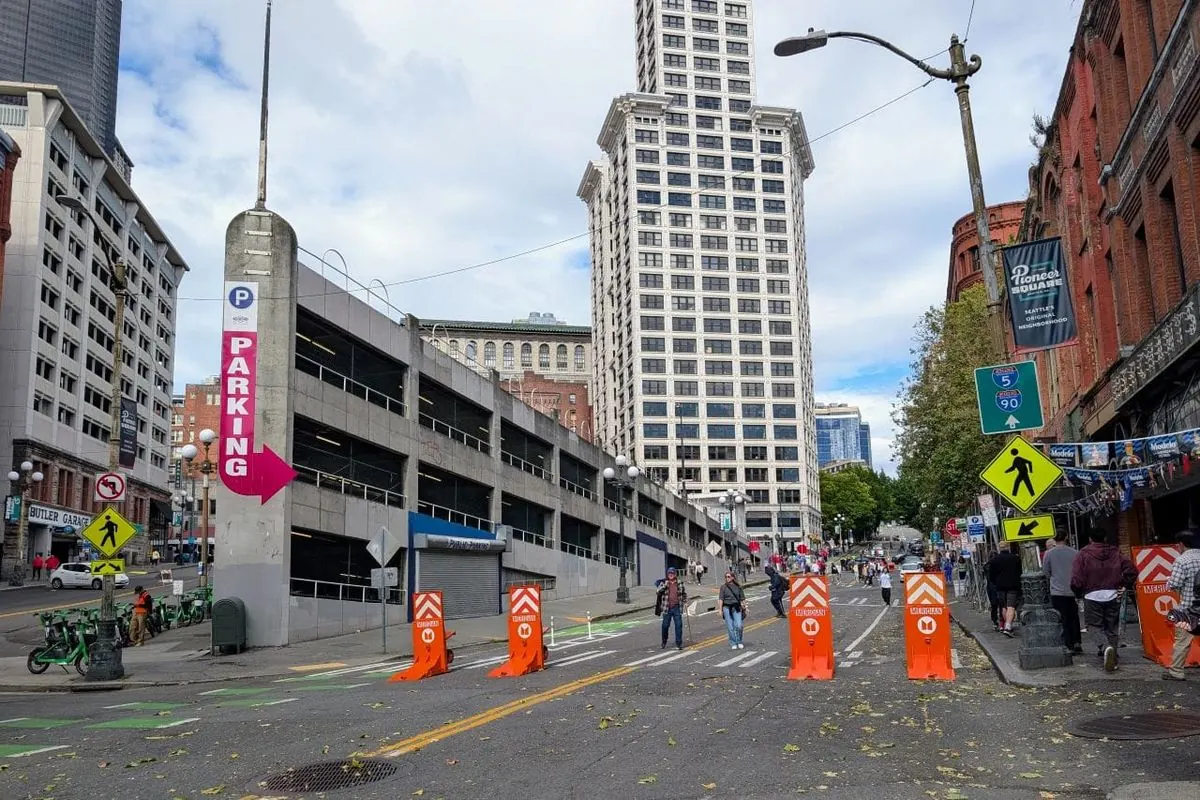
A Seattle urbanism article has argued that the city should treat its successful World Cup hosting experience as a reason to make more permanent changes to streets, transit and public space — a comparison that is relevant for London only as a transport and public-realm checklist, not as a local policy announcement.
The Urbanist’s piece, published on 22 July, responds to comments attributed to Seattle Mayor Katie Wilson after the tournament. It says the city’s event-time measures showed the value of pedestrian-focused streets, stronger transit service, downtown housing and public spaces that can absorb large crowds without relying primarily on private cars.
For London readers, the useful question is narrower: when a city proves during a major event that more people can move through central places by rail, bus, walking and temporary street management, what evidence is needed before those temporary arrangements become permanent policy?
This is not a London decision
The Seattle article is analysis from a specialist urbanism publication. It is not a Transport for London announcement, a London borough consultation, a GLA policy change or a UK planning decision.
That distinction matters. The piece does not establish any change to London transport services, street layouts, event management, crowd safety rules or planning policy. It does, however, identify a familiar urbanism pattern: major events often create short windows in which cities test street closures, crowd routing, public transport priority, public-realm programming and reduced parking reliance.
London has long experience with major events, football crowds, stadium access and ceremonial or cultural gatherings. But any London application would need to be checked against official sources: TfL operating data, borough traffic orders, event-management plans, safety advisory group documents, planning committee papers and public consultation material.
Key facts
| Point | What is known from the source |
|---|---|
| Source type | Specialist urbanism analysis from The Urbanist, focused on Seattle after the World Cup |
| Main claim | Seattle should carry forward event-time gains in pedestrian space, transit use and city-centre public life |
| London relevance | Comparative only: useful for thinking about major-event transport, street design and public realm |
| Caveat | No London policy, funding decision or scheme approval is reported in the source |
What Seattle says worked
According to The Urbanist, Seattle’s World Cup hosting period strengthened the case for a more people-centred city centre. The article links the tournament atmosphere to three broad areas: pedestrianised or car-light streets, more reliable and useful transit, and a denser downtown population that keeps public spaces active outside office hours.
The piece says temporary improvements to streets, storefronts and public spaces helped the city present itself well during the tournament. It also argues that some temporary measures could be retained if city leaders choose to do so.
The strongest transport point is not simply that crowds used public transport during a tournament. It is that a city-centre venue, linked to established transit and walkable public spaces, can reduce dependence on bespoke shuttles, taxis or car-based access. The Urbanist presents Seattle’s downtown stadium location as an advantage because fans could move through the wider city rather than being isolated in a car-oriented event zone.
For London, that comparison is familiar but still useful. The capital’s major venues and event districts vary sharply in how they connect to rail, Underground, bus, walking routes, cycling access and nearby high streets. A crowd that can disperse across several modes and directions creates a different planning problem from one funnelled through a single station, road corridor or car park.
The street-design question
The Seattle piece puts particular weight on streets that became more inviting when cars were restricted. It discusses places such as Pioneer Square, Pike Place and Occidental Avenue, arguing that closures and programming created room for gathering, food, arts activity and event spillover.
The London equivalent is not to copy those locations, but to ask what a temporary event closure proves. If a street functions better for walking, queuing, trading, emergency access and crowd movement when general traffic is removed, boroughs and TfL can then test whether the same street needs a permanent redesign, regular timed closures, stronger kerb management or a clearer event plan.
That assessment should be evidence-led. Useful London checks would include pedestrian counts, bus journey-time impacts, loading needs, access for disabled people, emergency access, collision history, local business feedback and the effect on nearby residential streets. A successful event day does not automatically justify a permanent closure, but it can reveal where old assumptions about traffic and parking no longer match how a place is actually used.
The Urbanist also notes that some Seattle business districts did not benefit equally from tournament footfall. That is a relevant warning for London. Event crowds can concentrate in a few corridors while nearby high streets see little uplift or face disruption without the spending benefit. Public-realm planning cannot stop at the stadium gate or fan-zone boundary; it has to consider wayfinding, programming and access across adjacent neighbourhoods.
Transit capacity and reliability
The Seattle article connects the tournament experience to calls for more transit investment, including stronger bus service. It frames the event as proof that more frequent and useful transit can support both visitors and residents.
For London, the lesson is less about a single network comparison and more about reliability under pressure. Major events test whether services can absorb peak surges, whether interchanges are legible, whether bus routes are protected from congestion, and whether people who are not regular users can understand how to complete their journeys.
A London event-transport review would need primary data rather than impressions. TfL and operators would be the appropriate sources for station entries and exits, line or route performance, bus delays, crowd-control measures and disruption patterns. Boroughs and event organisers would hold relevant material on temporary traffic orders, stewarding, road closures and local access.
The Seattle analysis makes a broader political point: temporary success can build support for permanent improvements. In London, that argument would still need to pass through funding, statutory consultation, equality assessment, traffic modelling where required, and local democratic scrutiny. The comparison is useful because it shows the questions to ask, not because it answers them for London.
Housing and city-centre activity
Although this draft is categorised around transportation, the Seattle source also links event success to downtown housing. The argument is that more residents near the centre help keep streets active beyond office hours and event windows.
That has an indirect transport consequence. A city centre with more residents is not only a destination; it is also an origin for daily trips, school journeys, caring trips, local shopping and night-time movement. Transport planning then has to serve everyday life as well as commuter peaks and special events.
London’s equivalent debate would require local housing and planning evidence. Borough local plans, GLA housing data, planning applications and development pipeline information would be the relevant source trail. The Seattle article should not be treated as evidence for any London housing claim, but it does show why transport, public realm and housing density are often linked in city-centre planning.
What London readers can check next
The practical value of the Seattle piece is as a prompt for scrutiny. When London hosts major crowds, residents and built-environment professionals can ask which temporary measures were genuinely temporary for safety reasons, which solved a recurring street problem, and which should be evaluated for repeat use or permanent design.
The most useful documents to watch in London are TfL event travel advice and performance material, borough traffic orders, planning and licensing committee papers, safety advisory group minutes where available, public-realm consultations and post-event reviews. Those sources can show whether a crowded but successful event day becomes evidence for better streets, or simply disappears once the barriers are removed.
Source: The Urbanist, “Seattle Should Kick the Ball Forward After Successful World Cup” — https://www.theurbanist.org/seattle-should-kick-the-ball-forward-after-successful-world-cup/
Fuente
The Urbanist Publicacion original: 2026-07-22T19:29:41+00:00
Related updates
US mayors rank housing affordability as top crisis as costs squeeze cities
A new survey from the US Conference of Mayors finds affordable housing leading city leaders’ concerns as the rising cost of living…
Read update
Seattle School Board Member Challenges Washington State MAGA-Backed Initiatives
Seattle School Board member Joe Mizrahi has issued a detailed critique of three Washington State ballot initiatives funded by a hedge fund…
Read update
Lessons from Los Angeles: How housing policies can deter new development – a cautionary tale for London
Los Angeles developers are scaling back projects despite huge housing demand, blaming pandemic-era rent protections and a mansion tax that encourages small-scale…
Read update
Uber’s $10B robotaxi bet signals a shift in urban mobility, but London’s streets remain a different arena
Uber has announced a $10 billion investment in autonomous vehicles, intensifying the robotaxi race with Waymo, Zoox and Tesla. For London, the…
Read updateWiki relacionada

Urban Planning Terms: Density, Public Realm and Transit-Oriented Development
A living glossary for terms that appear again and again in planning and development stories.
Read update