
Seattle Council Debates Universal Free School Meals Amid Funding Concerns
A disagreement has emerged between Seattle's Mayor and City Council over the implementation of a universal free school meals program, with a council amendment proposing a delay and alternative food assistance.
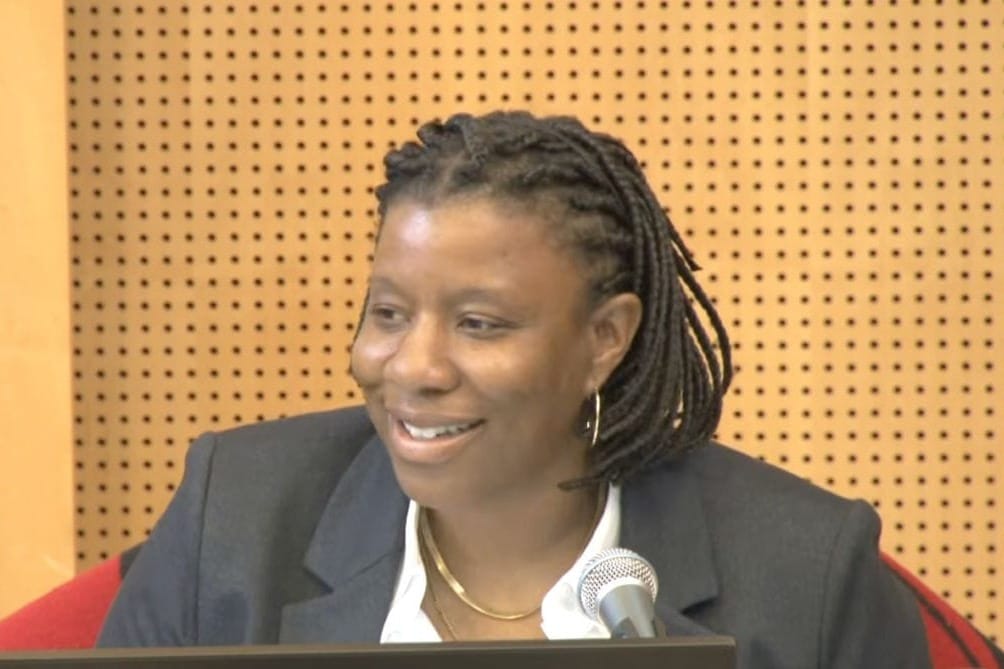
A significant debate is underway at Seattle City Council concerning Mayor Katie Wilson’s initiative to provide universal free school meals for all students. An amendment proposed by Council President Joy Hollingsworth and Councilmember Dionne Foster seeks to delay the program’s implementation by one year, redirecting some funds towards a food access voucher system.
The Mayor’s plan, which was part of her spending proposal for the Families, Education, Preschool, and Promise (FEPP) Levy passed by voters in 2025, aimed to offer free breakfast and lunch to all students starting in the 2026-2027 school year. Mayor Wilson has emphasized the need to address childhood hunger and food insecurity, noting that many students either do not participate in existing free and reduced-price lunch programs due to stigma or barriers, or their families fall just above the eligibility threshold but still struggle with food costs. The Mayor’s office estimates that up to 6,800 students could benefit from such a program.
Por que importa
The proposed delay by Hollingsworth and Foster would save approximately $4 million. This sum, they suggest, should be allocated to a pilot voucher program designed to provide weekend and school break meals for students already eligible for free school meals. This voucher program would run for the full six-year term of the FEPP levy.
Both the Mayor’s original proposal and the council’s amendments are predicated on the assumption that the Washington state legislature will assume the cost of universal school meals for all K-12 students beginning in the 2028-2029 school year. This state-level funding is expected to come from the recently passed “millionaires tax,” a 9.9% tax on income exceeding $1 million, although tax collection is not slated to begin until 2029. Mayor Wilson’s plan was intended to bridge this funding gap for Seattle students for the two academic years preceding the state’s takeover.
Contexto
Hollingsworth, who has a background in food access programs, argues that a voucher system would complement, rather than replace, the concept of universal meals by ensuring food access during periods when school is not in session. She highlighted the particular needs of children in South Seattle, citing concerns about food insecurity during evenings and weekends, and pointed to disparities in educational outcomes, such as the finding that 51% of Black students in Seattle are not meeting literacy benchmarks.
“There’s an equitable need here. I would like this program to run in conjunction with universal meals because it supports the concept of food access and closing the gap that we have in our city,” Hollingsworth stated. “I also have kids of color south of I-90 who already get free and reduced lunch meals, or free, and they also are very hungry for dinner, and they don’t have any food over the weekends.”
The City of Seattle already funds some weekend and school break meal programs through its Human Services department, administered by eight contracted food providers coordinated by Backpack Brigade. In 2025, these programs delivered over 160,000 food “backpacks.” Hollingsworth drew inspiration from a decade-old voucher program in the Bellevue School District that supports students during longer school vacations, advocating for a similar model in Seattle to address the “massive need” she has witnessed firsthand in South Seattle.
Councilmember Foster echoed Hollingsworth’s sentiment, emphasizing that the proposed amendment is not about undermining universal free school meals but about strategically addressing the immediate needs of low-income students who experience hunger during school breaks. “It’s not about the concept of gutting universal free schools, it’s about we have low-income kids, kids who are qualified for free and reduced lunch […] who are also going hungry during school breaks, during weekends,” Foster explained during a council meeting. She believes the amendment allows Seattle to implement its universal school meal program ahead of the state’s timeline while simultaneously bolstering another program to provide additional food access.
Mayor Wilson, however, maintains that a universal approach is crucial to overcome the stigma associated with voucher-based programs and to support families who are food insecure but do not qualify for existing assistance. She also pointed out the administrative burden and time commitment required for low-income families to navigate application processes for such programs. “We know how many kids in our school system are housing insecure or experiencing homelessness, and there’s so much stigma that comes around poverty and homelessness and and being on free lunch,” Wilson said. “I’m sure it serves as a marker of that for a lot of people, and so anything we can do to break down those barriers and to make people feel included and welcome is important.”
The financial aspect of the Mayor’s universal meals plan is structured so the City only incurs costs for meals actually served, potentially making initial cost estimates slightly higher than the eventual expenditure.
Key facts
| Aspect | Details |
|—|—|
| Program | Universal free school meals for all students |
| Proponent | Mayor Katie Wilson |
| Opposing amendment | Council President Joy Hollingsworth & Councilmember Dionne Foster |
| Proposed amendment | Delay universal meals by one year, fund voucher program |
| Funding source (proposed) | FEPP Levy funds (redirected) |
| State funding expected | 2028-2029 school year via “millionaires tax” |
| Estimated students benefiting from Mayor’s plan | Up to 6,800 |
The divergence in approach highlights a common tension in urban policy: balancing immediate, targeted needs with broader, more inclusive systemic changes. While Mayor Wilson prioritizes universal access and reducing stigma, the council members are focused on a more phased approach that addresses immediate gaps in food security during non-school periods through a voucher system, potentially saving funds in the short term. The debate underscores the complexities of implementing social programs and the different strategies policymakers employ to achieve equitable outcomes for vulnerable populations.
Source: The Urbanist, https://www.theurbanist.org/seattle-council-and-mayor-butt-heads-over-universal-free-school-meals/
Datos clave
| Punto | Detalle |
|---|---|
| Fuente | The Urbanist |
| Fecha | 2026-07-18T13:00:23+00:00 |
| Tema | Seattle Council and Mayor Butt Heads Over Universal Free School Meals |
Fuente
The Urbanist Publicacion original: 2026-07-18T13:00:23+00:00
Related updates
Why the predicted Portland ‘Carmaggedon’ never arrived — and what London can learn about traffic evaporation
A month-long closure of a mile-long section of I-5 in Portland was forecast to triple commute times. Instead, morning peak journeys increased…
Read update
What the fall of Angkor reveals about the risks of low-density urban sprawl
A new analysis of the fall of Angkor, the ancient Khmer capital, draws parallels between its sprawling, low-density infrastructure and the vulnerabilities…
Read update
Colorado Data Center Dispute Highlights Gap in Planning Rules and Community Oversight
A proposal for Colorado’s largest data centre in Aurora has sparked debate over planning rules that allow major developments to bypass public…
Read update
London procurement teams face mounting cost and compliance pressures, North American survey suggests
A survey of 100 public-sector procurement professionals across North America finds rising costs and compliance demands straining teams, with 46% still relying…
Read update