
Global Review Highlights Flaws in Bike Lane Design, Offering Lessons for London
A recent global assessment of cycling infrastructure, published in Momentum Magazine, identifies 30 of the world's most poorly designed bike lanes, underscoring the need for robust, connected networks to ensure cyclist safety.
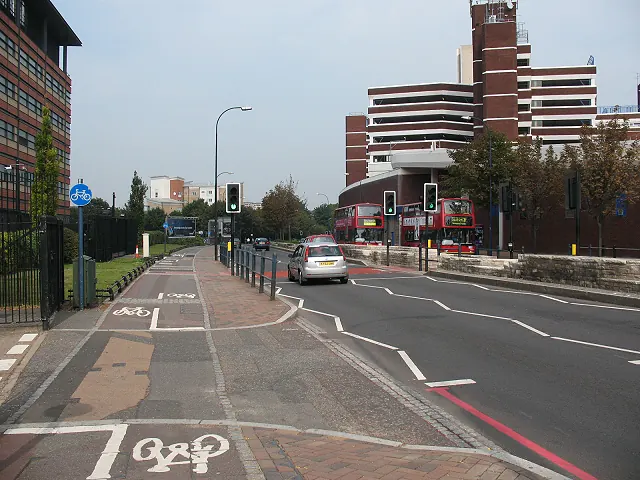
A recent compilation of the world’s most problematic bicycle lanes, featured in Momentum Magazine, provides a stark reminder of the challenges faced in creating effective and safe cycling infrastructure. The list, which includes 30 examples of poorly conceived or implemented bike lanes, serves as a critical case study for urban planners and transport authorities globally, including those in London.
The core issue identified across many of these substandard lanes is the insufficient nature of mere painted lines. As Ron Johnson, quoted in the article, points out, “A painted line alone doesn’t create safe cycling infrastructure. A bike lane only works when it forms part of a connected, well-designed network that keeps riders protected from beginning to end.” This emphasizes that isolated or poorly integrated cycle paths can be more detrimental than beneficial, failing to provide the necessary safety and connectivity for cyclists.
Por que importa
Examples cited in the review range from lanes that abruptly terminate at high-speed road junctions, such as highway on-ramps, to those obstructed by permanent fixtures like trees, poles, and drainage grates. Such design oversights not only negate the intended safety benefits but can actively create hazards, forcing cyclists into conflict with motor traffic or posing tripping risks. The review also points to “uniquely designed” lanes where the rationale behind their implementation appears questionable, raising doubts about the planning and decision-making processes involved.
While the report does not detail specific London examples, the principles highlighted are directly applicable to the ongoing development and improvement of cycling networks within the capital. London’s commitment to expanding its cycle superhighways and segregated routes means that understanding common pitfalls is crucial for avoiding costly and ineffective infrastructure.
Contexto
The need for a holistic approach to cycle network design is paramount. This involves not just the physical separation of cyclists from motor traffic but also ensuring that these lanes are part of a continuous, coherent system. This system should seamlessly connect residential areas with employment hubs, transport nodes, and recreational spaces, without introducing dangerous interfaces with fast-moving vehicles or complex intersections.
Furthermore, the maintenance and upkeep of cycle lanes are critical. The image of “cracked asphalt in a bike lane” from the source summary suggests that even well-intentioned designs can fail if not properly maintained. Poor surface conditions can lead to accidents and deter cyclists, undermining the investment in the infrastructure.
The global review underscores that the success of cycling infrastructure is measured by its usability and safety for its intended users. When bike lanes are poorly designed, obstructed, or disconnected, they can create a false sense of security, potentially leading to increased risks for cyclists. This highlights the importance of rigorous planning, community consultation, and ongoing evaluation in the implementation of any new urban infrastructure.
For London, this means a continued focus on:
* Network Connectivity: Ensuring new cycle routes integrate into the existing and planned network, avoiding dead ends or transitions onto busy roads.
* Robust Design Standards: Implementing clear guidelines for lane width, segregation, and intersection design, informed by best practices and data from existing schemes.
* Obstruction Management: Proactive identification and removal of temporary or permanent obstructions within cycle lanes.
* Maintenance Regimes: Establishing dedicated maintenance schedules to ensure cycle lanes remain in good condition.
* User Feedback Integration: Continuously gathering and acting upon feedback from cyclists to identify and rectify design or operational issues.
The review from Momentum Magazine, while global in scope, offers a valuable lens through which London can assess its own cycling strategies. By learning from the mistakes made elsewhere, the city can more effectively invest in a cycle infrastructure that truly supports sustainable and safe urban mobility.
Key facts
| Aspect | Detail |
|—|—|
| Source Publication | Momentum Magazine |
| Number of Lanes Reviewed | 30 |
| Primary Concern | Inadequate design leading to safety issues |
| Key Principle | Need for connected, well-designed cycling networks |
The development of safe and effective cycling infrastructure is a key component of London’s transport strategy, aiming to encourage modal shift, reduce congestion, and improve air quality. This global review reinforces the need for meticulous planning and execution to ensure that investments in cycling infrastructure deliver tangible benefits for residents and visitors. It also prompts a consideration of whether any of London’s own cycling routes could be improved by applying the lessons learned from these global examples.
Source: Planetizen News, https://www.planetizen.com/news/2026/07/138015-30-worlds-worst-bike-lanes
Datos clave
| Punto | Detalle |
|---|---|
| Fuente | Planetizen News |
| Fecha | 2026-07-18T12:00:00+00:00 |
| Tema | 30 of the world's worst bike lanes |
Fuente
Planetizen News Publicacion original: 2026-07-18T12:00:00+00:00
Related updates

No London Story: Streetsblog SF Roundup Falls Outside Editorial Beat
London Urbanism Desk cannot publish this Streetsblog SF roundup because none of the three Bay Area stories – water shuttle, Sunset Dunes,…
Read update
What Chicago’s Clybourn station study could teach London about transit accessibility and station relocation
A feasibility study for Chicago’s 1900-built Clybourn station is weighing relocation vs. retrofit. The trade-offs – accessibility, platform length, multimodal links, and…
Read update
Story Rejected – Off-Topic for London Urbanism Desk
A Seattle-based story on universal school meal funding does not fit the London urbanism beat. This editorial note explains why the item…
Read update
Issaquah ADU Self-Certification: A US Model With Limited London Parallel
The Washington city becomes the first to let architects self-certify backyard cottage plans under a 2025 state law. The programme has no…
Read updateWiki relacionada

Urban Planning Terms: Density, Public Realm and Transit-Oriented Development
A living glossary for terms that appear again and again in planning and development stories.
Read update