
Los Angeles Advances Center-Running Bike Lanes on Chandler Boulevard
Los Angeles Department of Transportation is investing $7 million to reconfigure three miles of Chandler Boulevard bike lanes, moving them to a center-running configuration to preserve parking and improve cyclist safety.
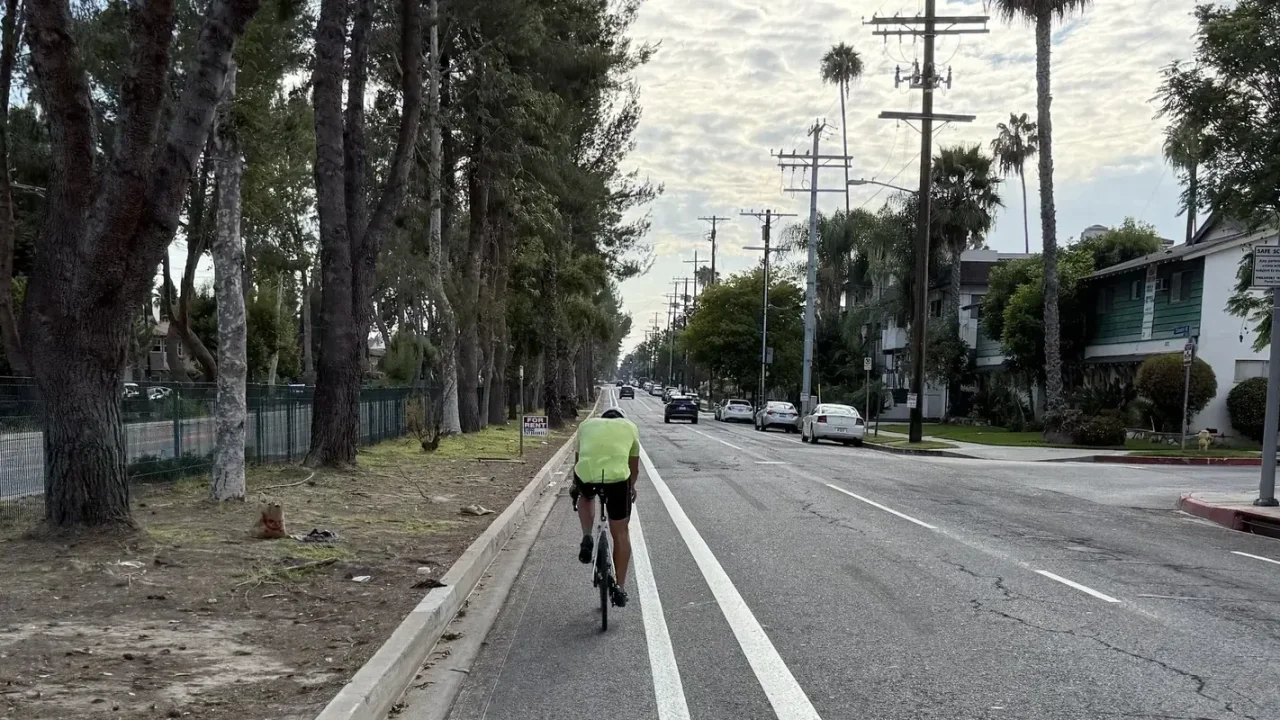
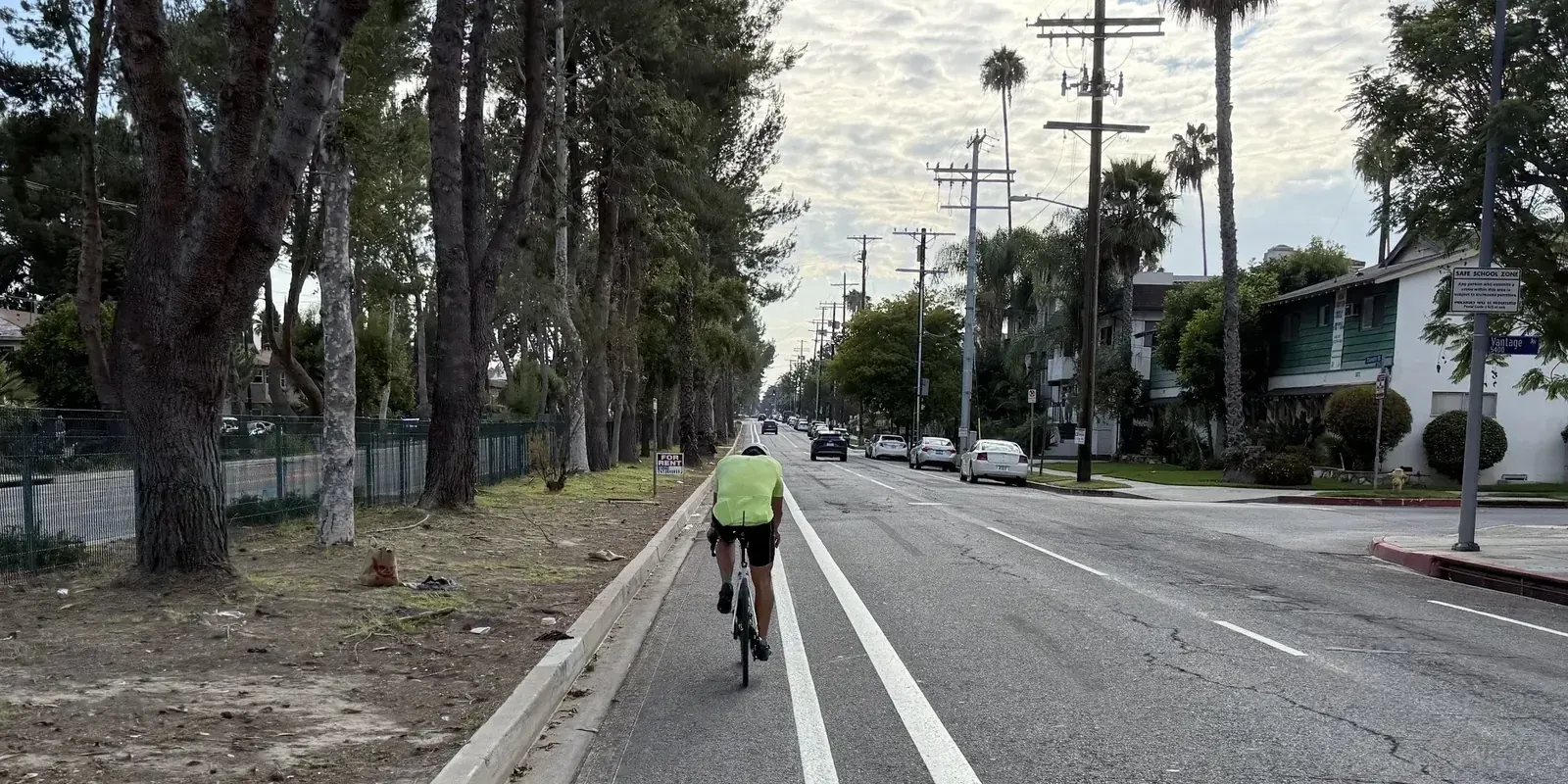
Los Angeles is undertaking a significant infrastructure upgrade on Chandler Boulevard, investing $7 million to reconfigure approximately three miles of existing bike lanes. The project, known as the Chandler Bicycle Connection, aims to enhance cyclist safety and accessibility by moving the lanes to a center-running configuration. This initiative extends from the vicinity of the North Hollywood Metro B and G Line Station westward towards Coldwater Canyon Avenue, running parallel to the G Line bus rapid transit route.
Center-Running Configuration
The core of the project involves relocating the existing right-side bike lanes to the left side of the street, positioned along the roadway’s median. This strategic shift is designed to minimize the impact on on-street parking, a common concern in urban development projects. By utilizing the median, the city aims to preserve valuable parking spaces for residents and businesses while creating a dedicated and safer space for cyclists.
Project Scope and Features
The Chandler Bicycle Connection project encompasses a range of civil engineering and streetscape improvements. Key elements include the removal of existing concrete median islands to facilitate the new lane layout. The project also involves reconstructing street pavements, curbs, and gutters to meet current accessibility standards, ensuring that the new infrastructure is usable for all members of the public. Modifications to existing traffic signals are also part of the scope to accommodate the altered street configuration and maintain efficient traffic flow.
Despite the extensive concrete work, cyclists will benefit from protected lanes. These will be designated as Class IV protected bike lanes, featuring raised rubber defenders and K-71 plastic bollards. While these elements offer a physical separation from vehicle traffic, they represent a more cost-effective solution compared to fully separated concrete barriers.
Project Timeline and Progress
City Councilmember Adrin Nazarian has shared photographic updates showcasing the newly protected Chandler bike lanes. These visuals indicate that construction is actively underway. The project builds upon earlier stages, with a groundbreaking reported in March 2026 and the contract approval occurring in January 2026. Detailed information about the project is available on the Los Angeles Department of Transportation (LADOT) project webpage.
Key facts
| Aspect | Detail |
|---|---|
| Project Name | Chandler Bicycle Connection |
| Investment | $7 million |
| Length | Approximately 3 miles |
| Location | Chandler Boulevard, North Hollywood to Coldwater Canyon Ave, LA |
| Bike Lane Type | Center-running, Class IV protected with rubber defenders and bollards |
| Key Stakeholder | Los Angeles Department of Transportation (LADOT) |
Impact on Urban Mobility
The Chandler Bicycle Connection project represents a notable investment in active transportation infrastructure within Los Angeles. By creating dedicated and protected cycling routes, the city aims to encourage more residents to choose cycling for commuting and recreation. This aligns with broader urban planning goals focused on reducing traffic congestion, improving air quality, and promoting healthier lifestyles. The center-running design, specifically chosen to preserve parking, highlights a pragmatic approach to balancing competing urban needs. The proximity to the North Hollywood Metro B and G Line Station also suggests an intention to enhance multi-modal connectivity, making it easier for commuters to combine cycling with public transit.
Future Considerations
As the project progresses, ongoing monitoring of its effectiveness will be crucial. This includes assessing usage rates, cyclist feedback, and any impacts on traffic flow and parking availability. The choice of flexible bollards and rubber defenders, while cost-effective, may require regular maintenance and monitoring for durability. Future developments in protected bike lane technology and materials could also inform maintenance and upgrade strategies for this corridor.
Source: Streetsblog LA, “Eyes on the Street: Progress on Chandler Center-Running Bike Lanes,” https://la.streetsblog.org/2026/07/13/eyes-on-the-street-progress-on-chandler-center-running-bike-lanes
Fuente
Streetsblog LA Publicacion original: 2026-07-13T22:14:17+00:00
Related updates
Clyde Hill’s Affordable Housing Settlement Offers a Case Study in State-Led Planning Pressure
The wealthy Seattle suburb is close to settling a legal challenge over its growth plan by offering developers extra building rights in…
Read updateODOT cost reporting obscures 60% overrun on Oregon highway project, raising questions about transport transparency
An Oregon highway widening project hailed as a budget success actually ran more than 60% over its original cost estimate, according to…
Read update
Austin moves to close 25-square-foot loophole in rental housing mould rules
Austin, Texas, is drafting new city code to replace a state rule that requires landlords to act only when mould covers 25…
Read update
US mayors rank housing affordability as top crisis as costs squeeze cities
A new survey from the US Conference of Mayors finds affordable housing leading city leaders’ concerns as the rising cost of living…
Read updateWiki relacionada

Urban Planning Terms: Density, Public Realm and Transit-Oriented Development
A living glossary for terms that appear again and again in planning and development stories.
Read update