
Eastside Enclave Considers Drastic Tax Hike to Avert Bankruptcy
A small, wealthy Eastside city is facing an "existential budget crisis," with voters to decide on a significant property tax increase to avoid potential bankruptcy or forced merger.
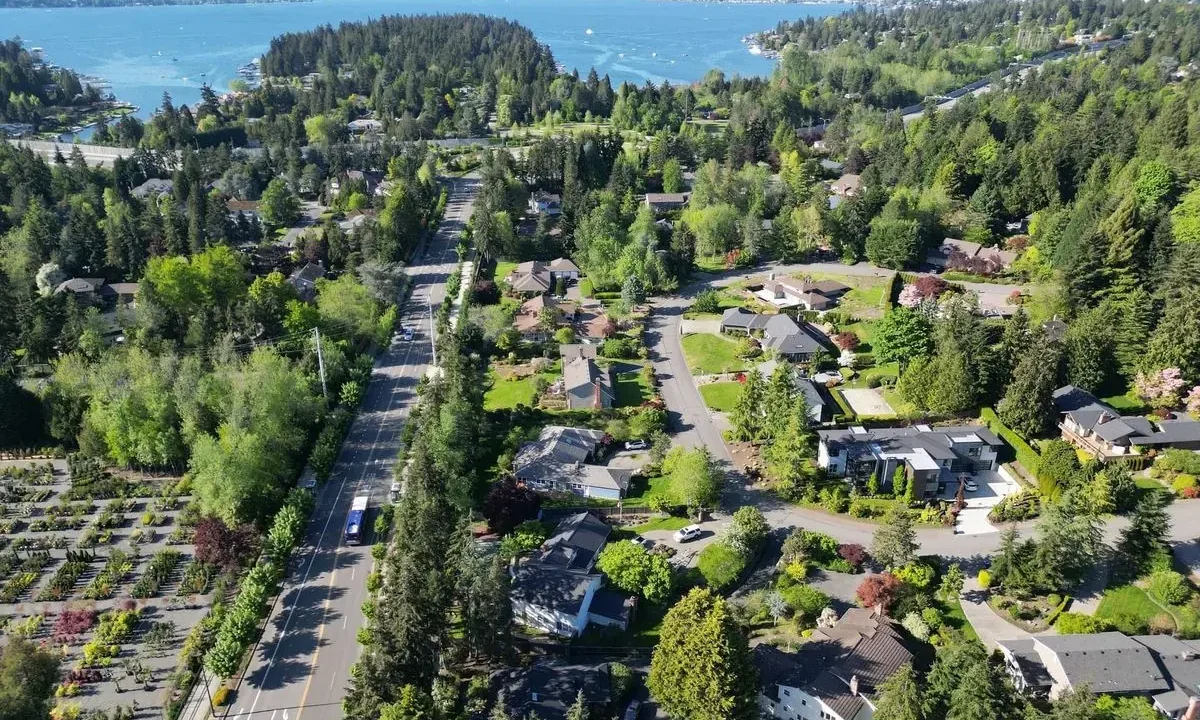
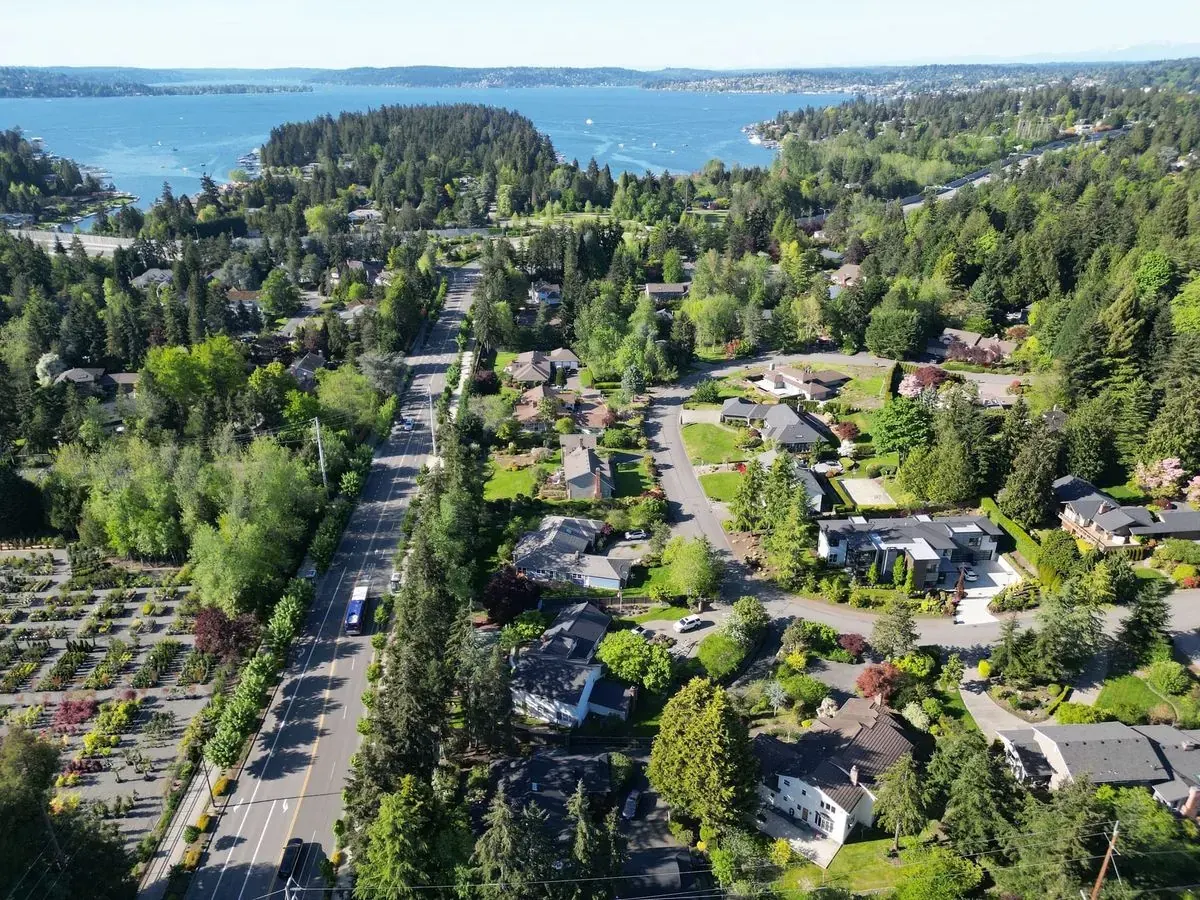
Clyde Hill, a city of 3,000 residents on the Eastside, is confronting a severe budget crisis that could force it to cease to exist as an independent municipality. City officials are proposing a substantial property tax increase of 69% to avoid bankruptcy, a situation that could loom as early as 2030.
The city has experienced budget deficits for five of the past seven years, leading to a significant drain on its reserves. Despite the considerable wealth of its residents, reflected in the collective $4.93 billion valuation of its approximately 1,100 properties, Clyde Hill has maintained lower tax rates, a key attraction for its inhabitants.
This November, voters will be asked to approve a property tax hike that would raise the rate to $0.50 per $1,000 of assessed value. While this would still be below the rates in many neighbouring cities, it represents the largest local property tax increase in Clyde Hill’s history. If approved by the City Council on July 14, the decision will present residents with a fundamental question about the value they place on maintaining their city’s borders.
Financial Sustainability Taskforce
The proposed increase stems from a recommendation by an independent Financial Sustainability Taskforce, established by the City Council last year. The taskforce’s findings indicated that without significant intervention, the city would exhaust its reserves by 2030.
“Unless the city did something, it was going to go bankrupt or it was going to be absorbed by another city,” taskforce member Wayne Burns stated at a recent council meeting. He warned that a merger could lead to increased taxes and a reduction in local control and police services.
Mayor Dean Hachamovitch, appointed last year, has been a vocal critic of the city’s financial trajectory for years, chronicling the budget issues in a Substack newsletter. In 2023, he noted the “process of denial and delay” that had characterised the city’s approach to its financial challenges.
A City Defined by its Borders
Clyde Hill, incorporated in 1953, covers just over a square mile. Unlike its rapidly expanding neighbour Bellevue, Clyde Hill has largely maintained its original boundaries. Its population has remained remarkably stable, with the 1970 census recording 2,987 residents, only 113 fewer than today.
The city’s original incorporation was driven by a desire to “control land use development such as lot size and commercial zoning,” with early reports highlighting lot-size restrictions as the primary motivation. Today, Clyde Hill has only two commercial establishments: a gas station and the Queen Bee coffee shop.
Facing External Pressures
Despite its efforts to maintain its distinct character, Clyde Hill is facing increasing external pressures that challenge its insular model. The city is currently involved in a legal challenge brought by the land use advocacy non-profit Futurewise. This challenge, similar to one that prompted Mercer Island to address affordable housing requirements and density, is expected to force Clyde Hill to re-evaluate its growth framework.
Furthermore, new state mandates are compelling Clyde Hill to update its land use code. This includes a requirement, introduced by 2023’s House Bill 1110, to allow duplexes. In response, the city previously used an emergency ordinance to curtail allowances for cottage housing, significantly restricting the types of new housing that can be built under its middle housing provisions.
These new state mandates have also been cited as a contributing factor to the city’s budget woes, with increased consultant fees since 2023 adding to unaffordable expenses. Notably, Clyde Hill did not utilise the model housing code provided by the state Commerce department, which could have reduced implementation costs, opting instead to develop its own framework that closely adheres to the minimum legal requirements.
Dominant Spending on Public Safety
The largest portion of Clyde Hill’s budget is allocated to police and fire services. Of the city’s $6.7 million budget for 2026, $2.8 million is designated for the police department, with an additional $900,000 for contracted services with the Bellevue Fire Department. This combined expenditure accounts for more than half of the city’s annual budget.
For comparison, the city administration employs 3.75 full-time staff, public works has 3.25, and planning and development services has two. The Clyde Hill Police Department’s $31,000 budget for uniforms this year represents 77% of the salary for the employee responsible for parks and recreation facilities.
Maintaining a local police department is considered a significant justification for the city government’s continued existence, alongside land use control. However, Wayne Burns suggested contracting with the King County Sheriff’s Department as a cost-saving measure, albeit with a caveat: “If you do that, it’s cheap, but you kind of get what you pay for in terms of responses.”
Past Efforts to Stabilise Finances
In previous attempts to address its financial situation and keep tax rates low, city officials explored various options. Last year, the City Council considered a proposal to withdraw from the King County Library System (KCLS), which could have offset the need for a local tax increase. Hunts Point and Yarrow Point are the only jurisdictions in King County that have withdrawn from KCLS, meaning their residents cannot access its services.
Key facts
| Aspect | Detail |
|—|—|
| City Population | Approximately 3,000 |
| Property Valuation | $4.93 billion (collective) |
| Proposed Property Tax Increase | 69% (to $0.50 per $1,000 assessed value) |
| Projected Reserve Exhaustion | By 2030, without action |
| Primary Budgetary Outlay | Police and Fire Services |
The city’s struggle highlights a broader tension between maintaining local control and unique municipal identities, and the increasing financial and regulatory pressures faced by small jurisdictions in a rapidly developing region. The decision before Clyde Hill voters will determine whether their city can sustain itself financially or if it must consider a future absorbed by its larger neighbours.
Source: The Urbanist, https://www.theurbanist.org/facing-an-existential-budget-crisis-an-eastside-enclave-considers-emergency-valve/
Datos clave
| Punto | Detalle |
|---|---|
| Fuente | The Urbanist |
| Fecha | 2026-07-07T14:01:31+00:00 |
| Tema | Facing an Existential Budget Crisis, an Eastside Enclave Considers Emergency Valve |
Fuente
The Urbanist Publicacion original: 2026-07-07T14:01:31+00:00
Related updates
US DOT road safety plan targets congestion and AV strategy, with implications for London’s Vision Zero approach
The US Department of Transportation’s 2026 National Roadway Safety Strategy prioritises rural and tribal communities and advanced technology to cut preventable crashes.…
Read update
Why the predicted Portland ‘Carmaggedon’ never arrived — and what London can learn about traffic evaporation
A month-long closure of a mile-long section of I-5 in Portland was forecast to triple commute times. Instead, morning peak journeys increased…
Read update
What the fall of Angkor reveals about the risks of low-density urban sprawl
A new analysis of the fall of Angkor, the ancient Khmer capital, draws parallels between its sprawling, low-density infrastructure and the vulnerabilities…
Read update
Why urban beauty matters for community wellbeing and civic pride
Research and everyday experience show that beautiful places foster stronger communities, better mental health, and greater civic engagement. What can London learn…
Read update