
California Coastal Commission Reforms Streamlined for Active Transport and Santa Monica’s Local Coastal Program
A revised bill aims to speed up coastal permitting for bike lanes and pedestrian projects, and sets a deadline for Santa Monica to certify its Local Coastal Program.
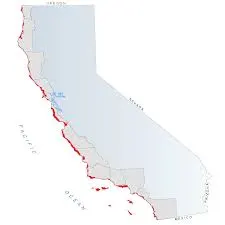
Assemblymember Rick Zbur’s Assembly Bill 1740, which seeks to reform the California Coastal Commission’s permitting process, is heading towards final Senate approval. The legislation has been significantly scaled back from its original February introduction, evolving through a series of committee hearings and stakeholder negotiations. The current version focuses on creating a streamlined process for certain bicycle, pedestrian, and transit projects, and importantly, imposes a deadline for the City of Santa Monica to achieve a certified Local Coastal Program (LCP) by 2029.
This compromise reflects a broader effort to balance environmental protections with the need for efficient project delivery, particularly for mobility and housing initiatives. The bill’s journey highlights the complexities of California’s coastal governance and the diverse interests involved in land-use decisions along the state’s coastline.
Key facts
| Aspect | Details |
|—|—|
| Bill Name | Assembly Bill 1740 |
| Author | Assemblymember Rick Zbur |
| Primary Focus | Streamlining Coastal Commission process for active transport projects; setting LCP deadline for Santa Monica |
| Santa Monica LCP Deadline | 2029 |
| Coastal Commission Review Timeline for LCP | Six months after submission |
| Expedited Process For | Active transportation projects, including those removing car parking without replacement |
Santa Monica’s Local Coastal Program
For decades, Santa Monica has operated without a fully certified Local Coastal Program (LCP). This absence has meant that many projects within the city’s coastal zone require an additional, often lengthy, review by the California Coastal Commission. This dual review process has been cited as a significant cause of costly delays for a variety of projects, including those related to housing, mobility, economic vitality, and public access.
The revised AB 1740 mandates that Santa Monica must submit a complete LCP by 2029. The Coastal Commission will then have six months to review and act upon the submission. Upon certification, Santa Monica would gain increased local authority over numerous routine approvals within its coastal zone. This could expedite permits for a range of developments, from transportation improvements and adaptive reuse projects to outdoor dining expansions and certain housing proposals.
Mayor Pro Tem Caroline Torosis of Santa Monica described the bill as a “practical solution that keeps the Coastal Act intact while creating accountability and certainty in a process that has lacked both for far too long.” She emphasized Santa Monica’s commitment to coastal access and sustainability, stating that the bill would help ensure this commitment is reflected in a certified LCP. City staff have indicated confidence in meeting the 2029 deadline, provided that draft LCP submissions to the City Council do not necessitate substantial amendments.
Streamlined Process for Active Transportation Projects
A significant statewide reform that survived the legislative negotiations is the directive for the Coastal Commission to establish an expedited ministerial process for active transportation projects. This provision is particularly noteworthy as it includes projects that involve the removal of car parking without the requirement to replace it.
Transportation advocates, including Michael Schneider from Streets for All, have welcomed this change. They argue that climate-friendly transportation projects, such as protected bike lanes, safer crosswalks, bus-priority lanes, and coastal access improvements, have historically faced lengthy and expensive permitting processes. This new expedited pathway aims to recognise that such projects, designed to reduce driving and improve environmental outcomes, should not be subjected to the same level of scrutiny as major coastal development.
While this provision is more narrowly defined than initially proposed, it could significantly speed up the delivery of projects that enhance public access to beaches and coastal destinations by reducing reliance on private vehicles. This aligns with broader urban planning goals of promoting sustainable mobility and improving the quality of public spaces.
Housing Provisions Removed
The original version of AB 1740 included provisions that would have exempted qualifying housing developments in urban, transit-rich coastal communities from separate Coastal Commission permits. The intent behind this was to align the Coastal Act with state housing and climate goals by facilitating the development of new homes in areas with existing infrastructure and transit access, addressing California’s significant housing supply constraints.
However, these housing-focused exemptions have been removed from the final version of the bill. The scaled-back legislation now concentrates primarily on Santa Monica’s LCP and the active transportation project streamlining. This shift indicates a compromise that prioritised the immediate needs of Santa Monica and the advancement of active transport, leaving the broader debate on how California’s coastal permitting system can better accommodate housing production to be addressed at a later time. The removal of these provisions means that the challenge of building more housing in coastal areas, particularly in supply-constrained markets, remains an ongoing issue for state and local policymakers.
Stakeholder Compromise and Future Implications
The evolution of AB 1740 from a broad reform bill to its current, more focused form is a testament to the intricate negotiations between various stakeholders. Initially, the bill faced opposition from some environmental groups and local neighbourhood associations in Santa Monica. These concerns, amplified through local media, led Assemblymember Zbur to facilitate a compromise. The current draft has reportedly garnered support from a wide array of groups, including the City of Santa Monica, the Coastal Commission, environmentalists, neighbourhood leaders, and mobility advocates.
The passing of this bill signifies a step forward in improving the efficiency of coastal development processes for specific project types and in resolving Santa Monica’s long-standing LCP issue. However, it also underscores the persistent challenges in reconciling coastal protection with development needs, particularly concerning housing. The broader discussion about reforming California’s coastal permitting to support housing production is far from over.
Source: Streetsblog SF, https://cal.streetsblog.org/2026/06/23/bill-to-reform-coastal-commission-scaled-back-but-still-delivers-wins-for-bicycle-pedestrian-projects-and-santa-monica
Datos clave
| Punto | Detalle |
|---|---|
| Fuente | Streetsblog SF |
| Fecha | 2026-06-23T23:14:01+00:00 |
| Tema | Bill to Reform Coastal Commission Scaled Back, but Still Delivers Wins for Bicycle/Pedestrian Projects and Santa Monica |
Fuente
Streetsblog SF Publicacion original: 2026-06-23T23:14:01+00:00
Related updates

Why the predicted Portland ‘Carmaggedon’ never arrived — and what London can learn about traffic evaporation
A month-long closure of a mile-long section of I-5 in Portland was forecast to triple commute times. Instead, morning peak journeys increased…
Read update
What the fall of Angkor reveals about the risks of low-density urban sprawl
A new analysis of the fall of Angkor, the ancient Khmer capital, draws parallels between its sprawling, low-density infrastructure and the vulnerabilities…
Read update
Colorado Data Center Dispute Highlights Gap in Planning Rules and Community Oversight
A proposal for Colorado’s largest data centre in Aurora has sparked debate over planning rules that allow major developments to bypass public…
Read update
London procurement teams face mounting cost and compliance pressures, North American survey suggests
A survey of 100 public-sector procurement professionals across North America finds rising costs and compliance demands straining teams, with 46% still relying…
Read updateWiki relacionada

Urban Planning Terms: Density, Public Realm and Transit-Oriented Development
A living glossary for terms that appear again and again in planning and development stories.
Read update