
Rethinking Transit Messaging: Beyond the “Coming Back” Narrative
A call for transit agencies to shift their communication strategy from recovery metrics to future-oriented success stories.
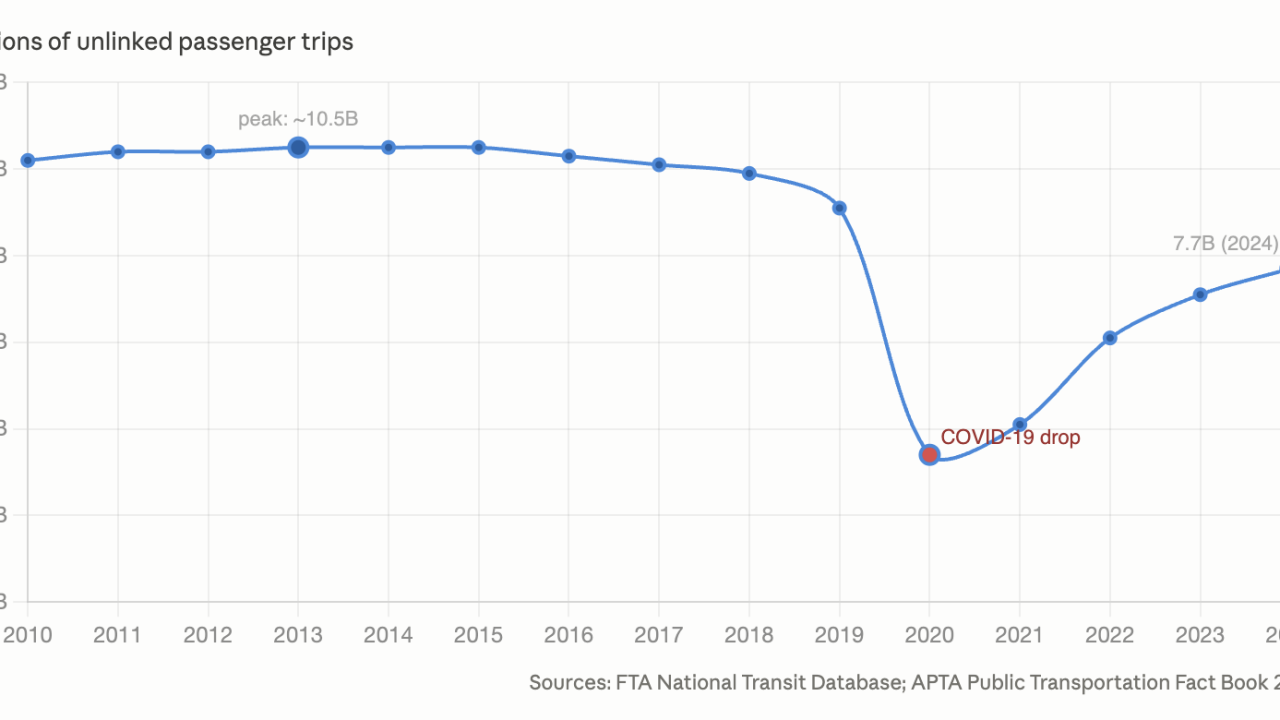
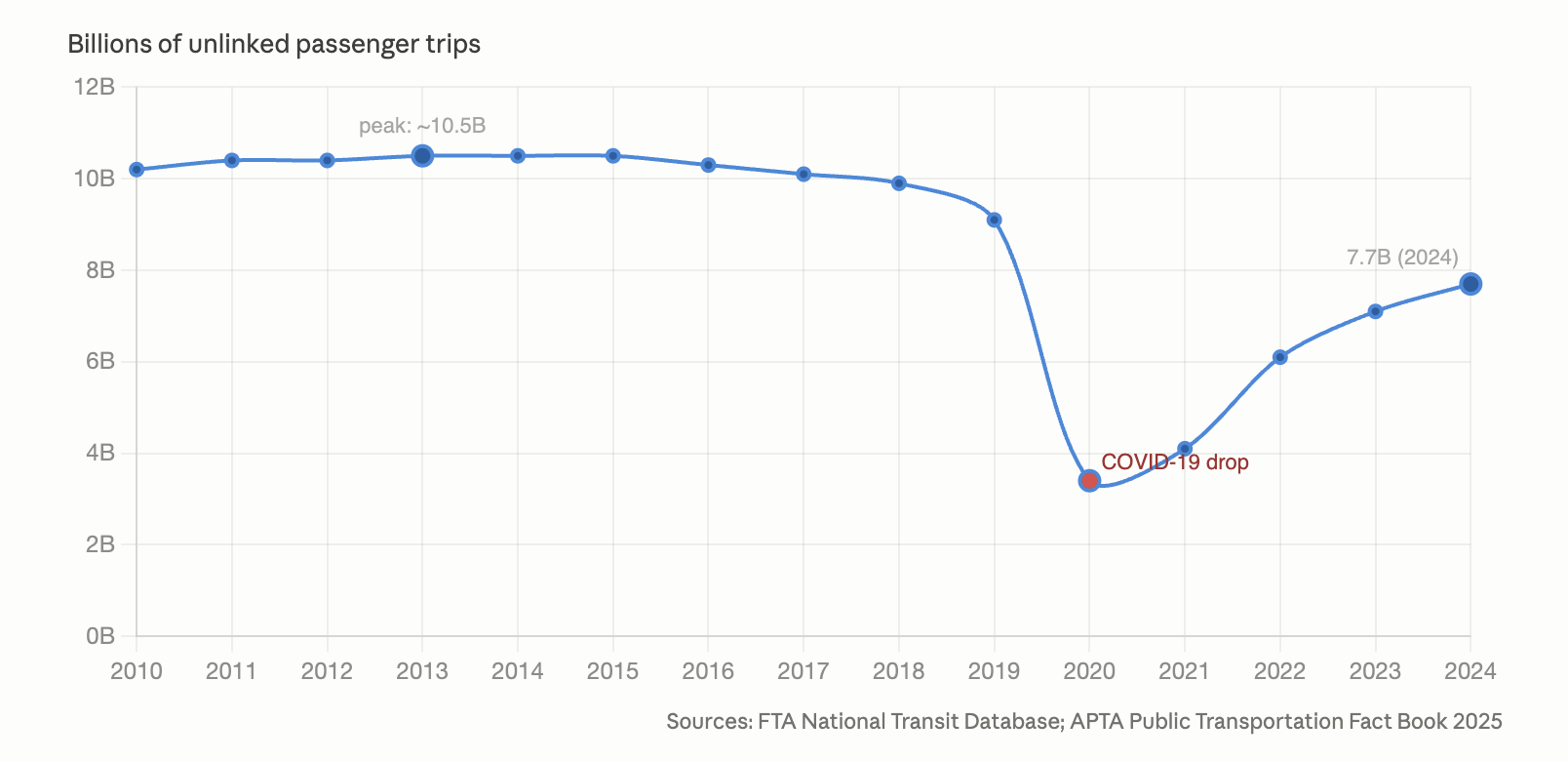
The way public transit agencies communicate their performance is crucial, especially as many face significant funding challenges. A prevailing narrative of “coming back” to pre-COVID ridership levels, while well-intentioned, may inadvertently frame transit in terms of relative failure and hinder efforts to secure necessary financial support. This approach concedes ground to a narrative that implies a rollback of time and suggests that agencies are mismanaged if they haven’t fully recovered, potentially leading voters to reject funding.
A more effective strategy involves shifting the focus from a retrospective look at 2019 ridership to a forward-looking depiction of transit agencies building for the future. This means explaining the stabilised demand patterns emerging since 2022 and highlighting the ongoing efforts to adapt and innovate within the new urban transport landscape.
The Limits of the “Back to 2019” Framework
Transit agencies often describe their progress in relation to 2019 figures. This benchmark, while seemingly logical, carries several unhelpful implications. It positions 2019 as the ultimate goal, suggesting that the past is the only attainable future. This can lead to a perception that if agencies are not achieving these past figures, they are failing, potentially due to poor governance. This narrative makes it easier for critics to argue that increased funding is unwarranted if past service levels are not being met.
Furthermore, focusing on past performance can obscure the significant changes in urban mobility patterns and user needs that have occurred since 2019. The pandemic accelerated existing trends and introduced new ones, such as increased remote work and a greater demand for flexible transport options. A rigid focus on pre-pandemic metrics fails to acknowledge these shifts and the agency’s efforts to adapt.
Building for a New Era of Urban Mobility
Instead of framing the conversation around recovery, transit agencies should articulate a vision of building for the future. This involves:
Explaining the current demand environment: Acknowledge the stabilisation of urban transport demand since 2022, presenting data that reflects this new reality. This provides a more accurate baseline for performance evaluation.
Highlighting adaptation and innovation: Showcase how agencies are evolving to meet contemporary needs. This could include service adjustments, new technology integration, enhanced accessibility features, or partnerships with other mobility providers.
Focusing on future growth and impact: Emphasise the role of transit in shaping healthier, more sustainable, and equitable cities. This narrative centres on the positive contributions of transit to urban life and its potential for future development.
This proactive approach reframes transit not as an entity struggling to return to a past state, but as a dynamic service actively shaping the future of urban mobility. It allows agencies to tell a story of success, progress, and relevance in a rapidly changing world.
The Importance of Language in Public Discourse
The language used by transit agencies and advocates significantly influences public perception and policy decisions. When agencies consistently frame their situation in terms of a percentage of pre-COVID ridership, they implicitly concede that they are not meeting expectations. This rhetoric can be easily exploited by those who oppose increased transit funding, as it provides a seemingly objective basis for criticism.
A shift in messaging could involve:
Starting data-driven stories from a more recent baseline (e.g., 2022 onwards) to reflect current, stabilised conditions.
Acknowledging historical performance without making it the sole or primary measure of current success.
Emphasising the evolving role of transit in supporting new urban development, climate goals, and economic activity.
The Case of Caltrain and the Misinterpretation of Data
An example that illustrates the pitfalls of focusing on outdated metrics was a tweet from Caltrain, a regional rail agency. The agency’s well-intentioned statement about ridership recovery was met with a misinterpretation that highlighted a perceived failure. The author of the Human Transit article notes that a figure of 37,000 riders for BART, CalTrain, and VTA over a weekend was presented in a way that suggested a massive shortfall. However, upon further investigation, it was clarified that this figure likely referred to passengers travelling to a specific event (Levi’s Stadium for World Cup games), not system-wide weekend ridership. This incident underscores how isolated or context-deficient data points, especially when framed within a “recovery” narrative, can lead to inaccurate conclusions about an agency’s performance.
For London, a city with a globally recognised and heavily utilised public transport network, these communication strategies are particularly relevant. As Transport for London (TfL) navigates its funding landscape and plans for future service enhancements, adopting a narrative that highlights its ongoing adaptation and its crucial role in London’s sustainable growth will be vital. This includes showcasing how the network supports new housing developments, facilitates the transition to net-zero emissions, and enhances the public realm, rather than solely focusing on a return to pre-pandemic passenger numbers.
Key facts
| Aspect | Detail |
|---|---|
| Primary Challenge | Securing funding for transit agencies facing structural deficits. |
| Current Messaging | Focus on recovering to pre-COVID (2019) ridership levels. |
| Proposed Messaging | Shift to building for the future, highlighting adaptation and innovation. |
| Data Baseline | Suggestion to start data-driven stories from 2022 onwards. |
| Reader Impact | Influences public perception, voter decisions on funding referendums. |
The shift in communication strategy proposed by Human Transit extends beyond mere semantics. It represents a fundamental reorientation of how transit agencies define and present their success. By moving away from a backward-looking “recovery” narrative and embracing a forward-looking vision of progress and adaptation, transit agencies can better advocate for their essential role in creating vibrant, sustainable, and accessible cities. This is particularly pertinent for London, where TfL’s continuous efforts to modernise and integrate services are key to the capital’s ongoing development and resilience.
Source: Human Transit – Public Transit Is Not “Coming Back” … It’s Doing Something Better (https://humantransit.org/2026/06/transit-is-not-coming-back-its-doing-something-better.html)
Fuente
Human Transit Publicacion original: 2026-06-23T18:43:10+00:00
Related updates

Seattle-Area Race Highlights Diverging Approaches to Housing, Transit and Tech Taxation
A Washington State legislative race in the 32nd District pits incrementalism against urgency on housing supply, transit funding and tech regulation, with…
Read update
New York court ruling on sanctuary policies carries implications for city-level immigration enforcement across the US
A federal judge has dismissed the Trump administration’s attempt to override New York City’s restrictions on immigration enforcement cooperation, citing state sovereignty.…
Read update
Automated license plate readers raise privacy, contract and oversight questions for UK cities
A new US-focused analysis of automated license plate recognition cameras highlights contract, privacy and oversight issues that London boroughs and Transport for…
Read update
Oregon’s “fix it first” dilemma: what London’s transport planners can learn from a revolt against megaprojects
Surveys show Oregonians overwhelmingly want existing roads repaired before new megaprojects are funded, and trust in the state’s transport agency has collapsed.…
Read updateWiki relacionada

Urban Planning Terms: Density, Public Realm and Transit-Oriented Development
A living glossary for terms that appear again and again in planning and development stories.
Read update