
Chicago Transit Union Cites “Leadership Vacuum” Amidst Funding Boost and Safety Efforts
The Amalgamated Transit Union Local 241 has voiced concerns over Chicago's CTA lacking a permanent president, arguing it impacts safety and training, despite recent budget amendments and reported crime reduction efforts.
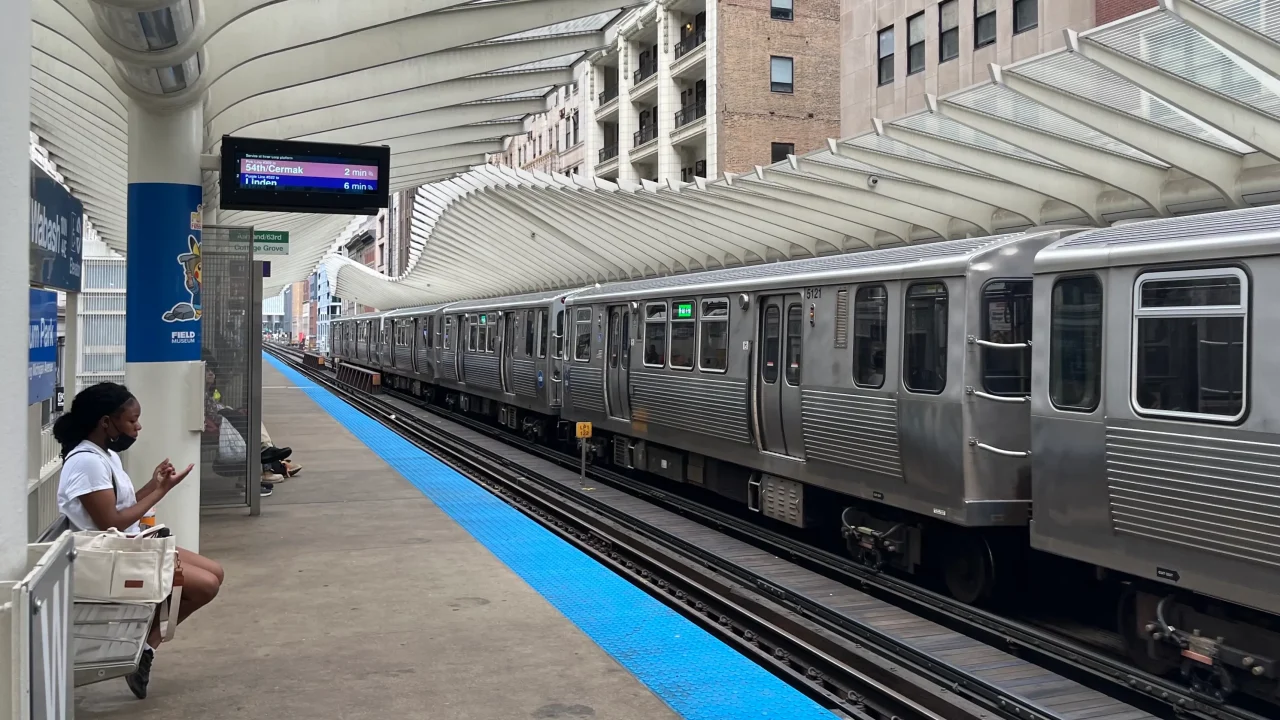
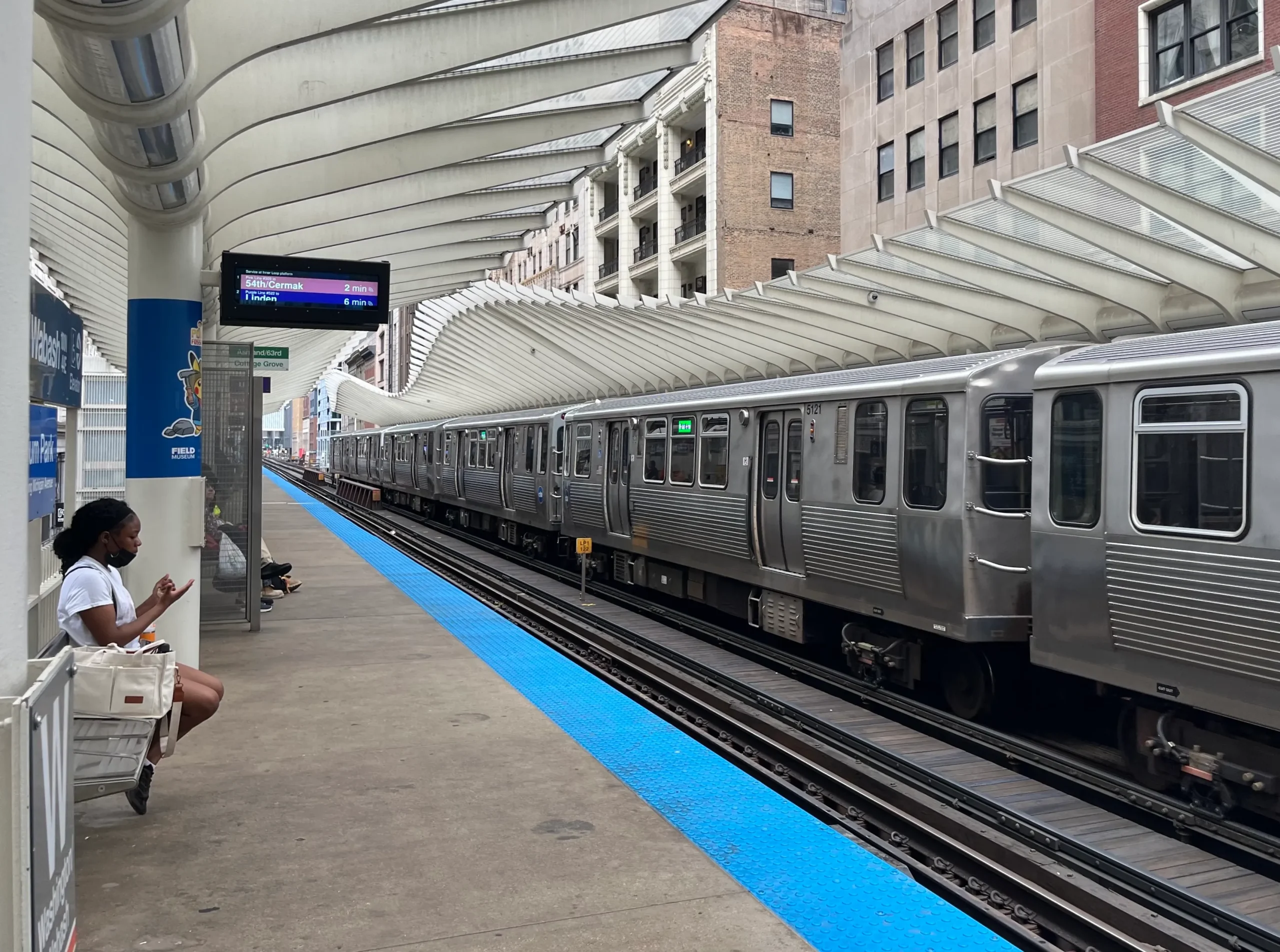
The Amalgamated Transit Union Local 241 has criticized the Chicago Transit Authority (CTA) for what it describes as a “leadership vacuum” stemming from the absence of a permanent president. This criticism comes at a time when the CTA is receiving new funding and its acting president, Nora Leerhsen, has highlighted progress in public safety initiatives. Leerhsen has held the acting role since February 2025, a period of nearly 18 months.
Union officials argue that the prolonged lack of a confirmed leader creates significant issues for both public safety and employee training. The union, which was a proponent of the transit bailout, claims to have been excluded from discussions concerning employee and rider safety, despite their members’ daily experiences with these challenges.
Leerhsen, in her response, acknowledged the union’s input and stated that she appreciates their perspectives. While she indicated that communication regarding safety is ongoing, she did not directly address all the points raised by the union representatives.
Budget Amendments and New Funding
During a recent CTA board meeting, the agency officially amended its 2026 budget to incorporate an additional $64.05 million in revenue from the RTA Sales Tax. This allocation is part of a larger distribution of $132.2 million from new funding that will be shared among the CTA, Metra, and the RTA, which is set to be replaced by the new Northern Illinois Transit Authority (NITA) in September. The remaining funds will be managed by the NITA board.
The RTA amendment includes substantial investments in public safety and service improvements. Notably, $20 million is earmarked for hiring off-duty police officers, $10 million for increasing K-9 units, and $2 million for the recruitment of Safe Ride Specialists, a new category of transit ambassadors.
Service enhancements are also set to benefit from this funding. $1 million will support bus lane enforcement, with $500,000 allocated to the Chicago Department of Transportation for the addition of bus priority zones at 40 intersections across several key avenues. Another $1 million is designated for the approved extension of the Route 10 Obama Presidential Center/Museum of Science & Industry Express, which aligns with the opening of the new landmark on June 19. Additional funding will support the extension of Route 57/Laramie north and the integration of routes 8/Halsted, 35 31st/35th, 74/Fullerton, and 85/Central into the Frequent Bus Network.
The CTA board also approved amendments to the capital budget to reflect new Congressional earmarks and other grant funding. These include $1.8 million for improvements to South Side rail station concessions, $2.5 million for upgrades to the Halsted/79th Street bus turnaround, and $1.2 million for enhancements at the Rockwell Brown Line station. Further investments include $500,000 for improvements at Belmont Station and $2 million to address slow zones on the Blue Line Forest Park Branch, particularly along the Eisenhower Expressway median. Additionally, $900,000 in federal funding will be used to add real-time arrival displays across the system.
Reopening of Racine Station
The RTA has allocated $256,277 in Innovation Coordination and Enhancement (ICE) funds to support a feasibility study for reopening the long-closed Racine/63rd Green Line station. The NITA Act mandates that this station be reopened by the start of 2029. Director Roberto Requejo acknowledged the helpfulness of this allocation but questioned the source of funding for the actual station restoration. Leerhsen indicated that the CTA would advocate for the NITA board to utilize some of its remaining new funding for this purpose.
Union Concerns Regarding Safety and Training
Edward Smith of Amalgamated Transit Union Local 241 specifically addressed the impact of the leadership vacuum on the training department. He stated that the department, once a model for operator instruction, has deteriorated, leading to bus and rail operators being dispatched without adequate training. This, he argued, contributes to an increase in preventable accidents and the disregard of recommendations from experienced instructors.
Leerhsen’s Board Report: Safety and Ridership Updates
In her regular report to the board, Leerhsen presented an optimistic view of the CTA’s performance. She noted that bus ridership has reached approximately 90% of pre-pandemic levels, with weekend ridership exceeding pre-pandemic figures. This trend is attributed partly to broader shifts in public transit usage, with many systems experiencing increased leisure travel.
Leerhsen also highlighted significant improvements in public safety, reporting a 30% system-wide decrease in crime for May 2026 compared to May 2025. The Red Line saw a notable 50% reduction in crime during the same period, with violent crime on this line dropping by over 70%. These improvements were credited to increased presence of Cook County Sheriff deputies and Chicago police officers on transit. The introduction of crisis intervention specialists and violence interrupters, expected to begin riding the ‘L’ later this year, is seen as an additional layer in the CTA’s crime reduction strategy. Leerhsen emphasized that these improvements not only encourage more Chicagoans to use public transit but also reduce delays, thereby enhancing service reliability. She concluded by stating that while progress has been made, the work is ongoing.
Key facts
| Aspect | Detail |
| :————————– | :—————————————————————————— |
| Union Criticism | Amalgamated Transit Union Local 241 cites “leadership vacuum” due to no permanent president. |
| New Funding | CTA to receive $64.05 million from RTA Sales Tax as part of a larger distribution. |
| Safety Investments | Funds allocated for additional police, K-9 units, Safe Ride Specialists, and bus lane enforcement. |
| Service Improvements | Funding for Route 10 extension, new frequent bus routes, and station upgrades. |
| Public Safety Report | CTA reports a 30% system-wide crime drop in May 2026 vs. May 2025. |
The situation at the CTA underscores a common challenge in public transit: balancing the need for strong, consistent leadership with the operational and financial pressures of managing a large urban transportation network. The union’s concerns, while voiced in the context of Chicago, reflect broader anxieties about the effectiveness of transit safety and training protocols when permanent leadership structures are absent. The substantial new funding offers an opportunity to address these issues, but the union’s call for a permanent president suggests that organizational stability remains a key concern for frontline transit workers.
Source: Streetsblog Chicago – https://chi.streetsblog.org/2026/06/10/union-criticizes-cta-for-leadership-vacuum-due-to-lack-of-a-permanent-president-acting-president-leerhsen-touts-public-safety-progress
Datos clave
| Punto | Detalle |
|---|---|
| Fuente | Streetsblog Chicago |
| Fecha | 2026-06-11T00:10:28+00:00 |
| Tema | Union criticizes CTA for “leadership vacuum” due to lack of a permanent president. Acting President Leerhsen touts publi |
Fuente
Streetsblog Chicago Publicacion original: 2026-06-11T00:10:28+00:00
Related updates

When zoning reform meets private covenants: the HOA obstacle to backyard cottages
As more US cities rewrite zoning rules to allow accessory dwellings, private homeowners’ association covenants remain a barrier that reform alone cannot…
Read update
Seattle-Area Race Highlights Diverging Approaches to Housing, Transit and Tech Taxation
A Washington State legislative race in the 32nd District pits incrementalism against urgency on housing supply, transit funding and tech regulation, with…
Read update
New York court ruling on sanctuary policies carries implications for city-level immigration enforcement across the US
A federal judge has dismissed the Trump administration’s attempt to override New York City’s restrictions on immigration enforcement cooperation, citing state sovereignty.…
Read update
Automated license plate readers raise privacy, contract and oversight questions for UK cities
A new US-focused analysis of automated license plate recognition cameras highlights contract, privacy and oversight issues that London boroughs and Transport for…
Read updateWiki relacionada

Urban Planning Terms: Density, Public Realm and Transit-Oriented Development
A living glossary for terms that appear again and again in planning and development stories.
Read update